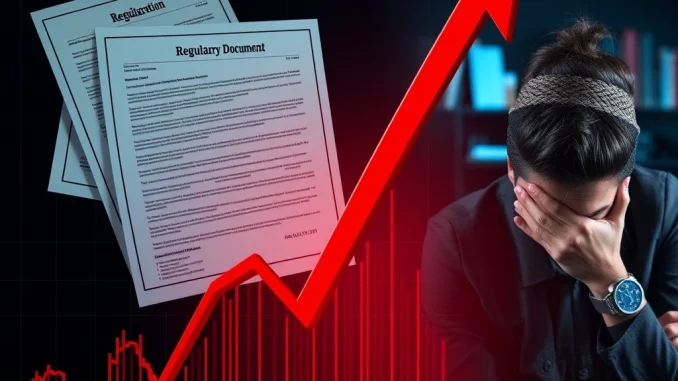
The cryptocurrency world was shocked as CATI, once a promising altcoin, experienced a catastrophic 7869.77% value drop in just one year. This staggering collapse has left investors reeling and raised serious questions about the project’s future viability amid growing regulatory scrutiny and liquidity concerns.
What Caused the CATI Cryptocurrency Collapse?
The dramatic decline of CATI can be attributed to three primary factors:
- Intensified regulatory scrutiny from financial authorities
- Severe liquidity issues in trading markets
- Growing investor distrust due to governance concerns
Regulatory Scrutiny Reaches Breaking Point
Recent months have seen unprecedented regulatory actions targeting CATI and similar assets. Authorities have expressed particular concern about:
| Regulatory Concern | Impact on CATI |
|---|---|
| Unclear use case | Reduced investor confidence |
| Governance questions | Exchange delistings |
| Compliance issues | Frozen assets |
Liquidity Concerns Amplify Market Volatility
The CATI cryptocurrency has become particularly vulnerable to wild price swings due to:
- Shrinking trading volumes across major exchanges
- Withdrawal of market makers from CATI pairs
- Growing bid-ask spreads making trades more expensive
Can the CATI Cryptocurrency Recover?
Market analysts suggest CATI faces an uphill battle for survival. The project would need to:
- Demonstrate clear regulatory compliance
- Rebuild trust through transparent governance
- Attract new liquidity providers
- Showcase real-world utility
FAQs About the CATI Cryptocurrency Crash
Q: How much has CATI lost in value?
A: CATI has declined 7869.77% over one year, with particularly steep drops recently (386.94% in one month, 1027.09% in seven days).
Q: Why are regulators targeting CATI?
A: Authorities have concerns about its governance structure, compliance standards, and unclear fundamental value proposition.
Q: Is CATI still tradeable?
A: While some exchanges still list CATI, liquidity has dried up significantly, making trades difficult to execute at stable prices.
Q: Should investors consider buying the dip?
A: Most analysts caution against this due to the extreme volatility and unresolved regulatory issues surrounding CATI.