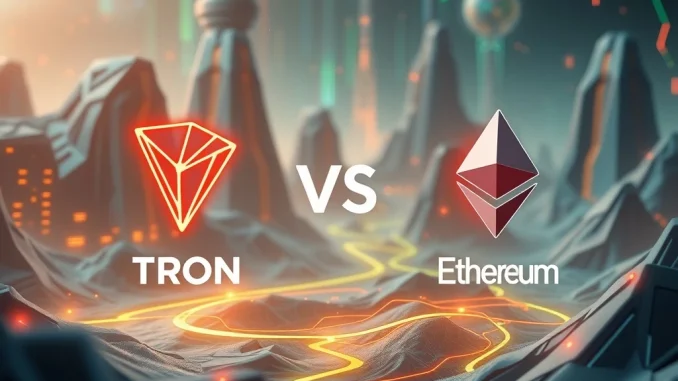
In 2025, TRON has emerged as a powerhouse in the blockchain space, leveraging low-fee USDT transactions and explosive DeFi growth to challenge Ethereum’s dominance. But how did TRON achieve this, and what does it mean for the future of blockchain? Let’s dive in.
TRON’s 2025 Performance: A Game-Changer in Blockchain
TRON’s record-breaking 2025 performance is a testament to its strategic focus on efficiency and scalability. Key metrics like transaction throughput, active user addresses, and revenue generation have hit multi-year highs, according to CryptoQuant. This growth is driven by:
- Ultra-low transaction fees
- High-speed processing capabilities
- Expanding DeFi ecosystem
USDT Transactions: TRON’s Secret Weapon
TRON’s dominance in USDT (Tether) stablecoin transfers has been a game-changer. By offering low fees and fast processing, TRON has become the preferred network for USDT transactions, outperforming Ethereum. This shift to TRON’s TRC-20 standard highlights its practical utility in everyday blockchain applications, especially in markets where stablecoins are a primary medium of exchange.
DeFi Growth: TRON’s Rising Star
TRON’s DeFi ecosystem has seen significant expansion, with platforms like JustLend and SunSwap attracting users with low-cost lending, borrowing, and trading solutions. While TRON’s Total Value Locked (TVL) is still smaller than Ethereum’s, its high-throughput, low-fee model is proving viable for financial applications.
Challenges and Opportunities for TRON
Despite its success, TRON faces challenges like regulatory scrutiny and concerns about centralization due to its Delegated Proof of Stake (DPoS) consensus mechanism. However, its ability to adapt and innovate will be crucial for sustaining long-term growth.
Conclusion: TRON’s 2025 Milestone
TRON’s 2025 performance marks a pivotal moment in blockchain adoption, proving that efficiency and cost-effectiveness can rival the ecosystem depth of established networks like Ethereum. While challenges remain, TRON’s trajectory in the digital economy looks promising.
Frequently Asked Questions (FAQs)
Q: How does TRON compare to Ethereum in 2025?
A: TRON has outperformed Ethereum in low-fee USDT transactions and DeFi growth, though Ethereum still leads in smart contract innovation.
Q: What makes TRON’s USDT transactions special?
A: TRON’s ultra-low fees and high-speed processing make it ideal for stablecoin transfers, especially in markets relying on USDT.
Q: What are the risks of using TRON?
A: Risks include regulatory scrutiny and concerns about centralization due to its DPoS consensus mechanism.
Q: Can TRON sustain its growth beyond 2025?
A: TRON’s future depends on navigating regulatory landscapes and expanding its use cases beyond stablecoins and DeFi.