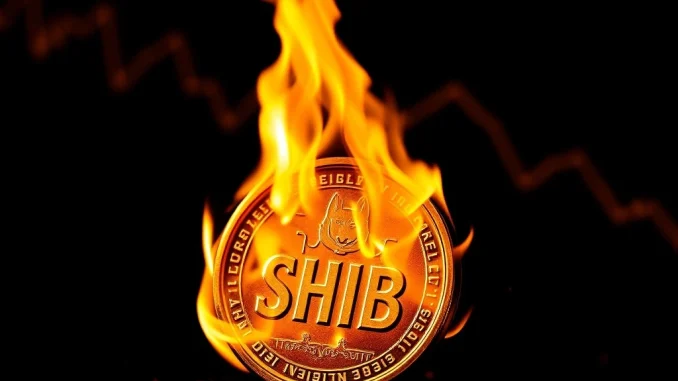
In a shocking turn of events, Shiba Inu (SHIB) has witnessed an astronomical 16,717.70% daily surge in token burns while its price tumbled 5.44%. This dramatic disconnect between supply reduction and price action has left investors scrambling for answers.
SHIB Burns Reach Unprecedented Levels
The Shiba Inu community has taken aggressive action to reduce token supply, with over 600 million SHIB tokens permanently destroyed in just 24 hours. Key burn statistics:
- Single transaction of 600.7 million SHIB sent to unspendable address
- 7-day burn total reaches 616.4 million tokens
- Weekly burn rate increase of 369.03%
Why Isn’t the Shiba Inu Price Responding?
Despite the massive SHIB burns, the token’s price continues to struggle:
| Metric | Value |
|---|---|
| Current Price | $0.00001324 |
| 24-hour Change | -5.44% |
| Market Cap | $7.95 billion |
Technical Indicators Signal Trouble for SHIB
The cryptocurrency market appears unimpressed by the supply reduction efforts:
- RSI at 46.32 (below neutral threshold)
- Price below 20-day moving average
- Failed to reclaim $0.00001406 resistance
Will SHIB Burns Eventually Impact Price?
While token burns aim to create scarcity, the immediate market response has been muted. This suggests:
- Possible broader market fatigue
- Short-term speculative positioning
- Need for sustained burn activity
Frequently Asked Questions
Why are SHIB burns increasing so dramatically?
The Shiba Inu community has intensified efforts to reduce supply through coordinated burn mechanisms, with one massive transaction accounting for most of the recent increase.
How does burning tokens affect cryptocurrency value?
Token burns reduce circulating supply, which in theory should increase scarcity and potentially drive up price if demand remains constant.
Why isn’t SHIB’s price rising with increased burns?
Market sentiment appears to be outweighing supply reduction effects, with broader crypto market conditions and investor psychology playing significant roles.
What’s the long-term outlook for SHIB?
While burns may support price long-term, SHIB’s trajectory currently depends more on overall market conditions than supply reduction alone.