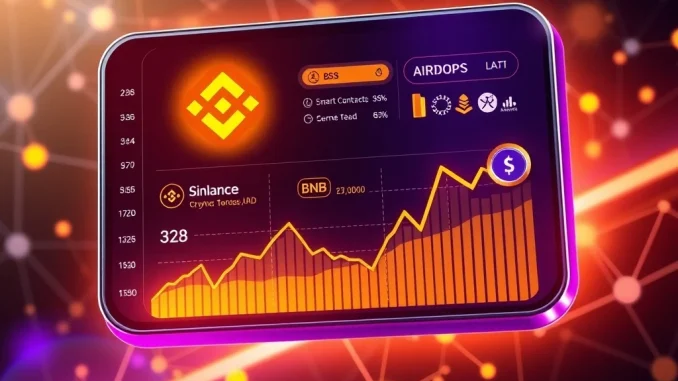
The cryptocurrency landscape is buzzing with excitement as Binance, a global leader in digital asset exchange, unveils a groundbreaking beta web wallet. This innovative tool is set to redefine how users interact with decentralized finance (DeFi) on the Binance Smart Chain (BSC) and Solana networks. With a massive 30 million BTR token airdrop accompanying its launch, and a notable surge in BNB Price, this development marks a pivotal moment for multi-chain accessibility and user engagement.
Unlocking Multi-Chain Potential: What Does the New Binance Wallet Offer?
Binance’s newly launched beta web wallet, introduced on July 25, 2025, is designed to significantly streamline smart contract trading. Its direct integration with the platform’s “Trade” button means users can now execute transactions across BSC and Solana without ever leaving the Binance interface. This initiative is a game-changer for DeFi participants and dApp developers, consolidating multi-chain capabilities into a single, intuitive platform.
Key features and benefits include:
- Seamless Integration: Directly linked to Binance’s trading interface for effortless transactions.
- Multi-Chain Support: Initially supports Binance Smart Chain (BSC) and Solana, with plans for broader expansion.
- Enhanced Accessibility: Lowers the barrier to entry for DeFi and dApp engagement.
- Developer Friendly: Provides a unified environment for building and deploying decentralized applications.
Boosting Adoption: The 30 Million BTR Airdrop Campaign
To incentivize early adoption and foster a vibrant user base, Binance has rolled out the Bitlayer Booster campaign. This multi-phase initiative promises a substantial 30 million BTR token airdrop to beta users. The campaign encourages participation through various mechanisms:
- Liquidity Drives: Encouraging users to provide liquidity to supported pools.
- Staking Rewards: Offering incentives for staking BTR tokens.
- Interactive Features: Engaging users through various platform activities.
This strategic move aligns with Binance’s broader vision to amplify liquidity and developer activity across its blockchain infrastructure. The Bitlayer Booster campaign is a clear signal of Binance’s commitment to cultivating a robust and active ecosystem around its new wallet.
The Market Reacts: BNB Price Surges and Solana News Today
The launch of the Binance Wallet has not gone unnoticed by the market. In a direct correlation, BNB, Binance’s native token, has experienced a significant upswing. Over the past 24 hours, BNB has seen an impressive 6.86% price increase, building on a remarkable 39.88% rise over the last 90 days. Furthermore, its trading volume surged by 78.44%, indicating heightened investor interest and activity.
This positive market reaction isn’t isolated to BNB. Analysts suggest that similar wallet introductions by major exchanges historically drive increased trading volumes for native tokens. The Coincu research team believes this wallet update could further bolster both BNB and SOL’s market positions by amplifying DeFi activity and liquidity across their respective ecosystems. The focus on Solana News Today highlights its growing importance within the multi-chain strategy.
While Binance executives have yet to issue public statements, user sentiment strongly suggests the wallet’s potential to enhance dApp accessibility, particularly for BSC and Solana-based projects. Popular tokens like Meme Rush and Binance Alpha are prominently featured, signaling Binance’s intent to attract a broader user base and capitalize on emerging trends.
Strengthening the DeFi Ecosystem: Binance’s Strategic Vision
Binance’s recent emphasis on fostering a robust DeFi Ecosystem is evident in this wallet launch. The platform currently supports over 4,500 developers building more than 300 dApps across DeFi and AI sectors. This new wallet serves as a crucial infrastructure piece, empowering both new and existing projects.
Binance Smart Chain (BSC) has gained considerable traction due to its low transaction fees and scalable solutions, positioning Binance as a formidable competitor against rivals like Coinbase, which recently rebranded its wallet app to emphasize social and financial features. By prioritizing BSC in the beta phase, Binance reinforces its commitment to the chain’s ecosystem, which has seen growing adoption for tools like automated liquidity provision and yield optimization.
The success of the beta phase will heavily rely on addressing user concerns regarding security and ease of use. Binance’s commitment to refining the wallet’s functionality, including transaction speed and gas cost optimizations, based on user feedback, will be crucial before a wider rollout. The platform’s focus on multi-chain support and automated trading bots aligns perfectly with industry trends such as cross-chain bridges and decentralized trading strategies.
The Bitlayer Booster campaign’s 24-hour liquidity drive and staking incentives are designed to engage both retail and institutional users, though specific participation targets remain undisclosed. As the beta progresses, Binance will refine the wallet’s interface and security protocols based on feedback, with long-term success hinging on its ability to maintain user trust in decentralized systems.
Conclusion: A New Era for Multi-Chain DeFi?
The launch of Binance’s beta web wallet, coupled with the generous 30 million BTR airdrop and the positive market reaction seen in BNB’s price surge, marks a significant step forward in making DeFi more accessible and efficient. By bridging the gap between centralized exchange convenience and decentralized application functionality across Solana and BSC, Binance is not just launching a product; it’s paving the way for a more integrated and user-friendly multi-chain future. As the beta phase unfolds, the crypto community will be watching closely to see how this innovation reshapes the landscape of decentralized finance and further solidifies Binance’s position at the forefront of the industry.
Frequently Asked Questions (FAQs)
What is the new Binance Beta Wallet?
The new Binance Beta Wallet is a web-based wallet designed to facilitate smart contract trading on the Binance Smart Chain (BSC) and Solana networks. It integrates directly with Binance’s “Trade” button, allowing users to perform multi-chain transactions without leaving the Binance platform.
How does the 30 million BTR Airdrop work?
The 30 million BTR token airdrop is part of the Bitlayer Booster campaign, designed to incentivize early adoption of the beta wallet. Users can participate through liquidity drives, staking rewards, and other interactive features to earn BTR tokens.
Why is BNB Price surging after the wallet launch?
The BNB price surge is attributed to increased market activity and investor confidence following the launch of the Binance Wallet. Historically, new wallet introductions by major exchanges often lead to increased trading volumes and positive price movements for their native tokens due to enhanced utility and ecosystem growth.
What does this mean for Solana News Today and its ecosystem?
For Solana, the integration into Binance’s new wallet means enhanced accessibility for its dApps and projects to a massive user base. This could significantly boost DeFi activity and liquidity within the Solana ecosystem, making it easier for users to interact with Solana-based smart contracts.
How will the new wallet impact the broader DeFi Ecosystem?
The new Binance Wallet aims to strengthen the broader DeFi ecosystem by providing a seamless, integrated multi-chain experience. By simplifying access to dApps on BSC and Solana, it encourages greater user participation, fosters developer activity, and potentially drives more liquidity into decentralized finance.
Is the new wallet secure?
As a beta product, Binance is actively gathering user feedback to refine the wallet’s functionality, including transaction speed, gas cost optimizations, and security protocols. The long-term success of the wallet will depend on Binance’s ability to maintain user trust by continuously improving its security features and addressing user concerns in decentralized systems.