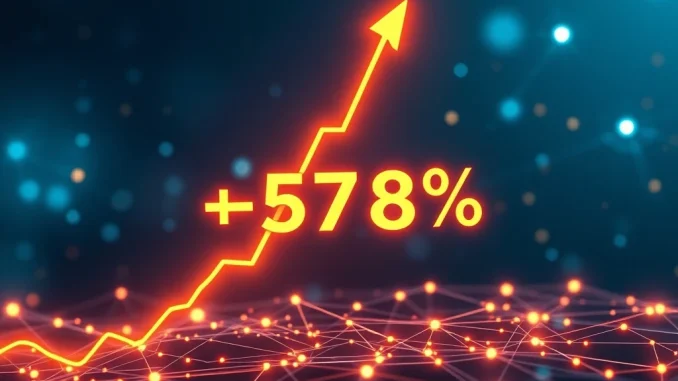
The cryptocurrency market, a realm renowned for its dramatic shifts and rapid evolutions, recently witnessed an astonishing event: SIGN crypto surged by an incredible 578.22% in just 24 hours. This monumental leap has captivated traders and analysts alike, prompting a deep dive into the underlying factors fueling such explosive growth. As of July 27, 2025, SIGN reached $0.08329, marking a significant moment in its volatile history. This sharp rise isn’t merely a fleeting pump; it’s a direct consequence of a series of strategic developments within its expanding ecosystem.
What’s Fueling the Astounding SIGN Price Surge?
The recent dramatic increase in SIGN price is primarily attributed to a confluence of strategic initiatives and significant technological advancements. A major catalyst was the announcement of a new partnership with a prominent blockchain infrastructure provider. This collaboration is poised to be a game-changer, aiming to substantially enhance the scalability and security of the SIGN network. Such improvements are critical for attracting institutional interest and fostering broader adoption, laying a solid foundation for sustainable growth.
The partnership, formally unveiled earlier this month, involves the integration of cutting-edge consensus mechanisms and robust data validation protocols. These technical upgrades are designed to address some of the most pressing challenges in the blockchain space: reducing transaction times and significantly lowering energy consumption. Developers have outlined a two-phase implementation plan, with the initial phase slated for completion by the end of the third quarter. This phased approach allows for meticulous testing and seamless integration, minimizing potential disruptions.
Key benefits expected from this infrastructure boost include:
- Enhanced Transaction Throughput: Faster processing of transactions, leading to a smoother user experience.
- Improved Network Security: Advanced protocols bolster the network’s resilience against attacks and ensure data integrity.
- Reduced Operational Costs: Lower energy consumption translates to more efficient and environmentally friendly operations.
- Scalability for Mass Adoption: The ability to handle a larger volume of users and transactions, paving the way for wider use cases.
How Are Strategic Blockchain Partnerships Driving Growth?
The power of a well-chosen blockchain partnership cannot be overstated in the crypto world. For SIGN, this collaboration extends beyond mere technical integration; it signifies a strategic alignment with entities that can provide the backbone for its ambitious expansion plans. By integrating with a major blockchain infrastructure provider, SIGN is essentially leveraging external expertise and resources to fortify its core technology. This not only enhances the network’s technical capabilities but also boosts its credibility within the wider blockchain community and among potential institutional investors.
The partnership’s focus on advanced consensus mechanisms (like potentially more efficient Proof-of-Stake variations or sharding solutions) and sophisticated data validation protocols (such as zero-knowledge proofs or oracle integrations) indicates a commitment to future-proofing the SIGN ecosystem. These technologies are vital for ensuring the network remains competitive, efficient, and secure as the blockchain landscape evolves. Such foundational improvements are often quiet drivers of long-term value, even if they don’t always grab immediate headlines like price surges do.
Expanding Token Utility: Beyond the Basics of SIGN Crypto
Beyond infrastructure, the expansion of token utility has been a significant contributor to the recent positive momentum for SIGN crypto. A major decentralized finance (DeFi) platform recently announced its support for SIGN as a collateral asset. This is a crucial development because it enables users to stake their SIGN tokens to generate yield, thereby increasing demand and providing a compelling incentive for holding the asset.
The integration into a prominent DeFi ecosystem means SIGN is no longer just a token tied to its original smart contract platform. It has diversified its use cases, becoming a valuable component in the broader DeFi landscape. This move introduces SIGN to a wider audience of DeFi enthusiasts and investors, potentially increasing its liquidity and trading volume. As more platforms recognize and integrate SIGN, its utility is expected to grow further, cementing its role as a versatile digital asset.
In parallel with utility expansion, the SIGN development team has also introduced a new governance model. This decentralized governance framework empowers token holders to propose and vote on protocol changes, fostering greater community participation and transparency. Tested successfully in a closed beta, this model has now been rolled out to the mainnet, reflecting a commitment to decentralization—a core tenet of the blockchain ethos. This enhanced governance structure is seen as critical for the long-term sustainability and adaptability of the SIGN project.
Is the SIGN Network Poised for Long-Term Success?
The health and vibrancy of the SIGN network are evident in its burgeoning developer activity and robust security measures. Over the past month alone, more than 150 new smart contracts have been deployed on the network. These contracts span a diverse range of applications, including sophisticated decentralized finance (DeFi) protocols, innovative non-fungible token (NFT) projects, and essential cross-chain bridges. This surge in development is a clear indicator of growing confidence and interest from builders in the SIGN ecosystem.
To further fuel this innovation, the SIGN Foundation launched a new developer grant program. This initiative provides crucial funding and support for projects that actively contribute to the network’s growth and foster innovation. Such programs are vital for attracting top talent and ensuring a continuous stream of new applications that add value to the ecosystem.
Community engagement has also seen a notable uptick, with the number of active wallet addresses increasing by over 400% in the past month. This surge in active users signals growing adoption and organic interest from the retail community. Simultaneously, institutional interest appears to be on the rise, with several major crypto funds reportedly conducting due diligence on the project. While no formal investments have been disclosed, this heightened scrutiny from large-scale investors suggests that SIGN may be attracting a broader range of participants beyond individual retail traders.
Navigating Volatility: A Critical Consideration for SIGN Investors
While the recent surge in SIGN price is undeniably impressive, it’s crucial for investors to approach digital assets with a clear understanding of their inherent volatility. The cryptocurrency market is known for its rapid and often unpredictable price swings, and SIGN is no exception. The original data highlighted a significant 238.07% drop over the past seven days, occurring prior to this 24-hour surge. This serves as a powerful reminder that even assets experiencing massive gains can also face substantial pullbacks in short periods.
Factors contributing to crypto volatility include:
- Market Sentiment: News, social media trends, and overall market mood can trigger swift price movements.
- Liquidity: Smaller market cap assets can be more susceptible to large price swings due to lower liquidity.
- Regulatory News: Announcements or changes in regulations can significantly impact investor confidence.
- Macroeconomic Factors: Broader economic conditions can influence investment in risk assets like cryptocurrencies.
Investors should conduct thorough due diligence, understand the project’s fundamentals, and never invest more than they can afford to lose. Diversification and a long-term perspective can help mitigate some of the risks associated with volatile assets like SIGN.
Looking Ahead: The Future Trajectory of SIGN
As SIGN moves into its next phase of development, the focus will remain squarely on execution, adoption, and the creation of long-term value for token holders. Analysts project that the continued integration of new infrastructure, coupled with the ongoing expansion of token use cases, could further drive demand for SIGN. The success of the two-phase implementation plan for infrastructure upgrades and the sustained growth in developer activity will be key indicators to watch.
The commitment to decentralized governance and community engagement also bodes well for the project’s resilience and adaptability. If SIGN can maintain its momentum in attracting both retail users and institutional interest, while consistently delivering on its technological roadmap, it stands a strong chance of solidifying its position in the competitive digital asset landscape. However, as always in the crypto market, vigilance and informed decision-making remain paramount.
Frequently Asked Questions (FAQs)
Q1: What is SIGN crypto?
A1: SIGN is a digital asset that operates within its own blockchain ecosystem. While the specific nature of its original smart contract platform isn’t detailed, it functions as a utility token within its network, supporting various applications like DeFi and NFTs, and recently gained significant market attention due to its price surge.
Q2: What caused the recent +578.22% surge in SIGN’s price?
A2: The dramatic price surge was primarily driven by the announcement of a strategic partnership with a major blockchain infrastructure provider, significant protocol upgrades enhancing scalability and security, the expansion of SIGN’s token utility (including support as collateral on a major DeFi platform), and a surge in developer activity and community engagement.
Q3: What are the key features and developments of the SIGN network?
A3: Key developments include the integration of advanced consensus mechanisms and data validation protocols for improved scalability and security, a new decentralized governance model for token holders, support for SIGN as a collateral asset on a major DeFi platform, and a vibrant developer ecosystem with over 150 new smart contracts deployed recently, supported by a developer grant program.
Q4: Is SIGN a volatile investment?
A4: Yes, like many cryptocurrencies, SIGN has demonstrated significant volatility. While it experienced a massive 24-hour surge, the article also notes a substantial 238.07% drop over the preceding seven days, highlighting its susceptibility to rapid price fluctuations. Investors should exercise caution and conduct thorough research.
Q5: How does the new governance model benefit SIGN token holders?
A5: The new decentralized governance model allows SIGN token holders to actively participate in the evolution of the protocol. They can propose and vote on various protocol changes, increasing transparency and ensuring that the project’s direction aligns with the community’s interests, which is crucial for long-term sustainability.
Q6: What are the future prospects for SIGN?
A6: Analysts suggest that continued integration of new infrastructure and the expansion of token use cases could further drive demand for SIGN. The project’s success will depend on its execution of planned developments, continued adoption by users and developers, and its ability to maintain community and institutional interest, all while navigating the inherent volatility of the crypto market.