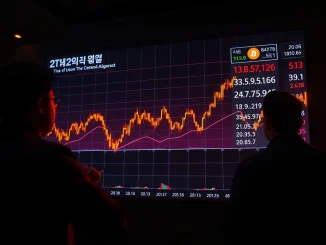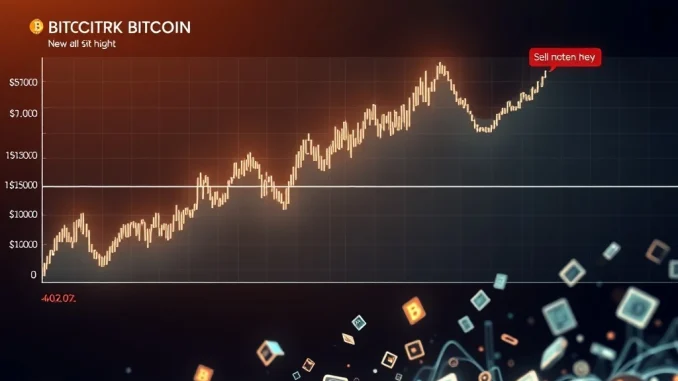
The cryptocurrency world is buzzing! Bitcoin has once again defied expectations, surging to a new all-time high (ATH). For many, this milestone would typically trigger a wave of profit-taking, leading to significant **Bitcoin selling pressure**. However, a groundbreaking analysis from the renowned crypto analytics firm CryptoQuant reveals a different story: this time, the market is exhibiting an unprecedented level of resilience, with virtually no significant selling pressure in sight. What does this mean for the future of the world’s leading digital asset?
Understanding the **Bitcoin ATH** Phenomenon: A New Era?
Reaching a new **Bitcoin ATH** isn’t just about a number on a screen; it signifies a monumental achievement, reflecting increased adoption, growing investor confidence, and the digital asset’s maturing status in global finance. Traditionally, when Bitcoin breaks previous records, a psychological barrier is often breached, prompting short-term traders and early investors to cash out their gains. This influx of supply onto exchanges usually creates substantial selling pressure, often leading to a temporary pullback or consolidation.
But this current ATH feels different. Instead of a market bracing for a correction, there’s a palpable sense of underlying strength. This suggests a fundamental shift in market dynamics, moving beyond mere speculative trading towards a more stable, long-term investment horizon.
Why is **Bitcoin Selling Pressure** Absent This Time?
The core of CryptoQuant’s startling revelation lies in the significantly diminished **Bitcoin selling pressure**. Their data points to a dramatic reduction in the amount of BTC flowing onto exchanges, which is the primary indicator of potential sell-offs. Here’s why this current cycle appears to be breaking the mold:
- Hodler Conviction: Long-term holders, often referred to as ‘hodlers,’ are showing unwavering conviction. Instead of liquidating their assets, they are accumulating or simply holding, confident in Bitcoin’s future appreciation.
- Institutional Demand: The entry of institutional players, particularly through spot Bitcoin ETFs, has introduced a new class of buyers with deep pockets and a long-term investment mandate. These entities are net accumulators, absorbing supply rather than adding to selling pressure.
- Reduced Leverage: The market appears to be less reliant on high leverage, which often exacerbates sell-offs during volatile periods. A healthier, less leveraged market means fewer forced liquidations.
- Supply Shock Dynamics: With the halving event reducing new Bitcoin supply, combined with increased demand, the fundamental supply-demand dynamics are strongly in favor of price appreciation.
This confluence of factors creates a unique environment where the usual profit-taking behavior is largely absent, paving the way for sustained growth.
The Curious Case of Dwindling **Exchange Inflows**
Perhaps the most compelling piece of evidence from CryptoQuant’s report is the astonishing decline in **exchange inflows**. The analytics firm notes that daily exchange inflows have plummeted to just 18,000 BTC per day. To put this into perspective, this is the lowest level recorded since 2015 – nearly a decade ago! Furthermore, it represents a staggering 78% decrease compared to periods of previous significant price surges, such as when Bitcoin was nearing its prior peak around $69,000 in late 2021, or even hypothetical targets like $100,000 that were anticipated to trigger large sell-offs.
What does such a drastic drop in exchange inflows tell us?
- Investor Reluctance to Sell: It clearly indicates that a vast majority of Bitcoin holders are choosing to keep their assets off exchanges, signaling a strong intention to hold rather than sell.
- OTC Deals: A portion of large transactions might be occurring over-the-counter (OTC), bypassing public exchanges and thus not contributing to exchange inflow data. This is common for institutional trades.
- Self-Custody Preference: More investors are moving their Bitcoin to personal cold storage wallets, reducing the circulating supply on exchanges and minimizing the immediate potential for selling.
This data paints a clear picture: the supply available for immediate sale on exchanges is historically low, creating a scarcity that supports higher prices even at new ATHs.
What Does **CryptoQuant Analysis** Reveal About Investor Behavior?
The in-depth **CryptoQuant analysis** provides invaluable insights into the evolving psychology of Bitcoin investors. It suggests a significant shift from the retail-driven, highly speculative cycles of the past to a more mature, institutionally-influenced market. The current behavior reflects:
| Indicator | Current Trend | Implication |
|---|---|---|
| Exchange Inflows | Lowest since 2015 | Strong HODL sentiment, low immediate selling pressure |
| Long-Term Holder Supply | Increasing/Stable | Supply moving to illiquid hands, reduced future selling |
| Derivatives Funding Rates | More balanced than previous peaks | Less speculative excess, healthier market structure |
This shift indicates that investors are not just buying for quick flips but are increasingly viewing Bitcoin as a long-term store of value, akin to digital gold. This deeper conviction provides a robust foundation for the current rally.
Navigating the Future: What’s Next for **Bitcoin Price**?
Given these unprecedented market dynamics, what can we expect for the **Bitcoin price** moving forward? While no one can predict the future with certainty, the absence of significant selling pressure at a new ATH suggests several possibilities:
- Sustained Uptrend: With limited supply entering exchanges, Bitcoin could continue its upward trajectory, potentially reaching new milestones without major pullbacks.
- Consolidation at Higher Levels: Instead of sharp corrections, we might see periods of consolidation where Bitcoin trades sideways at elevated price levels, allowing the market to absorb gains before the next leg up.
- Increased Volatility from External Factors: While internal selling pressure is low, external factors like macroeconomic news, regulatory changes, or unexpected global events could still introduce volatility.
- The ‘Supply Shock’ Narrative Intensifies: As more Bitcoin is locked away in long-term holdings and ETF vaults, the available supply for trading diminishes, potentially leading to sharper price increases when demand spikes.
For investors, this unique market environment underscores the importance of a long-term perspective. While short-term fluctuations are always possible, the underlying data suggests a strong foundation for continued growth. Diversification and risk management remain crucial, but the current signals are undeniably bullish for Bitcoin’s future trajectory.
Conclusion: A Paradigm Shift in Bitcoin’s Journey
Bitcoin’s ascent to a new all-time high, coupled with the surprising absence of selling pressure as highlighted by CryptoQuant, marks a significant paradigm shift in its market behavior. The drastically low exchange inflows, reminiscent of early adoption days, signal a maturing asset increasingly held by conviction-driven investors and institutions. This resilience suggests Bitcoin is moving beyond its volatile speculative phase into a more stable, recognized store of value. While vigilance is always warranted in crypto markets, the current indicators paint a compelling picture of an asset poised for continued long-term growth, cementing its place in the global financial landscape.
Frequently Asked Questions (FAQs)
Q1: What does ‘Bitcoin ATH’ mean?
A1: ATH stands for ‘All-Time High,’ meaning Bitcoin has reached the highest price point it has ever achieved since its inception.
Q2: Why is the absence of selling pressure significant at a new ATH?
A2: Typically, a new ATH triggers profit-taking, increasing selling pressure. Its absence suggests strong holding conviction among investors and institutions, indicating a robust underlying demand and limited immediate supply for sale.
Q3: What are ‘exchange inflows’ and why are they important?
A3: Exchange inflows refer to the amount of Bitcoin being sent to cryptocurrency exchanges. High inflows can indicate that investors intend to sell, while low inflows suggest that holders are keeping their Bitcoin off exchanges, signaling a reluctance to sell.
Q4: How does CryptoQuant’s analysis impact the market outlook?
A4: CryptoQuant’s analysis, showing historically low exchange inflows and minimal selling pressure, provides a strong bullish signal. It suggests that the current rally is supported by genuine holding sentiment rather than speculative exuberance, potentially leading to more sustained price appreciation.
Q5: Does this mean Bitcoin’s price will only go up from here?
A5: While the current indicators are very bullish, no asset’s price goes up indefinitely. External factors, unforeseen events, or even natural market corrections can still occur. However, the strong underlying fundamentals and investor behavior suggest a solid foundation for long-term growth.