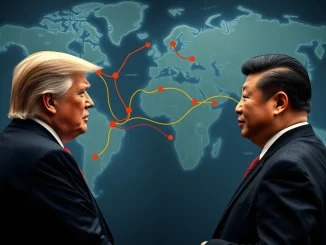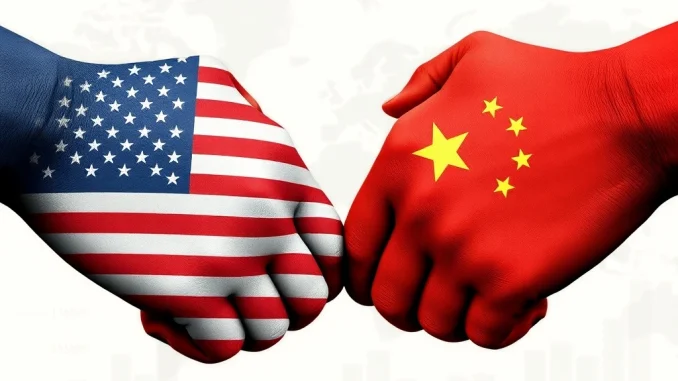
The shadow of escalating **US-China tariffs** has loomed large over global markets for years, causing jitters and uncertainty. Businesses and investors alike have been on edge, bracing for the next wave of trade disruptions. However, a recent announcement offers a much-needed breath of fresh air, as the world’s two largest economies have agreed to extend their tariff truce. What does this mean for the immediate future, and are we truly heading towards a resolution?
Understanding the Crucial US-China Trade Truce Extension
In a move that has temporarily calmed global anxieties, the United States and China have agreed to extend their **trade truce** by 90 days. This critical decision, announced after high-level discussions in Stockholm involving U.S. Treasury Secretary Scott Bessent and Chinese Vice Premier He Lifeng, pushes back the potential imposition of new tariffs on billions of dollars in goods that have been under contention since 2018. The extension, which now runs through late November, was initially set to expire on August 12. This pause follows previous rounds of negotiations held in Geneva and London, underscoring ongoing efforts to manage, if not resolve, persistent trade disputes.
This extension is a tactical maneuver, providing temporary relief to businesses and markets caught in the crossfire of escalating trade tensions. It highlights a shared interest in avoiding immediate economic disruptions, especially amid a broader global economic slowdown. While the agreement offers a moment of respite, it’s crucial to understand that it represents a delay rather than a definitive resolution to the deeper, systemic issues at play.
How Does This Truce Impact Global Market Volatility?
The news of the extended truce has been met with a palpable sense of relief across financial markets, significantly reducing immediate **market volatility**. Both Asian and U.S. equities saw stabilization in response, a clear indication of how deeply investors had braced for renewed tariff escalations. Such escalations would undoubtedly have put immense pressure on export-dependent industries and severely disrupted multinational **supply chains**, which are still recovering from recent global shocks.
The anticipation of new tariffs creates significant uncertainty, forcing companies to re-evaluate their sourcing, production, and distribution strategies. A tariff increase can directly impact the cost of goods, affecting consumer prices and corporate profits. By delaying these potential tariffs, the US and China have bought themselves — and the global economy — time. This breathing room allows businesses to plan with a bit more certainty and avoids a potential immediate downturn that could have ripple effects far beyond trade, touching everything from employment to investment.
Beyond the Truce: Unresolved Core Issues in US-China Tariffs
While the 90-day extension provides a welcome pause, analysts caution that it reflects a tactical maneuver rather than a resolution to deeper, more entrenched disputes. The underlying issues that have fueled the **US-China tariffs** remain largely unresolved. Key among these are:
- Fentanyl Production: U.S. efforts to curb the production and trafficking of fentanyl are a significant sticking point. The U.S. administration ties these efforts to domestic policy priorities and national security.
- Tariffs on Related Chemicals: China, conversely, demands the removal of U.S. tariffs on related chemicals, arguing that these tariffs impede collaborative efforts in combating drug trafficking. Chinese officials have framed these tariffs as obstacles to a more cooperative approach.
- Lack of Transparency: A notable aspect of this truce is the lack of public confirmation from either side, with the White House notably remaining silent. This lack of transparency fuels skepticism about the durability of the pause and suggests that both parties are primarily managing trade tensions rather than genuinely addressing systemic grievances.
These core issues highlight the complex interplay of economic, political, and social factors that define the relationship between the two global powers. Moving beyond a temporary truce will require addressing these fundamental disagreements head-on.
Navigating the Future: What Does This Mean for the Global Economy?
The timing of this agreement is particularly insightful, revealing the significant political and economic pressures shaping these high-stakes negotiations. The U.S. is currently navigating an election year, which complicates the Biden administration’s ability to enact sweeping trade reforms without political backlash. Simultaneously, China’s slowing economy has increased its reliance on stable export markets to maintain growth and employment.
Despite these challenges, neither side has publicly confirmed the truce’s extension, adding a layer of uncertainty to the situation. This cautious approach suggests that while both nations seek to avoid immediate conflict, they are still far from a comprehensive, long-term solution. The focus now shifts to whether negotiators can transition from crisis management to sustained cooperation. A successful resolution would require both sides to move beyond mere tactical concessions and address structural disputes, such as intellectual property protections, digital trade frameworks, and fair competition practices. Failure to do so could easily reignite tensions, forcing the world’s two largest economies into another damaging cycle of retaliatory tariffs with far-reaching consequences for the **global economy**.
Conclusion
The 90-day extension of the US-China tariff truce offers a crucial reprieve, providing much-needed stability to financial markets and temporary relief to businesses navigating complex global **supply chains**. While it successfully averts immediate **market volatility**, it is a temporary solution that underscores the deep-seated issues yet to be resolved between the two economic giants. The coming months will be critical in determining whether this truce marks a genuine step towards de-escalation and sustained cooperation, or merely a temporary pause before renewed conflict. The world will be watching closely as negotiators work to transform a tactical agreement into a durable foundation for future trade relations.
Frequently Asked Questions (FAQs)
1. What is the US-China tariff truce?
The US-China tariff truce is a temporary agreement between the United States and China to halt the imposition of new tariffs on billions of dollars worth of goods. It aims to de-escalate trade tensions and provide a window for further negotiations.
2. How long has the tariff truce been extended?
The tariff truce has been extended by 90 days, pushing the expiration date from August 12 to late November.
3. What are the main reasons for the truce extension?
The extension aims to avert immediate market volatility, provide temporary relief to businesses and global supply chains, and allow both nations to manage trade tensions amid a global economic slowdown and domestic political pressures (e.g., U.S. election year, China’s slowing economy).
4. What unresolved issues remain between the US and China despite the truce?
Core unresolved issues include U.S. efforts to curb fentanyl production, China’s demands to remove tariffs on related chemicals, intellectual property protections, and digital trade frameworks. The lack of public confirmation also highlights underlying distrust.
5. How does this truce affect global supply chains?
The truce offers temporary relief to global supply chains by removing the immediate threat of new tariffs, which could have disrupted logistics, increased costs, and forced companies to rapidly reconfigure their sourcing and production strategies.
6. Why is there skepticism about the truce’s durability?
Skepticism arises because the truce is seen as a tactical pause rather than a resolution of deeper structural disputes. The lack of public confirmation from the White House and the persistent unresolved core issues contribute to doubts about its long-term viability.