The world of cryptocurrency is rarely calm, and recent Bitcoin news today highlights just how quickly market emotions can shift. The Bitcoin Fear & Greed Index has surged to a striking 75, firmly planting itself in the ‘Greed’ zone. This significant climb indicates a pervasive optimism among investors, leading many to anticipate further price surges. But what does this intense bullishness truly mean for the future of Bitcoin, and should investors be preparing for potential turbulence?
Understanding the Bitcoin Fear & Greed Index
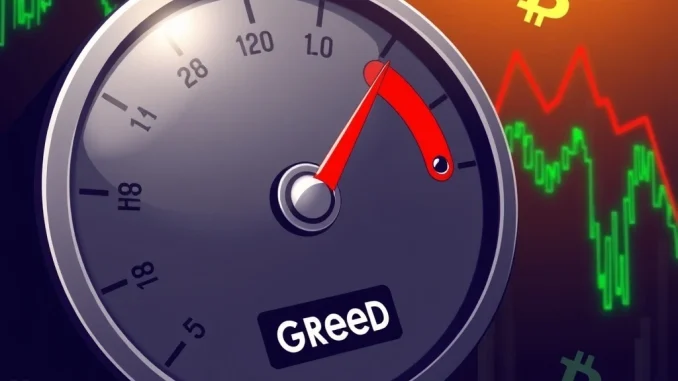
The Bitcoin Fear & Greed Index is a crucial tool for gauging the emotional state of the crypto market. Ranging from 0 (Extreme Fear) to 100 (Extreme Greed), it provides a snapshot of investor sentiment, helping to identify when the market might be overbought or oversold. A score of 75 signifies a strong inclination towards ‘Greed’, reflecting widespread confidence and heightened buying pressure.
- What It Measures: The index aggregates six weighted factors to assess market emotion.
- Key Components: Volatility (25%), market momentum/volume (25%), social media activity (15%), Bitcoin dominance (10%), Google Trends (10%), and surveys (currently paused, normally 15%).
- Current Interpretation: The high score of 75 is a blend of strong upward price momentum, increased trading volumes, and overwhelmingly positive social media chatter.
Is the Current Crypto Market Sentiment a Red Flag?
While optimism can fuel growth, an excessively high crypto market sentiment can also signal impending risks. Historically, scores above 80 have often served as precursors to significant market corrections or even bear markets. At 75, the index isn’t yet in ‘Extreme Greed’, but it certainly suggests a need for heightened vigilance.
When investors become overly confident, they may disregard fundamental analysis, chasing speculative gains. This can lead to inflated asset prices that are not sustainable in the long term, increasing the likelihood of a sharp downturn. The falling Bitcoin dominance, interpreted by the index as a sign of greed, suggests capital is flowing into altcoins, often a characteristic of a frothy market.
Navigating Potential Bitcoin Overvaluation Risks
The current ‘Greed’ level raises questions about potential Bitcoin overvaluation. While Bitcoin’s long-term trajectory remains positive for many, short-term price movements influenced by extreme sentiment can be volatile. Experts from COINOTAG emphasize the critical importance of disciplined risk management during such periods.
Here’s why caution is paramount:
- Excessive Exuberance: High sentiment can lead to impulsive trading, where decisions are driven by hype rather than sound strategy.
- Vulnerability to Shocks: An overvalued market is more susceptible to external shocks, whether they are macroeconomic shifts, regulatory news, or unexpected technological developments.
- Profit-Taking Opportunities: For long-term holders, periods of high greed can present opportune moments to secure gains and rebalance portfolios.
Strategies to Prepare for Market Corrections
Even if a full-blown correction isn’t imminent, smart investors prepare for all scenarios. The current environment, marked by high greed, offers a chance to refine your strategy and mitigate potential losses should market corrections occur. Proactive measures can safeguard your portfolio and position you for future opportunities.
Consider these actionable insights:
- Profit-Taking: Secure some gains by selling a portion of your holdings, especially if you’ve seen significant appreciation.
- Reassess Portfolio Exposure: Evaluate your overall risk level. Are you over-allocated to volatile assets? Diversification can spread risk across different cryptocurrencies or asset classes.
- Dollar-Cost Averaging (DCA): Instead of making large, impulsive purchases, consider investing a fixed amount regularly. This strategy averages out your entry price and reduces the impact of market volatility.
- Avoid Impulsive Trades: Resist the urge to ‘FOMO’ (Fear Of Missing Out) into assets based solely on hype. Stick to your investment plan.
Beyond the Index: A Holistic View of Bitcoin
While the Bitcoin Fear & Greed Index provides valuable insights into market psychology, it’s not a standalone predictive tool. A comprehensive investment approach combines sentiment analysis with technical and fundamental analysis. Factors such as macroeconomic trends, regulatory shifts, and technological advancements continue to play a significant role in Bitcoin’s price trajectory.
For instance, rising volatility, a key component of the index, can indicate both strong momentum and underlying instability. Investors must monitor these broader influences, as they can amplify or counteract the signals from the Fear & Greed Index. The temporary pause in surveys means the current index relies more heavily on other metrics like social media and Bitcoin dominance, emphasizing real-time, data-driven sentiment.
The cryptocurrency market stands at a critical juncture. The prevailing bullish momentum offers exciting growth opportunities, but it also demands a disciplined and measured approach. By balancing enthusiasm with prudence, and by implementing robust risk management strategies, investors can better position themselves to navigate both the exhilarating highs and the inevitable corrections that define the crypto landscape.
Frequently Asked Questions (FAQs)
Q1: What is the Bitcoin Fear & Greed Index?
The Bitcoin Fear & Greed Index is a tool that measures the current sentiment of the cryptocurrency market. It ranges from 0 (Extreme Fear) to 100 (Extreme Greed) and helps investors understand if the market is overly optimistic or pessimistic.
Q2: What does a score of 75 on the index signify?
A score of 75 indicates that the market is in the ‘Greed’ zone. This suggests high investor confidence, strong buying pressure, and a general expectation of further price increases for Bitcoin and other crypto assets.
Q3: Does a high Fear & Greed Index score always lead to a market correction?
Not always, but historically, scores above 80 (Extreme Greed) have often preceded significant market corrections or bear markets. A score of 75 suggests caution is warranted, as it indicates potential Bitcoin overvaluation and increased risk.
Q4: What actions should investors consider when the index shows ‘Greed’?
Investors should consider strategies like profit-taking to secure gains, reassessing portfolio exposure, avoiding impulsive trades driven by hype, and implementing dollar-cost averaging or diversification to mitigate potential downturns.
Q5: How reliable is the Bitcoin Fear & Greed Index as a predictive tool?
The index is not a standalone predictive tool. It offers valuable insights into market sentiment, but its signals should be combined with technical analysis, fundamental analysis, and an awareness of broader macroeconomic and regulatory trends for informed decision-making.