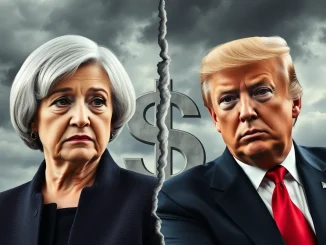
The financial world is buzzing! A monumental US-EU trade deal has just reshaped transatlantic economic ties, and its ripple effect is already being felt across markets, most notably sparking an incredible crypto rally. For cryptocurrency enthusiasts, this news is particularly electrifying, as Bitcoin and other digital assets have reacted with unprecedented gains. What does this landmark agreement mean for your portfolio and the future of global commerce?
What is the Landmark US-EU Trade Deal?
On July 24, 2025, a pivotal US-EU trade deal was announced, marking a significant step back from potential trade wars. This agreement dramatically cuts tariffs on most EU exports to the U.S. to a mere 15%, a substantial reduction from the previously threatened 30%. But it’s not just about tariffs; the pact is a comprehensive package designed to rebalance economic relations and foster investment. Key components of this historic agreement include:
- Tariff Reductions: A reciprocal adjustment of tariffs, ensuring 0% tariffs on U.S. goods entering EU markets, while EU exports to the U.S. face a reduced 15% tariff.
- Massive Investment Pledges: The European Union has committed to a staggering $600 billion investment in U.S. infrastructure and industries.
- Energy and Military Purchases: The EU also pledged to purchase $750 billion in American energy and military equipment, a strategic move aimed at bolstering transatlantic security and economic ties.
This deal, hailed by leaders like President Donald Trump and European Commission President Ursula von der Leyen, aims to bring stability and predictability to global trade, addressing long-standing tensions over trade deficits.
How Did This Deal Ignite a Crypto Rally?
The immediate aftermath of the US-EU trade deal announcement saw a remarkable surge across the cryptocurrency market, triggering a significant crypto rally. Bitcoin, the flagship cryptocurrency, quickly neared the $120,000 mark, while BNB also reached new all-time highs. But why did a trade agreement between two major economic blocs have such a profound impact on digital assets?
- Reduced Macroeconomic Risks: The deal significantly lowers the risk of a global tariff war, which would have destabilized economies and deterred investment. With this uncertainty removed, investors gain confidence.
- Increased Investor Optimism: Stabilized global trade dynamics foster a more optimistic investment climate. When traditional markets show signs of health and predictability, risk appetite often increases, benefiting assets like cryptocurrencies.
- Flow of Capital: The sheer scale of the investment pledges ($600 billion from the EU into U.S. infrastructure) suggests a massive flow of capital, which can indirectly or directly find its way into high-growth assets, including crypto.
Analysts quickly pointed to the reduced macroeconomic risks and a general wave of investor optimism as the primary drivers behind this strong weekend rally in the crypto space.
What’s the Latest on Bitcoin Price and Market Sentiment?
Following the US-EU trade deal, the Bitcoin price experienced a dramatic upward movement, nearing $120,000 and solidifying its position as a leading indicator of market sentiment. This surge wasn’t isolated; it pulled the broader crypto market higher, demonstrating Bitcoin’s continued influence.
The sentiment among crypto investors has shifted from cautious to overtly bullish. The removal of significant trade uncertainties provides a clearer runway for growth, encouraging both retail and institutional investors to re-enter or increase their positions in digital assets. This relief rally is also reflected in traditional markets, with U.S. stock futures rising and European equities anticipating a positive surge, particularly in sectors like automotive and luxury goods, which are highly sensitive to trade relations.
Beyond Crypto: The Broader Economic Impact
While the crypto rally grabbed headlines, the US-EU trade deal promises a far-reaching economic impact across various sectors. The agreement is poised to reshape transatlantic economic ties, with significant implications for job creation, industrial growth, and market stability.
- Job Creation: President Trump emphasized the deal’s potential to create numerous jobs in the U.S., driven by the $600 billion EU investment in infrastructure and industries.
- Reduced Trade Deficit: The agreement aims to address the EU’s annual $235 billion trade surplus with the U.S., promoting a more balanced trade relationship.
- Sector-Specific Benefits: European industries, particularly automotive and luxury goods manufacturers, are expected to see a significant relief rally due to avoided high tariffs and improved market access.
- Energy Security: The EU’s commitment to purchasing $750 billion in American energy contributes to its own energy security while providing a substantial boost to the U.S. energy sector.
This strategic rebalancing of economic ties is expected to foster long-term growth and stability, moving beyond the immediate market reactions.
Navigating Challenges for Global Trade Stability
While the US-EU trade deal has been largely celebrated for promoting global trade stability, analysts highlight that its long-term success hinges on effective implementation and ongoing diplomatic cooperation. Despite the immediate benefits of reduced tariff volatility, some challenges and risks remain:
- Implementation Details: The absence of detailed timelines or explicit enforcement mechanisms for the EU’s energy and investment pledges raises questions about their practical execution.
- Political Hurdles: Finalizing the agreement requires approvals from individual EU member states, which could introduce political complexities and delays.
- Sustained Cooperation: The pact’s sustainability depends on continued diplomatic efforts to navigate potential disagreements and ensure compliance with its terms.
Despite these considerations, the agreement marks a pivotal moment, signaling a commitment to de-escalation and cooperation in international trade. Its symbolic and practical implications point towards a future of more predictable and stable trade relations, benefiting businesses and consumers alike.
The landmark US-EU trade deal has undeniably sent positive shockwaves through the global economy, with the crypto rally serving as a vibrant testament to renewed investor confidence. By averting a potential tariff war and fostering massive investments, this agreement has not only stabilized transatlantic trade but also paved the way for significant economic growth. While challenges in implementation and ongoing cooperation remain, the immediate impact—especially the soaring Bitcoin price—underscores the profound interconnectedness of geopolitical stability and market dynamics. This deal stands as a powerful reminder that global collaboration can unlock unprecedented opportunities for prosperity across all financial sectors, including the burgeoning world of digital assets.
Frequently Asked Questions (FAQs)
Q1: What are the key terms of the new US-EU trade deal?
A1: The deal includes a reduction of tariffs to 15% on most EU exports to the U.S., a commitment from the EU to invest $600 billion in U.S. infrastructure, and a pledge to purchase $750 billion in American energy and military equipment. Reciprocal 0% tariffs apply to U.S. goods entering EU markets.
Q2: Why did the cryptocurrency market react so strongly to this trade agreement?
A2: The crypto rally was primarily driven by reduced macroeconomic risks and increased investor optimism. Averted trade wars and stable global trade dynamics create a more predictable investment environment, encouraging capital flow into higher-risk, higher-reward assets like cryptocurrencies.
Q3: What was the immediate impact on Bitcoin’s price?
A3: Following the announcement, the Bitcoin price surged significantly, nearing $120,000. This upward movement was a key indicator of the positive market sentiment generated by the trade deal.
Q4: How does this deal impact the broader global economy?
A4: Beyond crypto, the deal is expected to foster global trade stability, reduce the U.S.-EU trade deficit, create jobs through EU investments in U.S. industries, and benefit sectors like automotive and luxury goods by avoiding higher tariffs. It signals a strategic rebalancing of transatlantic economic ties.
Q5: Are there any unaddressed risks or challenges with the deal?
A5: Yes, analysts note the absence of detailed timelines or enforcement mechanisms for the EU’s investment and energy pledges. Additionally, the deal requires approvals from individual EU member states, posing potential political hurdles for full implementation.