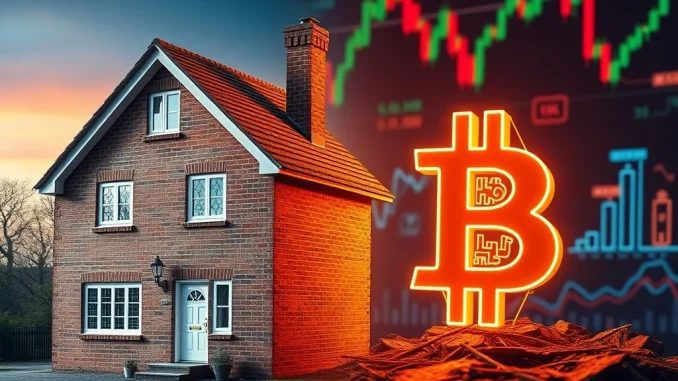
For generations, the mantra has been clear: ‘Buy land, they’re not making any more of it.’ Real estate has long stood as the bedrock of wealth building, a tangible asset offering stability and a hedge against inflation. But what happens when a new, intangible asset emerges, promising even greater returns, unparalleled liquidity, and a truly global reach? We’re witnessing a seismic shift in investment paradigms, where a growing chorus of investors is challenging the long-held supremacy of property in favor of a revolutionary alternative: Bitcoin investment. This isn’t just about a volatile digital coin; it’s about a fundamental re-evaluation of how we store value, grow wealth, and prepare for the financial future.
Why Bitcoin Investment is Captivating a New Generation
The allure of Bitcoin investment extends far beyond its impressive price surges. It represents a departure from traditional financial systems, offering a decentralized, transparent, and accessible avenue for wealth creation. But what exactly makes it so appealing, especially when compared to the tangible comfort of bricks and mortar?
Volatility: Risk or Opportunity?
Bitcoin’s price volatility is often cited as its greatest weakness. Wild swings can be unnerving, but for a new generation of investors, this volatility is also seen as a massive opportunity. Unlike real estate, which appreciates slowly over decades, Bitcoin has the potential for significant gains in much shorter timeframes. This rapid appreciation, while not guaranteed, offers a compelling narrative for those looking to accelerate their wealth accumulation.
Accessibility and Liquidity: Anytime, Anywhere
One of Bitcoin’s most compelling advantages is its unparalleled accessibility and liquidity. You can buy or sell Bitcoin 24/7, from anywhere in the world, with relatively low transaction costs compared to real estate. Imagine trying to sell a house in a matter of minutes, or buying a fraction of a commercial building. With Bitcoin, fractional ownership is inherent, and transactions are near-instantaneous. This ease of entry and exit makes it a highly attractive asset for modern investors who value flexibility.
Global and Permissionless Nature
Bitcoin operates on a global, permissionless network. There are no borders, no banks dictating terms, and no central authority to freeze your assets. This makes it an ideal store of value and medium of exchange in an increasingly interconnected world, especially for individuals in regions with unstable economies or restrictive financial systems. Real estate, by contrast, is inherently localized, subject to national laws, and often involves complex legal processes.
Real Estate vs Bitcoin: A Closer Look at the Contenders
To truly understand the shift, we must conduct a head-to-head comparison. While both asset classes have their merits, their fundamental characteristics cater to different investment philosophies and objectives. Let’s dissect the key differences when considering real estate vs Bitcoin.
Here’s a simplified comparison to highlight the contrasts:
| Feature | Real Estate | Bitcoin |
|---|---|---|
| Tangibility | Physical, visible asset | Digital, intangible asset |
| Liquidity | Low (months to sell) | High (minutes to sell) |
| Maintenance/Costs | Property taxes, repairs, insurance, utilities | Minimal (transaction fees) |
| Accessibility | High barrier to entry (large capital, mortgages) | Low barrier to entry (can buy fractions) |
| Global Reach | Localized, subject to national laws | Global, borderless, permissionless |
| Inflation Hedge | Historically strong (but slow) | Strong (due to fixed supply), but newer |
| Volatility | Low | High |
| Diversification | Limited, often concentrated | Excellent for portfolio diversification |
Inflation Hedge: Which Offers Better Protection?
Both real estate and Bitcoin are touted as inflation hedges. Real estate tends to appreciate with inflation as construction costs and demand rise. However, this appreciation is often slow and tied to local economic conditions. Bitcoin, with its fixed supply of 21 million coins, offers a unique form of scarcity. As fiat currencies are continually devalued through quantitative easing, Bitcoin’s limited supply makes it an increasingly attractive store of value, potentially offering a more potent hedge against long-term currency debasement.
The Burden of Ownership: Taxes, Maintenance, and More
Owning real estate comes with a significant burden: property taxes, maintenance costs, insurance, and the constant threat of unexpected repairs. These ongoing expenses can eat into profits and require active management. Bitcoin, on the other hand, requires no physical upkeep, no property taxes, and minimal ongoing costs beyond transaction fees. This ‘set it and forget it’ aspect appeals greatly to investors seeking passive growth without the associated headaches of physical property management.
Unlocking Crypto Wealth: Beyond Just Price Action
The concept of crypto wealth extends far beyond simply buying Bitcoin and watching its price. The broader cryptocurrency ecosystem offers numerous avenues for growth and utility that traditional real estate cannot match. It’s about participating in a new financial frontier.
- Decentralized Finance (DeFi): Bitcoin can be used as collateral in DeFi protocols to earn yield, borrow, or lend, creating active income streams that are impossible with illiquid real estate.
- NFTs and Digital Property: While not directly Bitcoin, the rise of NFTs (Non-Fungible Tokens) hints at a future where digital ownership, including virtual land, could become a new form of ‘real estate’ with its own unique market dynamics.
- Staking and Yield Farming: Though primarily associated with other cryptocurrencies, the principles of earning passive income through digital assets are a core part of the crypto ecosystem, offering new ways to grow your holdings.
Financial Sovereignty: Your Keys, Your Money
One of the most profound aspects of crypto wealth is the emphasis on financial sovereignty. With Bitcoin, you can hold your own keys, meaning you have complete control over your assets without relying on banks or third-party custodians. This level of autonomy is unprecedented in traditional finance and stands in stark contrast to real estate, where ownership is always subject to government registries, property laws, and potential eminent domain.
Navigating Digital Assets: Risks and Rewards
While the promise of digital assets is immense, it’s crucial to approach this new frontier with a clear understanding of the inherent risks. No investment is without its downsides, and Bitcoin is no exception. Responsible investing means weighing both the potential rewards and the challenges.
Regulatory Landscape: The Evolving Framework
The regulatory environment for digital assets is still evolving. Governments worldwide are grappling with how to classify, tax, and oversee cryptocurrencies. Changes in regulations can significantly impact Bitcoin’s price and usability. While this uncertainty presents a risk, it also suggests that as clarity emerges, institutional adoption could accelerate, potentially stabilizing the market.
Security Concerns: Protecting Your Holdings
Unlike a physical house, Bitcoin exists only digitally. This means it’s susceptible to cyber threats, hacking, and phishing scams if not stored securely. Education on proper wallet management, cold storage solutions, and robust security practices is paramount for any Bitcoin investor. The responsibility for security largely rests with the individual, a stark contrast to real estate where physical security is often handled by external services or built-in infrastructure.
Long-term Vision: Beyond Short-term Gains
For those considering Bitcoin as a long-term store of value, it’s important to look beyond daily price fluctuations. The underlying technology, the growing network effect, and increasing institutional interest paint a picture of a transformative asset. While short-term gains are attractive, the true potential lies in its role as a foundational layer for a new global financial system.
The Future of Investment: Is Bitcoin Leading the Charge?
As we look towards the future of investment, it’s becoming increasingly clear that digital assets, led by Bitcoin, will play a significant role. The traditional investment landscape is undergoing a profound transformation, and early adopters of Bitcoin are positioning themselves at the forefront of this change.
Institutional Adoption: A Growing Trend
Once dismissed as a niche interest, Bitcoin is now firmly on the radar of major financial institutions. Investment banks, hedge funds, and even public companies are adding Bitcoin to their balance sheets, offering crypto services, and launching Bitcoin ETFs. This institutional embrace lends significant legitimacy to Bitcoin as an asset class and is a strong indicator of its long-term viability.
Technological Advancement: The Evolution Continues
The Bitcoin network itself is constantly evolving. Innovations like the Lightning Network are improving scalability and reducing transaction costs, making Bitcoin more practical for everyday use. As the technology matures and becomes more user-friendly, its appeal will only broaden, further solidifying its position as a leading digital asset.
Portfolio Diversification: A New Frontier
For savvy investors, Bitcoin offers an excellent opportunity for portfolio diversification. Its low correlation with traditional assets like stocks and bonds can help reduce overall portfolio risk while offering exposure to a high-growth sector. Adding Bitcoin to a diversified portfolio can potentially enhance returns and provide a hedge against macroeconomic uncertainties.
Actionable Insights for the Modern Investor
So, what does this mean for you? If you’re considering a shift in your investment strategy, here are some actionable insights:
- Start Small and Learn: Don’t go all-in. Begin with a small amount you’re comfortable losing and educate yourself thoroughly about Bitcoin and the broader crypto market.
- Prioritize Security: Learn about different wallet types (hot vs. cold) and best practices for securing your digital assets.
- Think Long-Term: Bitcoin is not a get-rich-quick scheme. Adopt a long-term perspective, focusing on its potential as a store of value and technological innovation.
- Diversify Wisely: While Bitcoin offers immense potential, it’s still a volatile asset. Maintain a diversified portfolio that includes a mix of traditional and digital assets.
- Stay Informed: The crypto space evolves rapidly. Follow reputable news sources, engage with communities, and continuously update your knowledge.
The investment landscape is changing, and while real estate will always hold a place in portfolios, the rise of Bitcoin presents a compelling alternative for those seeking exponential growth, unparalleled liquidity, and a stake in the future of finance. It’s time to re-evaluate traditional wisdom and consider where true wealth creation might truly lie in the digital age.
Frequently Asked Questions (FAQs)
Is Bitcoin a better investment than real estate?
Whether Bitcoin is a ‘better’ investment than real estate depends on individual financial goals, risk tolerance, and investment horizon. Bitcoin offers higher liquidity, lower transaction costs, and potentially faster appreciation, but also comes with higher volatility and security responsibilities. Real estate offers stability, passive income through rent, and a tangible asset, but has high entry barriers, low liquidity, and ongoing maintenance costs.
Can Bitcoin really be a hedge against inflation like real estate?
Yes, many argue Bitcoin can be a strong inflation hedge, perhaps even more effective than real estate in certain contexts. Its fixed supply of 21 million coins creates scarcity, which can drive up its value as fiat currencies are debased. Real estate also hedges against inflation, but its appreciation is typically slower and tied to local market conditions and construction costs.
What are the main risks of investing in Bitcoin compared to real estate?
The main risks of Bitcoin include high price volatility, regulatory uncertainty, and security risks (e.g., hacking, loss of private keys). Real estate risks include market downturns, high illiquidity (difficulty selling quickly), high transaction costs, property taxes, maintenance expenses, and tenant issues for rental properties.
How accessible is Bitcoin investment for the average person?
Bitcoin investment is highly accessible. You can buy fractions of a Bitcoin with as little as a few dollars through various cryptocurrency exchanges. This contrasts sharply with real estate, which typically requires substantial capital for a down payment or full purchase, often involving mortgages and significant legal fees.
Should I sell my real estate to buy Bitcoin?
Selling all your real estate to buy Bitcoin is a high-risk strategy and generally not recommended. A balanced investment portfolio often includes diversification across various asset classes, including both traditional assets like real estate and emerging assets like Bitcoin. It’s advisable to consult with a financial advisor to assess your personal financial situation and risk tolerance before making significant investment decisions.
How do I secure my Bitcoin investment?
Securing your Bitcoin investment involves choosing the right storage method. Options include ‘hot wallets’ (online exchanges or software wallets for smaller amounts) and ‘cold wallets’ (hardware wallets or paper wallets for larger, long-term holdings). Cold wallets are generally considered more secure as they keep your private keys offline, protecting them from cyber threats. Always use strong, unique passwords and enable two-factor authentication (2FA) on exchanges.