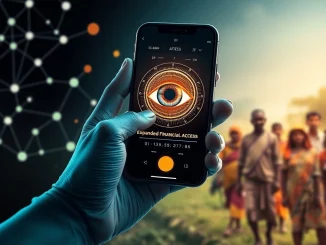
The world of decentralized finance (DeFi) is constantly pushing boundaries, seeking to redefine traditional financial systems. A recent initiative by Divine Research has stirred significant discussion, introducing a novel approach to providing crypto loans to underserved populations. This bold move leverages Sam Altman’s World ID, a biometric verification tool utilizing iris scans, to bypass conventional credit checks and collateral requirements. While promising unparalleled financial access, this model comes with a notable 40% default rate, raising critical questions about sustainability and the future of unbacked lending in the digital age.
The Bold Bet: Divine Research and Unbacked Loans
Divine Research has embarked on an ambitious journey, aiming to democratize financial services through unsecured crypto lending. Since late 2024, the firm has issued approximately 30,000 USDC stablecoin loans, primarily as microloans under $1,000, to individuals in markets often excluded by traditional banking systems. This initiative represents a significant departure from the collateral-heavy models prevalent in most DeFi lending protocols.
The core philosophy behind these unbacked loans is to extend financial lifelines where conventional avenues are non-existent or inaccessible. By removing the need for collateral, Divine Research seeks to empower individuals with limited assets or credit histories to secure funds for various needs, from small business ventures to personal emergencies. The interest rates, ranging between 20% and 30%, are reflective of the inherent high-risk profile associated with lending to this demographic, aiming to offset potential losses from non-repayment.
This approach, while innovative, directly challenges established financial norms that prioritize stringent risk mitigation. It highlights a tension between the desire for broad financial inclusion and the practical realities of lending to populations with inadequate repayment infrastructure or limited financial literacy. The success or failure of such models could significantly influence how future decentralized financial services are designed and implemented.
How World ID Transforms Biometric Verification in Lending
Central to Divine Research’s model is the integration of World ID, a biometric verification system developed by Sam Altman’s Worldcoin project. Instead of traditional Know Your Customer (KYC) procedures that often require extensive documentation and can be a barrier for the unbanked, World ID authenticates identities through iris scans. This innovative method aims to provide a unique, verifiable digital identity for every individual, ensuring that each borrower is a real person and preventing identity fraud and Sybil attacks—common vulnerabilities in decentralized environments.
Here’s how World ID’s biometric verification mechanism impacts the lending landscape:
- Simplified Onboarding: Borrowers can access loans rapidly without the need for traditional credit checks or extensive paperwork, significantly reducing friction in the application process.
- Enhanced Security: Iris scans offer a robust form of identity verification, making it extremely difficult for malicious actors to create multiple fake identities to exploit the system.
- Global Accessibility: By providing a universal digital identity, World ID facilitates financial access for millions worldwide who lack formal identification or banking infrastructure.
- Data Privacy Considerations: While offering security benefits, the use of biometric data raises important questions about privacy and data storage, which are ongoing debates within the Worldcoin ecosystem.
The reliance on World ID demonstrates a belief that secure, verifiable digital identity can unlock new paradigms in financial services, especially for those in emerging markets. It posits that a unique human identity, rather than traditional credit scores, can be the primary basis for trust in lending.
Navigating the High-Risk Waters: Default Rates in Decentralized Lending
By July 2025, Divine Research reported a significant 40% default rate on its decentralized lending initiative. This figure underscores the inherent challenges of providing unsecured loans to a high-risk demographic, even with advanced biometric verification in place. While World ID effectively mitigates identity fraud, it does not, by itself, guarantee repayment capacity or willingness.
Several factors likely contribute to this high default rate:
- Lack of Credit History: Borrowers in underserved markets often lack formal credit histories, making it difficult to assess their repayment reliability through conventional means.
- Economic Volatility: Many target regions experience economic instability, natural disasters, or political unrest, which can severely impact borrowers’ ability to repay loans.
- High Interest Rates: While necessary to offset risk, interest rates of 20-30% can become a heavy burden, particularly for microloan recipients, potentially leading to a debt spiral if not managed carefully.
- Limited Repayment Infrastructure: The absence of robust legal frameworks or efficient debt collection mechanisms in some regions can complicate recovery efforts for unbacked loans.
Despite these challenges, Divine Research’s model suggests that the high-interest rates (reportedly exceeding 40% in some cases) are designed to ensure profitability even with a substantial portion of loans defaulting. This controversial approach highlights a crucial dilemma in financial inclusion: how to provide access to credit while maintaining a sustainable business model without overburdening vulnerable populations.
The experience of Divine Research serves as a critical case study for the evolving DeFi landscape. It illustrates that while technological innovation can solve identity verification problems, the fundamental economic realities of lending, especially to high-risk groups, remain complex and require multifaceted solutions beyond just identity.
The Future of Crypto Loans: Balancing Innovation and Responsibility
Divine Research’s initiative represents a pivotal moment for the future of crypto loans and decentralized finance. The firm’s willingness to experiment with uncollateralized lending, coupled with the novel application of World ID, sets a precedent for how financial access might be expanded globally. However, the high default rate necessitates a closer look at the mechanisms required to balance ambitious inclusivity goals with fiscal responsibility.
The implications of this model are far-reaching:
- Scalable Identity Solutions: World ID’s deployment in this context demonstrates its viability as a scalable solution for identity verification in decentralized applications, potentially influencing future regulatory frameworks.
- Rethinking Risk Models: The success of such a model, despite high defaults, suggests a shift from traditional collateral-based risk assessment to one that incorporates identity and potentially reputation-based systems over time.
- Regulatory Scrutiny: As these models gain traction, regulators will inevitably face the challenge of adapting existing consumer protection laws and financial oversight to a decentralized, borderless environment.
- Ethical Considerations: The high interest rates and default rates raise ethical questions about lending to vulnerable populations. Future iterations may need to explore alternative repayment incentives or community-based support systems.
The integration of identity tools into lending platforms is a significant trend in DeFi. Divine Research’s pioneering efforts, while facing significant hurdles, provide invaluable insights into the complexities of delivering financial services to the unbanked using blockchain technology. The sector’s evolution will depend on its ability to innovate responsibly, ensuring that the pursuit of financial access does not inadvertently lead to unsustainable debt burdens for those it aims to serve.
Divine Research’s bold venture into unbacked crypto loans, powered by World ID’s unique biometric verification, marks a significant milestone in the quest for global financial inclusion. While the reported 40% default rate highlights the inherent risks and challenges of lending to underserved markets, it also underscores the innovative spirit driving the DeFi sector. This initiative forces a critical re-evaluation of traditional lending paradigms, demonstrating how decentralized identity solutions can unlock new possibilities for financial access. As the crypto landscape continues to evolve, the lessons learned from Divine Research will be crucial in shaping a future where financial innovation is balanced with robust risk management and social responsibility.
Frequently Asked Questions (FAQs)
What are unbacked crypto loans, and how do they differ from traditional loans?
Unbacked crypto loans are a type of unsecured loan provided in cryptocurrency, typically stablecoins like USDC, without requiring borrowers to provide any collateral. Unlike traditional loans that often demand assets (like property or vehicles) or a strong credit history as security, unbacked crypto loans rely on alternative methods for borrower verification, such as biometric identity. This makes them accessible to individuals who lack traditional collateral or credit scores.
How does World ID facilitate these loans?
World ID, developed by Sam Altman’s Worldcoin, serves as a biometric verification tool. It authenticates a borrower’s identity through iris scans, creating a unique digital identity. This process replaces conventional Know Your Customer (KYC) procedures, allowing Divine Research to verify borrowers’ uniqueness and prevent identity fraud and Sybil attacks without relying on traditional documentation or credit checks.
Why is the default rate for Divine Research’s loans so high?
The reported 40% default rate stems from several factors. These loans are issued to individuals in underserved markets who often lack formal credit histories, making repayment predictability difficult. Additionally, these regions may experience economic volatility, and the high-interest rates (20-30%) can pose a significant repayment burden. While World ID verifies identity, it does not guarantee a borrower’s ability or willingness to repay.
Are these high-interest rates ethical, given the target demographic?
The ethics of high-interest microloans (20-30%, potentially exceeding 40% to ensure profitability) to vulnerable populations are a subject of ongoing debate. While Divine Research argues these rates are necessary to offset the high default risk and ensure the sustainability of providing financial access, critics highlight the potential for these loans to exacerbate debt burdens in communities with limited financial resources and infrastructure. It’s a complex balance between financial inclusion and consumer protection.
What are the broader implications of this initiative for DeFi and financial inclusion?
This initiative demonstrates the potential of decentralized identity solutions like World ID to expand financial access globally, particularly for the unbanked. It challenges traditional lending models and highlights the ongoing trend of integrating identity tools into DeFi platforms. However, it also underscores the critical need for robust risk management, sustainable business models, and potential regulatory oversight to ensure that innovation in decentralized lending genuinely benefits vulnerable populations without creating new forms of financial instability.