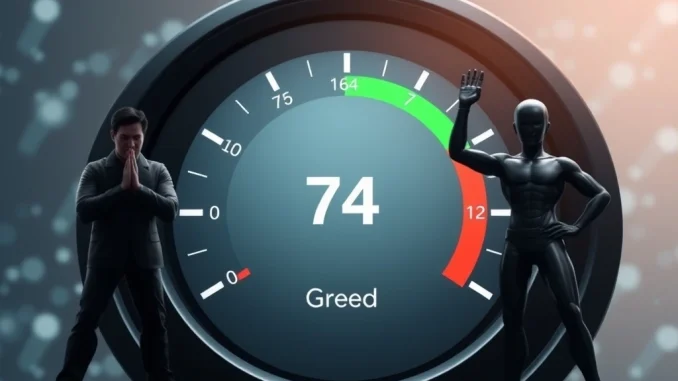
Are you feeling the buzz in the crypto air? The digital asset space is a rollercoaster of emotions, and understanding its pulse is crucial for any investor. That’s where the Crypto Fear & Greed Index comes into play. It’s more than just a number; it’s a powerful barometer of the prevailing mood in the market, helping us gauge whether investors are overly fearful or excessively greedy. As of July 14, this critical index, provided by the software development platform Alternative, holds steady at 74, firmly entrenched in the ‘Greed’ zone. But what does this persistent high score truly signify for the future of crypto?
Decoding the Crypto Fear & Greed Index: What Does 74 Mean?
The Crypto Fear & Greed Index is designed to give you a quick snapshot of current market psychology. Ranging from 0 to 100, where 0 represents ‘Extreme Fear’ and 100 signifies ‘Extreme Greed,’ this index acts as a compass, guiding investors through the often-turbulent waters of cryptocurrency. A score of 74, as we see now, indicates a strong inclination towards ‘Greed’ among market participants. This means:
- High Optimism: Investors are generally confident and bullish about future price movements.
- Increased Buying Pressure: Many are eager to buy, fearing they might miss out on potential gains (FOMO – Fear Of Missing Out).
- Potential for Overextension: While positive, sustained high ‘Greed’ levels can sometimes precede market corrections as assets become overvalued.
Understanding this score isn’t just academic; it offers actionable insights. Historically, periods of extreme fear have often presented buying opportunities for brave investors, while extreme greed has sometimes warned of impending pullbacks. The current sustained ‘Greed’ suggests a robust, albeit potentially overheated, market environment.
The Pillars of Market Sentiment: How is the Index Calculated?
The sophistication of the Crypto Fear & Greed Index lies in its multi-faceted approach to gauging market sentiment. It doesn’t rely on a single metric but aggregates data from six key factors, each weighted to reflect its impact on the overall market mood. Here’s a breakdown:
| Factor | Weightage | Description |
|---|---|---|
| Volatility | 25% | Measures the current volatility and maximum drawdowns of Bitcoin compared to its average over 30 and 90 days. High volatility often signals fear. |
| Market Momentum/Volume | 25% | Analyzes the current volume and market momentum of Bitcoin and compares it with average values. High buying volumes in a bullish market suggest greed. |
| Social Media | 15% | Scans various social media platforms for crypto-related hashtags and measures the speed and quantity of posts. High engagement can indicate a ‘greed’ phase. |
| Surveys | 15% | (Currently Paused) Polls investors on their market outlook, directly gauging their sentiment. |
| Bitcoin Dominance | 10% | Examines Bitcoin’s share of the total cryptocurrency market capitalization. Rising dominance can indicate a flight to safety (fear) or a strong leader (greed). |
| Google Trends | 10% | Analyzes search query data for crypto-related terms on Google. Spikes in certain searches (e.g., “Bitcoin price manipulation”) can signal fear. |
It’s important to note that while the survey component is currently paused, the remaining five factors continue to provide a robust framework for assessing the market’s emotional state.
The Role of Bitcoin Dominance in Shaping Market Sentiment
Among the various factors contributing to the Crypto Fear & Greed Index, Bitcoin dominance holds a unique position. Bitcoin, as the pioneer and largest cryptocurrency by market capitalization, often dictates the broader market’s direction. Its dominance, which measures its percentage of the total crypto market cap, can be a telling sign of investor behavior:
- Rising Dominance: When Bitcoin’s dominance increases, it often suggests that investors are moving funds from altcoins back into Bitcoin. This can be a sign of fear, as Bitcoin is generally perceived as a ‘safer’ haven in volatile times, or it can indicate a strong Bitcoin-led rally, pulling the entire market up.
- Falling Dominance: A decrease in Bitcoin dominance typically means altcoins are gaining strength relative to Bitcoin, often seen during periods of high ‘greed’ where investors are more willing to take risks on smaller, potentially higher-gain assets.
The index considers how changes in Bitcoin dominance reflect the collective confidence (or lack thereof) in the wider altcoin market versus the established king of crypto.
Navigating the ‘Greed Zone’: Opportunities and Risks for Market Momentum
The current ‘Greed’ reading of 74 signals strong positive market momentum. This environment often brings exciting opportunities, but it’s crucial to approach it with a balanced perspective:
Opportunities in a Greed-Driven Market:
- Potential for Continued Upside: Strong buying interest can propel prices higher in the short to medium term.
- Liquidity: High trading volumes mean easier entry and exit points for positions.
- Altcoin Rallies: Often, sustained Bitcoin strength allows altcoins to follow suit, leading to significant gains across the board.
Risks to Be Mindful Of:
- Overbought Conditions: Assets might become overvalued, making them susceptible to sudden corrections.
- Increased Volatility: While greed drives prices up, the emotional nature of such a market can lead to sharp pullbacks.
- FOMO-Induced Decisions: Investors might make irrational decisions based on emotion rather than sound analysis, leading to losses.
Understanding the balance between opportunity and risk is paramount when the market is in a sustained state of ‘Greed’.
Actionable Insights for Investors in the Current Greed Zone
So, what should you do when the market is buzzing with greed zone energy? Here are some actionable insights:
- Don’t Get Swept Away by FOMO: While the market is trending up, avoid impulsive decisions. Stick to your investment plan and risk tolerance.
- Consider Profit-Taking: If you’ve accumulated significant gains, it might be a good time to consider taking some profits off the table, securing your initial investment or a portion of your gains.
- Re-evaluate Your Portfolio: Use this time to review your portfolio. Are your holdings still aligned with your long-term goals? Is anything significantly overweighted?
- Research Diligently: Even in a bull market, not all projects are winners. Focus on fundamental analysis and robust projects.
- Prepare for Volatility: While the trend is up, markets can turn quickly. Have a strategy for potential downturns, including stop-loss orders or setting price alerts.
The index is a tool, not a crystal ball. It reflects sentiment, which can change rapidly. Use it as one piece of your overall market analysis, alongside technical and fundamental indicators.
Conclusion: Riding the Waves of Crypto Sentiment
The Crypto Fear & Greed Index remaining at 74, firmly in the ‘Greed’ zone, tells us a clear story: optimism and bullish sentiment are currently dominating the cryptocurrency market. This comprehensive index, by factoring in elements like volatility, market momentum, social media buzz, Bitcoin dominance, and Google Trends, provides a valuable lens through which to view the collective psychology of investors. While ‘Greed’ can signal exciting opportunities and continued upward trends, it also serves as a crucial reminder to exercise caution, avoid emotional decisions, and always be prepared for potential shifts. By understanding and utilizing tools like this index, investors can make more informed decisions, navigate the market’s emotional currents, and potentially enhance their long-term success in the dynamic world of digital assets.
Frequently Asked Questions (FAQs)
Q1: What is the Crypto Fear & Greed Index?
The Crypto Fear & Greed Index is a tool that measures the current emotional state of the cryptocurrency market. It ranges from 0 (Extreme Fear) to 100 (Extreme Greed) and is calculated based on various market factors to help investors gauge whether the market is overly fearful or excessively optimistic.
Q2: How is the Crypto Fear & Greed Index calculated?
The index is calculated using six key factors: volatility (25%), market momentum/volume (25%), social media sentiment (15%), surveys (15% – currently paused), Bitcoin dominance (10%), and Google Trends data (10%). Each factor contributes a weighted score to the overall index value.
Q3: What does a high ‘Greed’ score (like 74) signify?
A high ‘Greed’ score, such as 74, indicates that investors are feeling very optimistic and confident about the market. This often suggests strong buying pressure and a belief that prices will continue to rise. However, it can also signal that the market might be becoming overbought and could be due for a correction.
Q4: Should I buy when the index shows ‘Greed’ and sell when it shows ‘Fear’?
While some investors follow a contrarian strategy (buy when fearful, sell when greedy), the index is a sentiment indicator, not a definitive trading signal. It’s best used as one tool among many. Extreme fear can indeed present buying opportunities, and extreme greed can signal caution, but always combine it with your own research, technical analysis, and risk management strategy.
Q5: How does Bitcoin dominance affect the index?
Bitcoin dominance, which is Bitcoin’s market cap share of the total crypto market, influences the index by reflecting investor behavior. A rising dominance might suggest a flight to Bitcoin as a ‘safe haven’ (fear) or a strong Bitcoin-led rally (greed), while falling dominance could indicate altcoin season (greed). It helps gauge the broader market’s confidence in the overall crypto ecosystem versus just Bitcoin.
Q6: Are the surveys still included in the index calculation?
No, as stated by Alternative, the surveys component of the Crypto Fear & Greed Index is currently paused. The index continues to be calculated robustly using the remaining five factors: volatility, market momentum/volume, social media, Bitcoin dominance, and Google Trends.