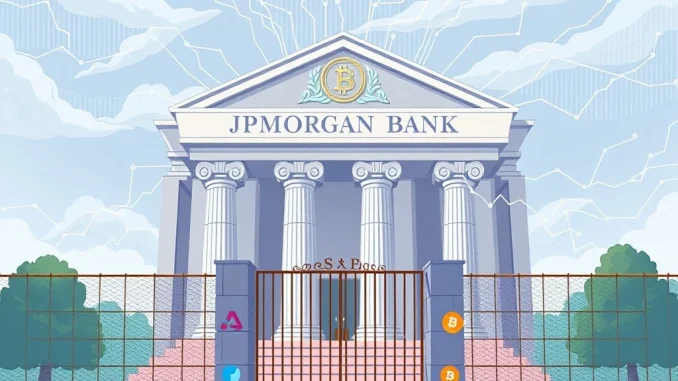
Imagine a world where accessing your own financial data, or letting an app manage it for you, suddenly comes with a hefty price tag. That’s precisely the alarming scenario unfolding as JPMorgan data fees for fintech firms spark widespread controversy across the financial landscape. This isn’t just a corporate squabble; it’s a pivotal moment that could redefine the future of digital finance, impacting everything from startup potential to your fundamental consumer data access.
Why Are JPMorgan Data Fees Sparking Such Controversy?
JPMorgan Chase, one of the world’s largest banks, has put forward a proposal to charge fees for data access. These charges are aimed squarely at data aggregators like Plaid, which act as vital bridges between traditional bank accounts and a myriad of financial applications. If you use platforms like Gemini, Coinbase, or Kraken, chances are you’ve indirectly relied on these aggregators to connect your bank for deposits or withdrawals.
The core of the dispute lies in the potential ripple effect of these JPMorgan data fees. Critics argue that imposing such charges could:
- Create Financial Barriers: Smaller fintech startups, often operating on tight budgets, might find these new costs prohibitive, hindering their ability to compete with larger, established players.
- Reduce Competition: With fewer startups able to enter or sustain themselves in the market, the overall competitive landscape in both fintech and crypto could shrink, leading to less innovation and fewer choices for consumers.
- Consolidate Power: Opponents suggest this move is an attempt by traditional banks to maintain their dominance and potentially suppress the growth of decentralized finance.
Tyler Winklevoss, co-founder of Gemini, has been particularly vocal, labeling the proposal an “anti-crypto agenda.” He alleges that JPMorgan is engaging in a form of regulatory capture, using its influence to stifle competition and solidify its position in the financial sector. JPMorgan, however, defends its stance by citing an overwhelming volume of data requests. Spokesperson Pusateri claims that over 90% of two billion monthly requests are irrelevant to actual consumer activity, and the fees are designed to curb unnecessary traffic and protect customer information. Yet, for many in the crypto community, this rationale masks a deeper ambition to control the flow of financial data.
The Ripple Effect: Crypto Innovation Under Threat?
The proposed JPMorgan data fees directly threaten the vibrant ecosystem of crypto innovation. Many decentralized applications and crypto exchanges rely on seamless, affordable data access to provide user-friendly experiences. Imagine if every time you linked your bank account to a crypto platform, the platform itself had to pay a fee, which would then likely be passed on to you, the user.
This isn’t just about cost; it’s about the very spirit of innovation. Startups thrive on agility and low barriers to entry. If fundamental data access becomes a costly commodity, it could:
- Stifle New Ideas: Developers might hesitate to build novel applications if the underlying infrastructure costs are too high.
- Slow Adoption: Higher costs for platforms could translate to higher fees for users, making crypto less attractive to mainstream consumers.
- Centralize Control: If only large, well-funded entities can afford data access, it contradicts the decentralized ethos of the crypto space.
Winklevoss even linked Gemini’s recent offboarding from JPMorgan to this issue, suggesting the bank’s decision was retaliatory. This highlights the intense friction between established financial institutions and the rapidly expanding crypto world, where data liquidity is as vital as capital.
Safeguarding Your Rights: The Open Banking Rule’s Critical Role
At the heart of this debate lies the Consumer Financial Protection Bureau’s (CFPB) Open Banking Rule. This crucial regulation currently safeguards free data access for third-party applications, ensuring that consumers can securely share their financial information with the apps of their choice without incurring additional charges. It’s a cornerstone of modern digital finance, empowering users and fostering a competitive environment.
However, critics fear its potential repeal. If the Open Banking Rule is weakened or eliminated, it could pave the way for banks to impose costly fees, fundamentally undermining fintech growth and consumer empowerment. This shift would have significant consequences:
- Monetization of Consumer Data: Banks could start charging for access to data that, until now, has been freely available to consumers and the apps they authorize.
- Disproportionate Impact on Small Firms: Smaller fintech companies and startups, unable to absorb additional costs, would be severely disadvantaged, potentially leading to their collapse or acquisition by larger entities.
- Narrowed Consumer Options: With fewer players in the market, consumers would face limited choices for financial services, potentially leading to higher fees and less innovative products.
The fate of the Open Banking Rule remains a critical determinant for the future of financial services. Its continued enforcement is seen as essential for protecting consumer interests and promoting a level playing field.
Navigating the Future: Fintech Growth at Risk?
The proposed JPMorgan data fees pose a direct threat to the trajectory of fintech growth. The fintech sector, particularly its crypto arm, has flourished precisely because of its ability to innovate rapidly and offer services that traditional banks often overlook or are slow to adopt. Affordable data access is the lifeblood of this innovation.
Interestingly, JPMorgan’s approach to crypto is complex. While it seeks to impose data fees, the bank is also reportedly exploring crypto-backed loans. This dual strategy highlights a broader tension: the institution’s desire to maintain control over legacy financial systems while cautiously engaging with the burgeoning world of crypto innovation. This selective embrace suggests a strategy of ‘if you can’t beat them, control them,’ rather than fostering open competition.
Industry experts warn that these fees could:
- Slow Development: The pace of developing user-friendly crypto platforms and integrated financial services could significantly decrease.
- Concentrate Power: The financial services industry could become even more concentrated, with a few large players dominating, stifling the entrepreneurial spirit that has driven much of the recent innovation.
- Increase Costs for Consumers: Ultimately, any additional costs imposed on fintechs will likely be passed down to the end-users, making digital financial services more expensive.
The long-term health of the fintech sector depends on fair and open access to data, ensuring that the next generation of financial solutions can emerge and thrive without undue burdens.
Ensuring Fair Play: Protecting Consumer Data Access
The ongoing controversy underscores the evolving regulatory landscape for both crypto and fintech. The battle over consumer data access is not merely a technical one; it’s a fight for the principles of open banking, consumer choice, and competitive markets. Preserving these principles is crucial for a financial ecosystem that benefits everyone, not just a few dominant players.
Winklevoss and other critics are urging stronger advocacy to resist what they describe as anti-competitive practices. Their call to action emphasizes the need for a united front to protect the foundations of open banking. The CFPB’s role is pivotal here; its decisions will significantly influence the sector’s trajectory, determining whether financial innovation remains open and accessible or becomes a privilege for the few.
As debates over data access and regulatory frameworks continue, the industry’s ability to advocate for equitable policies will be paramount. A collaborative effort between consumers, fintech innovators, and regulators is essential to shaping a competitive, consumer-focused financial ecosystem where data flows freely and innovation is encouraged, not stifled.
The proposed JPMorgan data fees represent a critical juncture for the crypto and fintech industries. While JPMorgan cites operational reasons, the broader implications for competition, innovation, and consumer data access are undeniable. The outcome of this debate, particularly regarding the future of the Open Banking Rule, will significantly shape the landscape of digital finance for years to come. It’s a stark reminder that as technology evolves, so too must our commitment to fair play and open markets.
Frequently Asked Questions (FAQs)
What are JPMorgan’s proposed data fees?
JPMorgan Chase proposes charging fees to data aggregators like Plaid for accessing customer financial data. These aggregators are used by many fintech and crypto platforms (e.g., Gemini, Coinbase) to connect users’ bank accounts for transactions.
Why is the crypto industry concerned about these fees?
The crypto industry fears these fees could create significant financial barriers for startups, reduce competition, and stifle innovation. Critics like Tyler Winklevoss see it as an “anti-crypto agenda” designed to consolidate power within traditional banking and hinder the growth of decentralized finance.
What is the Open Banking Rule and why is it important in this context?
The Consumer Financial Protection Bureau’s (CFPB) Open Banking Rule ensures free data access for third-party apps, allowing consumers to securely share their financial data without extra charges. Its potential repeal is a major concern, as it could enable banks to monetize customer data, negatively impacting fintech growth and consumer choice.
How might these fees impact everyday consumers?
If banks impose data fees, these costs could be passed on to consumers through higher fees for financial services or limited access to innovative fintech applications. It could also reduce consumer choice by disproportionately affecting smaller firms that cannot absorb the additional expenses.
Is JPMorgan entirely against crypto?
JPMorgan’s stance is complex. While proposing data fees that could harm crypto businesses, the bank is also reportedly exploring crypto-backed loans. This suggests a selective engagement with the asset class, aiming to balance control over traditional finance with cautious participation in crypto innovation.