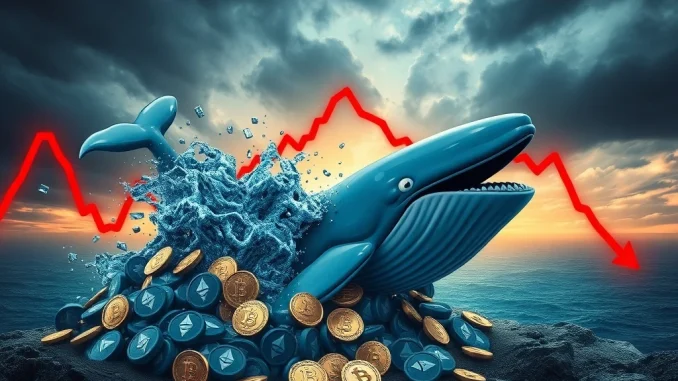
The crypto market, renowned for its exhilarating highs and equally dramatic lows, has once again delivered a stark reminder of its inherent volatility and the perils of high-stakes trading. In a recent, jaw-dropping event, a prominent whale trader operating under the pseudonym @qwatio experienced a catastrophic crypto liquidation, losing nearly $100 million in a matter of days. This dramatic wipeout serves as a powerful cautionary tale for anyone venturing into the high-leverage world of digital assets.
What Exactly Happened in This Whale Trader’s Devastating Loss?
According to blockchain analytics firm Lookonchain, the trader @qwatio, who had opened significant short positions, was completely wiped out in less than 48 hours. The sheer scale of the losses is staggering, encompassing a diversified (and ultimately ill-fated) portfolio of major cryptocurrencies and even a meme coin. Here’s a breakdown of the monumental losses:
- 458 BTC ($55 million): The largest portion of the loss came from Bitcoin, underscoring the significant exposure to the flagship cryptocurrency.
- 12,147 ETH ($36.55 million): Ethereum, the second-largest cryptocurrency by market capitalization, also contributed substantially to the liquidation.
- 5.4 million FARTCOIN ($7.33 million): The inclusion of a meme coin like FARTCOIN highlights the speculative nature of some of the trader’s bets, adding another layer of risk to an already volatile strategy.
The swiftness of the event — less than two days — emphasizes how rapidly market conditions can change and how quickly leveraged positions can unravel, leading to a complete crypto liquidation.
Understanding Short Positions and the Peril of Leverage: A Primer
For those new to the intricacies of crypto trading, understanding what happened to @qwatio requires a brief dive into the concepts of shorting and leverage. When a trader opens a short position, they are essentially betting that the price of an asset will fall. They borrow the asset, sell it, and aim to buy it back later at a lower price to return it to the lender, pocketing the difference. If the price rises instead, the trader faces losses.
Leverage, on the other hand, allows traders to control a large position with a relatively small amount of their own capital. While this can amplify profits if the market moves in their favor, it equally amplifies losses if it moves against them. In @qwatio’s case, a significant upward movement in Bitcoin and Ethereum prices triggered what’s known as a ‘short squeeze,’ leading to automatic sell-offs of their collateral to cover losses – resulting in a full Bitcoin liquidation and Ethereum liquidation.
This mechanism is designed to protect lenders and exchanges but can be brutal for traders caught on the wrong side of a major price swing. The higher the leverage, the smaller the price movement required to trigger a liquidation.
Lessons from a Whale Trader’s Wipeout: Navigating Market Volatility
While the story of @qwatio is a dramatic one, it offers invaluable lessons for all crypto participants, from seasoned traders to newcomers:
- Risk Management is Paramount: Never trade with more than you can afford to lose, especially when using leverage. Implementing strict stop-loss orders is crucial to limit potential downside.
- Understand Leverage: While enticing, leverage is a double-edged sword. A conservative approach to leverage can prevent catastrophic losses.
- Diversification (with Caution): While @qwatio held multiple assets, the inclusion of highly speculative tokens like FARTCOIN added unnecessary risk. Diversification should ideally be across assets with different risk profiles.
- Market Sentiment Matters: Markets can be irrational and unpredictable. Even experienced traders can be caught off guard by sudden shifts in sentiment or unexpected news.
- The ‘Whale’ Myth: Even large, experienced traders are not immune to market forces. The term whale trader often implies invincibility, but this event proves otherwise.
The swiftness of this crypto liquidation serves as a potent reminder that the crypto market demands respect, caution, and a well-defined risk strategy.
The Broader Impact: What Does This Mean for the Crypto Market?
While one individual’s massive loss might not immediately crash the entire market, events like @qwatio’s liquidation ripple through the ecosystem in subtle ways. They contribute to market sentiment, often reinforcing a sense of caution among retail investors. Such high-profile failures can also lead to increased scrutiny from regulators regarding leveraged trading platforms and their risk protocols.
Moreover, large liquidations can sometimes create temporary selling pressure as assets are automatically sold off, potentially leading to brief price dips. However, the crypto market is resilient, and these events are often absorbed relatively quickly. The main takeaway is the reinforcement of fundamental principles: do your own research, manage your risk diligently, and avoid overextending yourself in such a dynamic environment.
In conclusion, the devastating crypto liquidation of @qwatio, resulting in over $98 million in losses across Bitcoin, Ethereum, and even FARTCOIN, is a stark reminder of the immense risks associated with leveraged trading in the volatile cryptocurrency market. This event underscores the critical importance of robust risk management, a deep understanding of market mechanics, and a healthy respect for the unpredictable nature of digital assets. While the allure of amplified gains is strong, the potential for amplified losses, as tragically demonstrated here, is an ever-present reality that every participant must acknowledge and prepare for.
Frequently Asked Questions (FAQs)
Q1: What is crypto liquidation?
A: Crypto liquidation occurs when a trader’s leveraged position is automatically closed by an exchange due to their collateral falling below a certain threshold. This happens when the market moves significantly against their bet, and they no longer have enough funds to cover potential losses, preventing them from incurring negative balances.
Q2: Who is a ‘whale trader’ in crypto?
A: A ‘whale trader’ refers to an individual or entity holding a very large amount of cryptocurrency. Due to their significant holdings, their trading activities (buying or selling) can have a noticeable impact on market prices and liquidity.
Q3: How do short positions work in cryptocurrency trading?
A: When you open a short position, you borrow cryptocurrency from an exchange and immediately sell it, hoping to buy it back later at a lower price. You then return the borrowed crypto, profiting from the price difference. If the price rises instead, you incur a loss when buying back at a higher price.
Q4: What are the primary risks of leveraged trading?
A: The main risk of leveraged trading is amplified losses. While leverage can magnify profits, it also magnifies losses, meaning even a small adverse price movement can lead to significant losses or even full liquidation of your entire collateral.
Q5: What is a ‘short squeeze’ and how does it relate to liquidation?
A: A short squeeze occurs when the price of an asset that many traders have bet against (shorted) suddenly rises sharply. This forces short sellers to buy back the asset to limit their losses, which further drives up the price, creating a cascade of buying that can lead to mass liquidations of short positions.
Q6: How can crypto traders protect themselves from liquidation?
A: Traders can protect themselves by using conservative leverage, setting stop-loss orders to automatically close positions at a predetermined loss level, diversifying their portfolio, and not risking more capital than they can afford to lose. Regular monitoring of market conditions and avoiding highly speculative assets with leverage are also key.