The cryptocurrency world is no stranger to dramatic swings, and recent events surrounding XRP, the digital asset linked to Ripple, have once again proven this point. After a thrilling ascent to a seven-year peak, the XRP price has experienced a notable pullback, leaving investors and analysts closely watching its next move. This article delves into the factors behind this correction, offering insights into market dynamics, regulatory hurdles, and what lies ahead for XRP.
Understanding the Recent XRP Price Dynamics
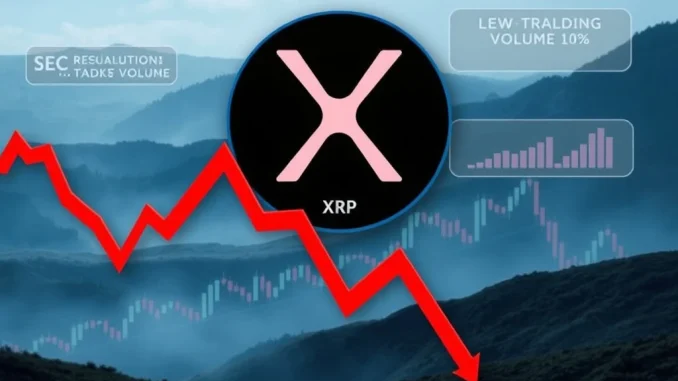
XRP had a remarkable run in July 2025, surging to an impressive seven-year high of $3.666. This rally was largely fueled by a surge of capital into top-tier altcoins, buoyed by a period of relative stability for Bitcoin. However, the excitement was short-lived. A confluence of factors led to a significant 13% retreat from its mid-month peak, marking a crucial consolidation phase for the digital asset.
- Peak and Pullback: XRP’s journey to $3.666 represented renewed investor confidence and a bullish sentiment for altcoins.
- Market Fatigue: The subsequent pullback reflects a broader altcoin market fatigue, where initial capital inflows cooled as investors reassessed risk.
- Consolidation Zone: Currently, XRP prices are oscillating between $3 and $3.24, indicating a short-term exhaustion as the market digests recent gains and uncertainties.
This period of consolidation is critical. It suggests that while there’s underlying interest, the immediate impetus for further upward movement has waned, prompting traders to adopt a more cautious ‘wait-and-see’ approach.
The Impact of the SEC ETF Decision on XRP
One of the most significant catalysts for XRP’s recent downturn was the U.S. Securities and Exchange Commission (SEC)’s decision to delay its ruling on the Bitwise crypto ETF application. This news sent ripples across the entire crypto market, with XRP dropping a notable 6% in a single day following the announcement. The SEC ETF decision underscores the crypto sector’s profound vulnerability to regulatory developments.
For XRP, in particular, regulatory clarity is paramount, given its ongoing legal battle with the SEC. Any delay or negative news regarding broader crypto ETFs can amplify existing anxieties and suppress investor confidence. The market interprets such delays as a sign of continued regulatory uncertainty, making large institutional investments less likely in the short term.
A Deep Dive into XRP Trading Volume Decline
A stark indicator of the market’s current hesitancy is the dramatic drop in XRP trading volume. CoinMarketCap reported a staggering 42% decrease in 24-hour trading volume, settling at $4.04 billion. This significant reduction in trading activity signals a lack of conviction among investors, both buyers and sellers.
Why is trading volume important?
- Confirmation of Trends: High volume often confirms price movements, indicating strong market participation. Low volume, especially during a pullback, can suggest a lack of strong buying interest to reverse the trend.
- Liquidity: Reduced volume means lower liquidity, making it harder for large trades to execute without significantly impacting the price.
- Investor Sentiment: A drop in volume often reflects a wait-and-see approach, with traders holding back until clearer market signals emerge, possibly from macroeconomic catalysts or regulatory clarity.
The current low volume environment means that any significant price movements, up or down, could be more exaggerated due to thinner order books, making XRP particularly susceptible to sudden shifts.
Navigating the Broader Altcoin Market Fatigue
XRP’s performance isn’t isolated; it’s intricately linked to the broader altcoin market. The recent fatigue observed across altcoins is largely attributed to Bitcoin’s fluctuating influence on capital rotation. While Bitcoin’s stabilization initially prompted inflows into altcoins, this trend has cooled as investors reassess risk amidst global economic uncertainties.
Key factors contributing to altcoin fatigue:
- Bitcoin’s Consolidation: Bitcoin’s own consolidation near $114,000 adds to market uncertainty. When Bitcoin lacks clear directional momentum, capital tends to stay put or flow back into Bitcoin, rather than venturing into riskier altcoins.
- Macroeconomic Headwinds: Global economic concerns, inflation, and central bank policies (like the U.S. Federal Reserve’s interest rate decisions) significantly influence investor appetite for risk-on assets like cryptocurrencies.
- Regulatory Overhang: The persistent cloud of regulatory uncertainty, exemplified by the SEC’s delays, dampens enthusiasm across the entire altcoin sector.
This interconnectedness means that XRP’s recovery is not solely dependent on its own developments but also on the overall health and sentiment of the wider crypto market.
Understanding Crypto Volatility and Key Support Levels for XRP
The inherent crypto volatility has amplified XRP’s price swings. Technical analysis provides crucial insights into potential future movements. Analysts are closely watching critical support levels for XRP, particularly between $2.90 and $3.00.
What these levels mean for traders:
- Critical Support: The $2.90–$3.00 range is a psychological and technical barrier. Holding above this suggests that buyers are stepping in to prevent further declines.
- Downside Risk: A breakdown below $2.90 could trigger further declines, potentially pushing XRP towards $2.70 as stop-loss orders are triggered and selling pressure increases.
- Upside Potential: Sustained momentum above $3.00, especially with an increase in trading volume, could signal a retest of July highs, indicating renewed bullish sentiment.
However, the current reduced trading activity suggests a lack of strong conviction in either direction. Investors are largely awaiting clearer signals, particularly regarding regulatory frameworks and broader macroeconomic liquidity trends, before making significant moves.
The near-term trajectory of XRP remains contingent on two pivotal factors: the SEC’s rulings on ETF approvals and the token’s ability to hold its key support levels. Analysts warn that failure to stabilize above $2.90 could deepen the correction, particularly if liquidity conditions fail to improve. The U.S. Federal Reserve’s upcoming interest rate decision also looms large, as lower rates have historically boosted risk-on assets. However, the market’s mixed signals—ranging from Bitcoin’s tight consolidation to altcoin fatigue—underscore the fragile balance between optimism and caution. Investor behavior remains fragmented, with heavy whale activity and regulatory outcomes shaping market dynamics. While XRP’s seven-year high signals renewed interest in altcoins, the 13% pullback from its mid-month peak highlights the sector’s susceptibility to profit-taking and external shocks. The delayed ETF decisions have cast a shadow over sentiment, with XRP’s ongoing legal battle with the SEC further complicating its outlook.
Frequently Asked Questions (FAQs)
Q1: Why did XRP pull back 13% from its seven-year high?
XRP’s pullback was primarily due to a combination of factors: declining trading volumes, broader altcoin market fatigue, and the U.S. SEC’s decision to delay its ruling on the Bitwise crypto ETF application. These factors collectively led to investor caution and profit-taking after a rapid surge.
Q2: How does the SEC’s ETF decision impact XRP?
The SEC’s delay on the Bitwise crypto ETF application created market jitters, highlighting the cryptocurrency sector’s vulnerability to regulatory developments. For XRP, which is already embroiled in its own legal battle with the SEC, such delays add to uncertainty and can deter institutional investment, contributing to price drops.
Q3: What do declining trading volumes signify for XRP?
A significant drop in XRP’s 24-hour trading volume (42% to $4.04 billion) indicates a lack of conviction and increased hesitancy among traders. Low volume suggests that neither buyers nor sellers are strongly committing, leading to a ‘wait-and-see’ approach and potentially making price movements more volatile due to thinner liquidity.
Q4: What are the critical support levels for XRP, and what do they mean?
Technical analysts point to critical support levels for XRP between $2.90 and $3.00. Holding above this range suggests buyer interest and potential stabilization. However, a breakdown below $2.90 could trigger further declines, potentially to $2.70, while sustained momentum above $3.00 might signal a retest of previous highs, provided trading activity increases.
Q5: How does Bitcoin’s performance affect XRP and the broader altcoin market?
Bitcoin’s performance significantly influences the broader altcoin market, including XRP. When Bitcoin consolidates or experiences uncertainty, capital often rotates out of altcoins or remains cautious. Bitcoin’s stability can initially fuel altcoin rallies, but its fluctuations can also lead to altcoin fatigue as investors reassess risk.
Q6: What macroeconomic factors could influence XRP’s future price?
Macroeconomic factors such as the U.S. Federal Reserve’s interest rate decisions play a pivotal role. Lower interest rates historically boost risk-on assets like cryptocurrencies. However, global economic uncertainties and the overall liquidity trends in the market also heavily influence investor sentiment and capital flows into digital assets like XRP.