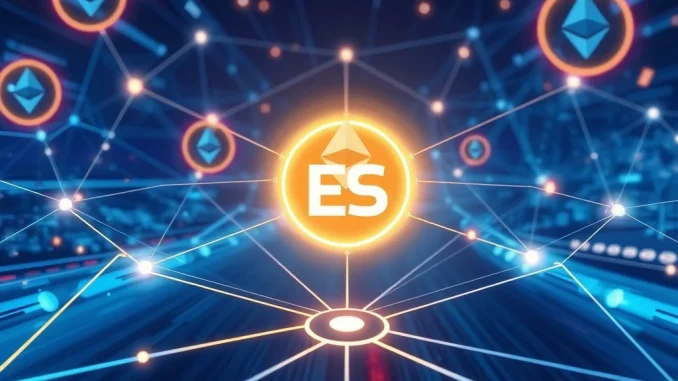
The cryptocurrency world is abuzz with the impending launch of the Eclipse ES token, marking a significant milestone for Eclipse, the innovative platform that stands as the first Ethereum Layer-2 powered by the Solana Virtual Machine (SVM). This unique convergence promises to bring the best of both worlds – Ethereum’s robust security and developer ecosystem, combined with Solana’s high throughput and low transaction costs. Mark your calendars, as the official announcement confirms that the highly anticipated claims for the ES token will commence on July 16 at 09:00 UTC, followed swiftly by centralized exchange listings at 10:00 UTC on the same day. This event is not just another token launch; it represents a pivotal moment in the evolution of blockchain interoperability and scalability.
The Dawn of a New Era: Understanding the Eclipse ES Token Launch
Eclipse has positioned itself at the forefront of blockchain innovation by tackling one of the industry’s most persistent challenges: scalability without sacrificing decentralization or security. By leveraging the Solana Virtual Machine (SVM) as its execution environment on an Ethereum Layer-2, Eclipse offers a compelling solution for developers and users seeking faster, cheaper, and more efficient transactions. The upcoming launch of the Eclipse ES token is central to this ecosystem, designed to facilitate governance, incentivize network participation, and power various functionalities within the Eclipse network.
The dual announcement of token claims and exchange listings on the same day is a strategic move, aimed at providing immediate liquidity and accessibility for early contributors and the broader crypto community. This synchronized approach helps to minimize market fragmentation and ensures a smoother onboarding process for new participants. For those who have been following Eclipse’s journey, this date signifies the culmination of extensive development and community building.
Key Dates to Remember:
- ES Token Claims Open: July 16, 09:00 UTC
- Centralized Exchange Listings Open: July 16, 10:00 UTC
Why the Solana Virtual Machine (SVM) on Ethereum Layer-2? A Revolutionary Approach
The decision to integrate the Solana Virtual Machine (SVM) into an Ethereum Layer-2 is what truly sets Eclipse apart. Traditionally, Layer-2 solutions on Ethereum have relied on the Ethereum Virtual Machine (EVM), which, while powerful, can sometimes be a bottleneck for high-performance applications. The SVM, renowned for its parallel processing capabilities and efficiency, offers a significant upgrade in terms of transaction throughput and execution speed.
Here’s why this combination is revolutionary:
- Unmatched Speed and Throughput: The SVM allows for parallel execution of transactions, drastically increasing the number of operations Eclipse can process per second compared to traditional EVM-based Layer-2s. This is crucial for applications requiring high transaction volumes, such as gaming, DeFi, and NFTs.
- Developer Familiarity: While leveraging SVM, Eclipse aims to make it accessible to developers already familiar with the Ethereum ecosystem, bridging the gap between two prominent blockchain developer communities. This can foster rapid innovation and adoption.
- Cost Efficiency: By processing transactions more efficiently, Eclipse can offer significantly lower gas fees, making blockchain interactions more affordable for everyday users and dApp developers.
- Ethereum’s Security Backbone: Despite using SVM for execution, Eclipse inherits the robust security guarantees of the Ethereum mainnet, providing a secure and reliable foundation for its operations.
This hybrid architecture addresses the ‘blockchain trilemma’ by striving for a balance of scalability, security, and decentralization. The Eclipse ES token will play a vital role in securing and governing this innovative cross-chain environment.
Navigating Your ES Token Claims: What You Need to Know
For eligible participants, the opening of ES token claims on July 16 at 09:00 UTC is a moment to prepare for. While specific instructions for the claiming process will be detailed by Eclipse closer to the date, typically, this involves connecting a wallet that was eligible for an airdrop or participation in an early-stage event. It is paramount to exercise caution and only use official links provided directly by Eclipse’s verified channels (like their official website or X account) to avoid phishing scams.
Here are general steps to prepare for token claims:
- Verify Eligibility: Ensure you meet the criteria for claiming tokens (e.g., participation in testnets, early community engagement, specific campaigns).
- Prepare Your Wallet: Have a compatible and secure wallet ready (e.g., MetaMask, Ledger, Trezor) with sufficient ETH for potential gas fees on the Ethereum mainnet or the Eclipse Layer-2, depending on the claiming mechanism.
- Stay Informed: Follow Eclipse’s official announcements on X and their website for precise instructions and any last-minute updates regarding the claiming portal.
- Security First: Double-check URLs and never share your seed phrase or private keys with anyone.
Successfully claiming your Eclipse ES token will grant you access to the network’s governance and utility, allowing you to participate in its growth and development.
The Gateway to Liquidity: Significance of Centralized Exchange Listings
Just one hour after the claims open, the centralized exchange listings for the Eclipse ES token will commence at 10:00 UTC on July 16. This is a critical step for any new cryptocurrency, as it significantly enhances liquidity, price discovery, and accessibility for a broader investor base. Listings on reputable centralized exchanges (CEXs) provide several key advantages:
- Increased Accessibility: CEXs simplify the process of buying and selling cryptocurrencies, making it easier for new users who might not be comfortable with decentralized exchanges (DEXs).
- Enhanced Liquidity: High trading volumes on CEXs ensure that users can buy or sell ES tokens quickly without significant price slippage.
- Price Discovery: The open market on CEXs helps establish a fair market price for the ES token based on supply and demand.
- Credibility and Trust: Being listed on major exchanges often lends a project a sense of legitimacy and trust, as exchanges typically conduct due diligence before listing.
While the specific exchanges have not been publicly disclosed in the provided announcement, the simultaneous opening of claims and listings suggests a well-coordinated strategy to ensure a robust market entry for the Eclipse ES token. This will be a moment keenly watched by traders and investors alike, eager to participate in the Eclipse ecosystem.
Eclipse’s Impact on the Ethereum Layer-2 Landscape: A Game Changer?
The introduction of Eclipse with its unique Solana Virtual Machine integration poses a fascinating question for the broader Ethereum Layer-2 landscape: is it a game changer? Current Layer-2 solutions, such as Optimism, Arbitrum, and zkSync, primarily rely on the EVM, offering varying trade-offs between speed, cost, and security. Eclipse’s approach introduces a new paradigm, potentially unlocking use cases that were previously challenging on EVM-centric chains due to performance limitations.
Consider the implications:
- Diversification of Layer-2 Tech: Eclipse adds a new flavor to the Layer-2 mix, offering developers more choices based on their specific application needs.
- Cross-Chain Synergy: It exemplifies a growing trend towards interoperability, demonstrating that different blockchain technologies can be combined to create superior solutions.
- Attracting Solana Developers to Ethereum: Developers familiar with SVM on Solana might find Eclipse an attractive entry point into the Ethereum ecosystem, expanding the talent pool for Layer-2 development.
- Pushing the Boundaries of Scalability: Eclipse’s success could inspire other projects to explore novel combinations of virtual machines and blockchain architectures, further advancing scalability solutions.
While the long-term impact will depend on adoption and network performance, Eclipse certainly presents a compelling vision for the future of scalable blockchain infrastructure on Ethereum.
Actionable Insights for the Community
As the launch date approaches, here are some actionable insights for anyone interested in the Eclipse ES token and the Eclipse platform:
- Stay Informed: Follow Eclipse’s official social media channels and announcements for real-time updates on claims and listings.
- Prepare Your Wallets: Ensure your crypto wallets are secure and ready for claiming or trading.
- Research Exchanges: Keep an eye out for announcements regarding which centralized exchanges will list the ES token to prepare for trading.
- Understand the Tech: Take some time to understand the unique value proposition of Eclipse’s SVM on Ethereum Layer-2 to make informed decisions.
- Be Wary of Scams: The excitement around new token launches often attracts malicious actors. Always double-check URLs and verify information from official sources only.
Conclusion: A New Horizon for Blockchain Scalability
The upcoming launch of the Eclipse ES token and the immediate availability of claims and centralized exchange listings on July 16 mark a pivotal moment for the cryptocurrency landscape. Eclipse’s innovative integration of the Solana Virtual Machine on an Ethereum Layer-2 offers a compelling vision for the future of blockchain scalability, promising high throughput, low costs, and robust security. This unique approach could redefine what’s possible on Layer-2 networks, fostering a new wave of decentralized applications and user experiences. As the crypto community looks towards a more interconnected and efficient future, Eclipse stands as a testament to the power of cross-chain innovation. This is more than just a token launch; it’s the unveiling of a potentially transformative technology designed to unlock the next era of blockchain adoption.
Frequently Asked Questions (FAQs)
Q1: What is Eclipse, and what makes it unique?
Eclipse is the first Ethereum Layer-2 solution that utilizes the Solana Virtual Machine (SVM) for its execution environment. This unique combination aims to provide the high throughput and low transaction costs of Solana with the security and decentralization of the Ethereum mainnet, offering a powerful and efficient platform for decentralized applications.
Q2: What is the ES token, and what is its purpose?
The ES token is the native cryptocurrency of the Eclipse network. Its primary purposes include facilitating network governance, incentivizing participation within the ecosystem, and potentially serving as a utility token for transaction fees or other services on the Eclipse Layer-2.
Q3: When can I claim my ES tokens and where will they be listed?
Claims for the ES token will begin on July 16 at 09:00 UTC. Centralized exchange listings for ES are scheduled to open just one hour later, at 10:00 UTC on the same day. Specific exchange names will be announced by Eclipse through their official channels.
Q4: Why did Eclipse choose the Solana Virtual Machine instead of the Ethereum Virtual Machine (EVM)?
Eclipse chose the Solana Virtual Machine (SVM) due to its superior performance characteristics, particularly its ability to process transactions in parallel. This allows Eclipse to achieve significantly higher transaction throughput and lower latency compared to traditional EVM-based Layer-2s, making it ideal for high-demand applications.
Q5: How can I ensure a safe ES token claiming process?
To ensure a safe claiming process, always refer to Eclipse’s official announcements for the correct claiming portal link. Never click on suspicious links, do not share your wallet’s seed phrase or private keys with anyone, and verify the authenticity of any website asking for your crypto wallet connection.