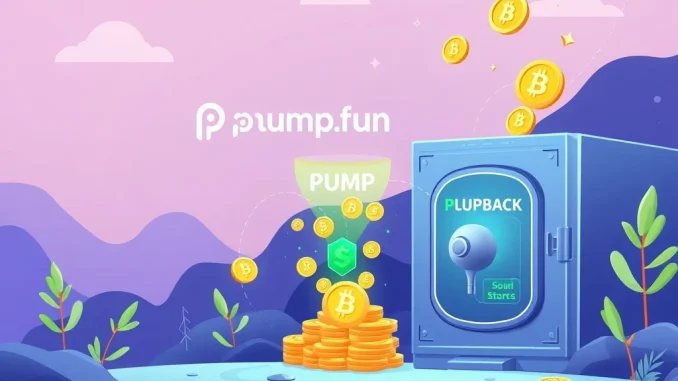
The world of decentralized finance (DeFi) is constantly evolving, with projects finding innovative ways to engage their communities and manage their token economies. A significant announcement recently emerged from BWE News on X: Pump.fun is embarking on its very first PUMP token buyback. This move, coming shortly after the token’s launch on July 14, is generating considerable buzz and raises important questions about the project’s strategy and the broader implications for the crypto market.
Why Pump.fun’s PUMP Token Buyback is Making Waves?
Pump.fun has carved out a unique niche in the crypto space as a platform that allows users to launch new tokens, often meme coins, with relative ease and without the need for initial liquidity. It’s designed to be a fairer, more accessible way to create and trade new digital assets. The announcement of its first PUMP token buyback is not just a routine update; it’s a strategic maneuver that can significantly impact the project’s future and investor confidence.
A token buyback, in essence, is when a project uses its treasury funds to repurchase its own tokens from the open market. This action serves several key purposes:
- Reducing Supply: By buying back tokens, the total circulating supply is reduced, which can, in theory, lead to an increase in the value of the remaining tokens if demand stays constant or grows.
- Demonstrating Confidence: It signals to the market that the project believes its token is undervalued and is willing to invest in its own ecosystem.
- Value Accrual: The bought-back tokens can be burned (permanently removed from circulation), locked up, or redistributed, all of which aim to accrue value to existing holders.
For a platform like Pump.fun, which thrives on community engagement and rapid token launches, a buyback could be a powerful statement about its commitment to its native PUMP token and its long-term vision.
Unpacking the Tokenomics Behind This Strategic Move
Understanding the tokenomics of a project is crucial for any crypto enthusiast or investor. Tokenomics refers to the economics of a cryptocurrency, including its supply, demand, distribution, and how it’s used within its ecosystem. A PUMP token buyback is a direct application of tokenomic principles aimed at influencing the token’s value proposition.
Here’s how it typically works and what it might mean for PUMP:
The funds for a buyback usually come from the project’s revenue streams. For Pump.fun, this could be a portion of the fees generated from token launches or trading activities on its platform. Once the tokens are repurchased, the project has a few options:
- Burning: The most common method, where tokens are sent to an unspendable address, permanently removing them from circulation. This is highly deflationary.
- Staking Rewards/Liquidity Provision: The tokens could be used to incentivize staking or to provide liquidity, further integrating them into the ecosystem.
- Treasury Holdings: Holding the tokens in a treasury for future use, such as ecosystem grants or development.
The specific method Pump.fun chooses for the repurchased PUMP tokens will dictate the precise impact on its tokenomics. If they opt for burning, it creates a direct deflationary pressure, potentially making each remaining PUMP token more valuable. This strategy often aims to reward early adopters and long-term holders by reducing the overall supply.
The Broader Impact on Decentralized Finance (DeFi) Ecosystems
The decision by Pump.fun to pursue a PUMP token buyback isn’t just an isolated event; it reflects a growing trend and maturity within decentralized finance. As the DeFi space evolves, projects are increasingly adopting traditional financial mechanisms like buybacks to manage their token economies and create sustainable value for their communities.
In the nascent stages of DeFi, many projects focused solely on liquidity mining and high APYs. However, as the market matures, there’s a greater emphasis on sustainable token models that can withstand market volatility and provide long-term utility. Buybacks are one such mechanism that aligns a project’s success with its token’s value. This move by Pump.fun could inspire other platforms, especially those in the meme coin or launchpad sectors, to consider similar strategies for enhancing their token’s value proposition and building stronger, more resilient ecosystems.
It also highlights the increasing professionalism and strategic planning within the DeFi sector. Projects are moving beyond mere hype to implement sound economic policies that benefit their stakeholders.
What This Means for Crypto News and Future Investments
For those following crypto news and considering future investments, Pump.fun’s buyback is a development worth noting. Such actions often lead to increased attention and can positively influence investor sentiment. While a buyback doesn’t guarantee a price increase, it typically indicates a project’s health and commitment.
Key Takeaways for Investors:
- Positive Signal: A buyback is generally seen as a bullish signal, indicating the project has sufficient funds and confidence in its future.
- Potential for Scarcity: If tokens are burned, it creates scarcity, which can be a strong driver for price appreciation over time.
- Due Diligence Remains Key: Always remember that crypto markets are volatile. While a buyback is positive, it’s essential to research Pump.fun’s overall roadmap, community strength, and market conditions before making investment decisions.
This event will undoubtedly be a topic of discussion across various crypto news outlets, providing insights into how new and innovative platforms are adapting their strategies to create long-term value. It reinforces the idea that even in the fast-paced world of meme coins and rapid launches, fundamental economic principles are still vital.
Pump.fun’s decision to pursue its first PUMP token buyback is a significant moment for the project and a noteworthy event in the broader decentralized finance landscape. It underscores a strategic move towards a more sustainable and value-driven token economy, leveraging robust tokenomics to benefit its community. As the crypto world continues to evolve, such proactive measures from projects like Pump.fun will be crucial in shaping the future of digital assets and how investors perceive their long-term potential. Keep an eye on the official announcements from Pump.fun for further details on this exciting development.
Frequently Asked Questions (FAQs)
Q1: What is a token buyback in cryptocurrency?
A token buyback is when a crypto project uses its treasury funds to repurchase its own native tokens from the open market. This action reduces the circulating supply of the token, aiming to increase its scarcity and potentially its value, and demonstrates the project’s confidence in its own asset.
Q2: Why is Pump.fun conducting a PUMP token buyback?
Pump.fun is likely conducting a PUMP token buyback to enhance the token’s value proposition, reduce its circulating supply, and signal confidence in the project’s long-term viability. It’s a common strategy in tokenomics to create deflationary pressure and reward holders.
Q3: How does a token buyback impact the PUMP token’s price?
While not a guarantee, a token buyback typically creates upward price pressure by reducing supply. If demand remains constant or increases, the reduced supply can lead to a higher price per token. It also often boosts investor confidence, which can further contribute to price appreciation.
Q4: What is Pump.fun, and when was the PUMP token launched?
Pump.fun is a platform designed to allow users to easily launch new tokens, particularly meme coins, without needing initial liquidity. The PUMP token, which is Pump.fun’s native cryptocurrency, was launched on July 14.
Q5: Will the bought-back PUMP tokens be burned or used otherwise?
The article mentions that bought-back tokens can be burned (permanently removed), locked up, or redistributed. The specific method Pump.fun chooses for its repurchased PUMP tokens will determine the precise long-term impact on its tokenomics. Details on this are usually provided by the project after the buyback.