The crypto world often buzzes with news of groundbreaking proposals and community-driven decisions. But what happens when a highly anticipated move, like a significant LSK token burn, falls short not because of disapproval, but due to a surprising technicality? This is precisely the scenario that unfolded with the Lisk DAO‘s recent treasury proposal, leaving many in the community pondering the intricacies of decentralized governance.
Unpacking the Lisk DAO Proposal’s Unexpected Stall
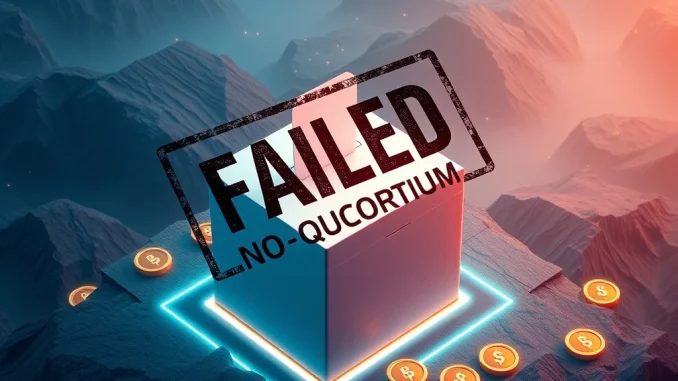
In a turn of events that has captured the attention of the blockchain community, the Lisk DAO‘s ambitious plan to burn 100 million LSK tokens from its treasury did not come to fruition. Despite an overwhelming show of support, with 99.46% of votes cast in favor, the proposal ultimately failed to pass. The reason? A lack of quorum.
According to Tally, an on-chain governance platform, the required threshold for voter participation was not met. This outcome highlights a critical challenge within decentralized autonomous organizations: even strong consensus on an idea can be undermined if not enough members actively participate in the voting process. The proposal aimed to address the 145 million new LSK tokens that were minted during the token’s recent ERC-20 migration, a move intended to rebalance the token supply and potentially enhance its value proposition.
Why Does an LSK Token Burn Matter?
A token burn is a process where a certain amount of cryptocurrency tokens are permanently removed from circulation. This is typically done by sending them to an unspendable wallet address, often referred to as a ‘burn address.’ The primary reasons for an LSK token burn, or any token burn, often include:
- Supply Reduction: By reducing the total supply of tokens, a burn can potentially increase the scarcity of the remaining tokens.
- Value Proposition: Scarcity, in theory, can lead to an increase in the token’s value, benefiting existing holders.
- Inflation Control: In cases where new tokens are minted (as with Lisk’s ERC-20 migration), a burn can help offset inflationary pressures.
- Commitment Signal: It signals a project’s commitment to its token holders and the long-term health of its ecosystem.
The proposed 100 million LSK burn was a substantial amount, reflecting a significant effort to manage the tokenomics post-migration and align with community expectations for a healthy token ecosystem.
The Critical Role of DAO Governance in Action
The Lisk situation offers a compelling case study in the complexities of DAO governance. DAOs are designed to be transparent and community-driven, allowing token holders to vote on important decisions. However, the concept of ‘quorum’ is vital for ensuring that decisions reflect a broad base of participation, not just a small, highly engaged minority.
What is Quorum? Quorum refers to the minimum number of participants or the minimum percentage of voting power required for a vote to be considered valid. Its purpose is to prevent decisions from being made by only a handful of individuals, ensuring legitimacy and broader community buy-in.
In Lisk’s case, despite nearly unanimous approval from those who voted, the overall voter turnout was insufficient. This highlights a persistent challenge for many DAOs: how to foster active and consistent participation from a dispersed community. It underscores that designing effective governance mechanisms involves more than just setting up voting platforms; it requires continuous engagement and education to ensure community members are both aware of and motivated to participate in critical decisions.
Connecting the Dots: ERC-20 Migration and Lisk’s Tokenomics
The context for this Lisk proposal is crucial. Lisk recently underwent a significant ERC-20 migration. This move involved transitioning LSK tokens from Lisk’s native blockchain to the Ethereum blockchain, making them ERC-20 compatible. The primary benefits of such a migration include increased interoperability with the broader Ethereum ecosystem, access to a wider range of DeFi protocols, and enhanced liquidity on various exchanges.
During this migration, 145 million new LSK tokens were minted to facilitate the swap from the old chain to the new ERC-20 standard. While this was a necessary step for the project’s evolution, it also led to an increase in the total token supply. The failed burn proposal was an attempt by the Lisk DAO to manage this increased supply, demonstrating a proactive approach to maintaining tokenomics stability post-migration.
What’s Next for Lisk After the Proposal’s Setback?
The failure of this significant Lisk proposal due to quorum issues is undoubtedly a setback, but it is by no means the end of the road for the Lisk DAO or the LSK token. Here are some potential next steps and considerations:
- Re-proposal: The community could choose to re-introduce the burn proposal, perhaps with adjusted parameters or a more intensive campaign to encourage voter participation.
- Community Engagement: Increased efforts might be needed to educate and mobilize LSK holders about the importance of their vote and the impact of quorum requirements.
- Governance Mechanism Review: The Lisk DAO might review its quorum requirements or voting incentives to ensure a more robust and responsive governance system.
- Focus on Development: Despite this hiccup, Lisk continues to develop its ecosystem, focusing on its modular blockchain framework and empowering developers.
This incident serves as a valuable lesson for Lisk and other DAOs alike: robust governance isn’t just about having the right tools, but about fostering an actively engaged community. The future of the LSK token burn proposal, and indeed Lisk’s tokenomics, will largely depend on the community’s ability to learn from this experience and adapt its approach to decentralized decision-making.
Conclusion: A Call for Active Participation in Decentralized Governance
The Lisk DAO’s recent experience with its failed 100 million LSK token burn proposal due to a lack of quorum serves as a powerful reminder of the unique challenges and responsibilities inherent in decentralized autonomous organizations. While the community demonstrated strong support for the initiative, the outcome underscores the critical need for active and widespread participation in DAO governance. As Lisk navigates its post-ERC-20 migration landscape, this event will undoubtedly spark further discussions on how to foster more robust and engaged community decision-making, ensuring that future proposals truly reflect the collective will of its token holders. The path forward for Lisk will require continued commitment from its community to overcome these hurdles and build a truly decentralized and effective ecosystem.
Frequently Asked Questions (FAQs)
Q1: Why did the Lisk DAO’s 100M LSK token burn proposal fail?
The proposal failed not due to a lack of approval (it received 99.46% ‘Yes’ votes), but because it did not meet the required quorum. Quorum is the minimum percentage of total eligible voting power that must participate for a vote to be considered valid.
Q2: What is an LSK token burn, and why was it proposed?
An LSK token burn involves permanently removing a certain amount of LSK tokens from circulation. This proposal aimed to burn 100 million LSK from the treasury to help rebalance the token supply after 145 million new LSK were minted during the recent ERC-20 migration.
Q3: What is the significance of the ERC-20 migration for Lisk?
The ERC-20 migration moved LSK tokens from Lisk’s native blockchain to the Ethereum blockchain. This enhances interoperability, allows LSK to be used in the broader Ethereum DeFi ecosystem, and increases liquidity, but also led to the minting of new tokens to facilitate the swap.
Q4: How does this event reflect on DAO governance?
This event highlights a common challenge in DAO governance: achieving sufficient voter participation (quorum). It shows that even with strong community sentiment for a proposal, the mechanics of decentralized decision-making require active engagement from a broad base of token holders to be successful.
Q5: What might be the next steps for the Lisk DAO regarding this proposal?
The Lisk DAO could re-propose the burn, potentially with adjusted parameters or a more concerted effort to encourage voter turnout. They might also review their governance mechanisms to improve participation and ensure future proposals meet quorum requirements.