In the dynamic world of finance, where every major economic tremor can send ripples through global markets, including the volatile realm of cryptocurrencies, a recent development has captured the attention of investors and analysts alike. Reports suggest that former President Donald Trump has floated the idea of dismissing Federal Reserve Chair Jerome Powell, sparking immediate debate and concern. This potential move, if pursued, could have profound implications for the US economy and beyond, directly affecting the environment in which digital assets operate. Understanding the nuances of the Trump Fed Chair conflict is crucial for anyone navigating today’s financial landscape.
The Escalating Trump Fed Chair Conflict
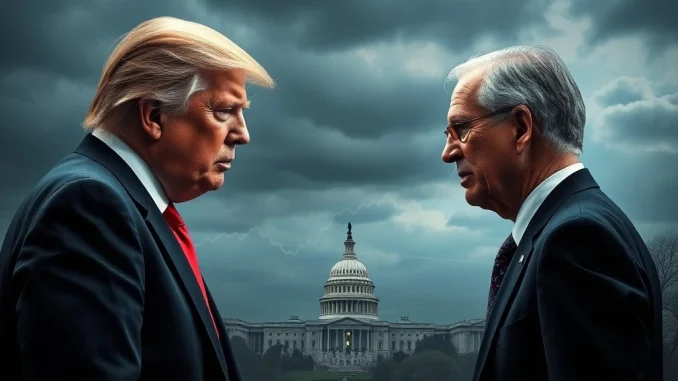
The suggestion from Donald Trump regarding the dismissal of Fed Chair Jerome Powell isn’t entirely new, but its resurfacing underscores a persistent tension. According to CBS reports, Trump recently polled House Republicans on the idea, receiving some vocal support. This isn’t just political rhetoric; it reflects a deep-seated frustration from Trump’s perspective regarding the pace and direction of the Fed’s monetary policy, particularly concerning interest rates. The relationship between a President and the central bank chief is typically one of respectful independence, yet this has often been strained during Trump’s previous term. His open criticism of Powell’s decisions has been a defining feature of their interactions, highlighting a fundamental disagreement on economic strategy.
This escalating conflict raises questions about the future of monetary policy and the stability of financial markets. Investors, including those in the cryptocurrency space, often look to central bank actions as key indicators of economic health and future liquidity. Any perceived political interference with the Federal Reserve could introduce significant uncertainty, potentially impacting risk appetite across all asset classes.
The Unprecedented Nature of a Jerome Powell Firing
The idea of a president unilaterally firing a Federal Reserve Chair is a legally untested and potentially perilous path. While the President appoints the Fed Chair, the Federal Reserve Act specifies that governors (including the Chair) can be removed ‘for cause.’ What constitutes ’cause’ is open to interpretation and has never been definitively tested in the context of a Fed Chair. Historically, Presidents have respected the Fed’s independence to avoid politicizing monetary policy, which is crucial for maintaining economic stability and market confidence. A Jerome Powell firing would plunge the US into uncharted legal and constitutional waters.
Such a move would likely face immediate legal challenges, potentially leading to a protracted court battle. The implications extend far beyond the individual, challenging the very framework of central bank autonomy. For financial markets, the uncertainty generated by such a dispute could be significant, potentially leading to increased volatility and a reassessment of US economic governance.
Key Considerations for Removal ‘For Cause’:
- Legal Interpretation: What specific actions or inactions by the Chair would legally constitute ’cause’?
- Historical Precedent: No Fed Chair has ever been removed by a President.
- Constitutional Implications: A clash between executive power and an independent institution designed to be apolitical.
Understanding the Interest Rate Policy Disagreement
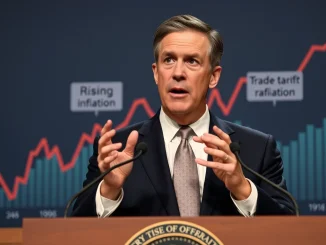
At the heart of the interest rate policy debate is a fundamental difference in economic philosophy and immediate goals. Trump has consistently advocated for lower interest rates, arguing that they stimulate economic growth, make borrowing cheaper for businesses and consumers, and keep the US competitive globally. His desire for rapid rate cuts aligns with a strategy aimed at boosting economic activity, which could be politically beneficial. He has often criticized Powell for not cutting rates fast enough or for raising them too quickly in the past, viewing these actions as impediments to growth.
Jerome Powell, on the other hand, and the Federal Reserve as an institution, operate under a dual mandate from Congress: to achieve maximum employment and stable prices (low inflation). The Fed’s decisions on interest rates are based on a complex assessment of economic data, inflation trends, and global financial conditions, not political expediency. Raising rates helps cool an overheating economy and combat inflation, while cutting them stimulates growth. Powell’s cautious approach has been aimed at navigating these mandates without triggering either recession or runaway inflation.
The disagreement highlights the inherent tension between short-term political objectives and the long-term economic stability that an independent central bank strives to achieve.
Safeguarding Federal Reserve Independence: Why It Matters
The concept of Federal Reserve independence is not merely an academic ideal; it is a cornerstone of modern economic stability. An independent central bank is crucial because it allows monetary policy decisions to be made based on economic data and expertise, free from the pressures of political cycles or partisan agendas. This autonomy helps maintain public and market confidence in the Fed’s ability to manage the economy effectively, preventing inflationary spirals or deep recessions.
If the Fed’s independence were compromised, there would be several significant risks:
- Loss of Credibility: Markets might lose faith in the Fed’s ability to make sound, unbiased decisions, leading to capital flight or decreased investment.
- Inflationary Pressures: A politically influenced Fed might be pressured to keep rates artificially low, potentially leading to uncontrolled inflation.
- Economic Instability: Without an independent body to act as a counterweight to short-term political demands, the economy could become more susceptible to boom-bust cycles.
- Global Repercussions: The US dollar’s status as a global reserve currency could be undermined, impacting international trade and finance.
The historical consensus among economists and policymakers, both domestically and internationally, has strongly favored maintaining the Fed’s independence as a vital safeguard for the economy.
Potential Economic Stability Impact and Market Reactions
The mere suggestion of firing the Fed Chair can send jitters through financial markets, and an actual attempt would likely trigger significant volatility. The immediate economic stability impact could manifest in several ways:
- Stock Market Volatility: Uncertainty about future monetary policy could lead to sharp swings in equity markets.
- Bond Market Reactions: Yields on US Treasury bonds could become unpredictable, affecting borrowing costs for the government and corporations.
- US Dollar Fluctuations: The dollar’s value could weaken if international investors perceive increased political risk or a less stable economic outlook.
- Investor Confidence: A fundamental challenge to the Fed’s independence could erode investor confidence, potentially leading to capital outflows.
For the cryptocurrency market, while often seen as uncorrelated, macro-economic stability is a significant underlying factor. Increased global financial uncertainty often leads investors to seek safe havens or, conversely, to shed riskier assets. A major disruption to US economic policy could trigger a ‘risk-off’ sentiment, potentially affecting Bitcoin and other digital assets. Conversely, some might argue that a perceived weakening of traditional financial institutions could drive more interest in decentralized alternatives, but the immediate impact is often negative volatility.
Challenges and Risks Ahead:
The path forward is fraught with challenges. Beyond the legal and political battles, the core risk is the erosion of trust in America’s economic institutions. This could lead to:
- Policy Paralysis: A prolonged dispute could distract from pressing economic issues.
- Damaged Reputation: The US’s standing as a beacon of stable economic governance could be tarnished globally.
- Unpredictable Outcomes: The lack of precedent means the full scope of consequences is unknown.
Navigating these waters requires careful consideration from all stakeholders, from policymakers to everyday investors. The stability of the financial system, and by extension, the broader economy, hinges on the perceived integrity and autonomy of its key institutions.
Conclusion: A Critical Juncture for Economic Governance
The discussion surrounding the potential dismissal of Federal Reserve Chair Jerome Powell by Donald Trump represents more than just a political skirmish; it’s a critical juncture for the principles of economic governance and central bank independence. While the legal feasibility of such a move remains highly uncertain, the very suggestion sends powerful signals about the future direction of US monetary policy and the potential for increased political influence over the nation’s financial stability. The implications for interest rates, market confidence, and the broader global economy are substantial, affecting everything from traditional stocks and bonds to the burgeoning world of cryptocurrencies. As this saga unfolds, market participants and citizens alike will be watching closely, recognizing that the outcome could redefine the boundaries of presidential power and the future of independent economic policymaking in the United States.
Frequently Asked Questions (FAQs)
Q1: Can a U.S. President legally fire the Federal Reserve Chair?
A1: The Federal Reserve Act states that governors (including the Chair) can be removed ‘for cause.’ However, what constitutes ’cause’ is not clearly defined, and no Fed Chair has ever been removed by a President. Any such attempt would likely face significant legal challenges and be an unprecedented constitutional test.
Q2: Why does Donald Trump want lower interest rates?
A2: Trump has consistently argued that lower interest rates stimulate economic growth, make borrowing cheaper for businesses and consumers, and keep the US competitive globally. He believes higher rates hinder economic expansion and his administration’s growth objectives.
Q3: Why is Federal Reserve independence considered important?
A3: Federal Reserve independence is crucial because it allows monetary policy decisions to be made based on economic data and expertise, free from short-term political pressures. This autonomy helps maintain market confidence, prevent inflation, and ensure long-term economic stability, protecting the economy from political cycles.
Q4: How might this situation impact cryptocurrency markets?
A4: While often seen as distinct, cryptocurrency markets are not entirely immune to macroeconomic shifts. Increased uncertainty in traditional financial markets due to a challenge to Fed independence could lead to a ‘risk-off’ sentiment, potentially causing volatility in crypto prices. Conversely, some might view it as a reason to seek decentralized alternatives, but the immediate impact is often negative for risk assets.
Q5: What is the Fed’s ‘dual mandate’?
A5: The Federal Reserve operates under a dual mandate from Congress: to achieve maximum employment and maintain stable prices (i.e., control inflation). Its interest rate decisions are aimed at balancing these two objectives to ensure overall economic health.