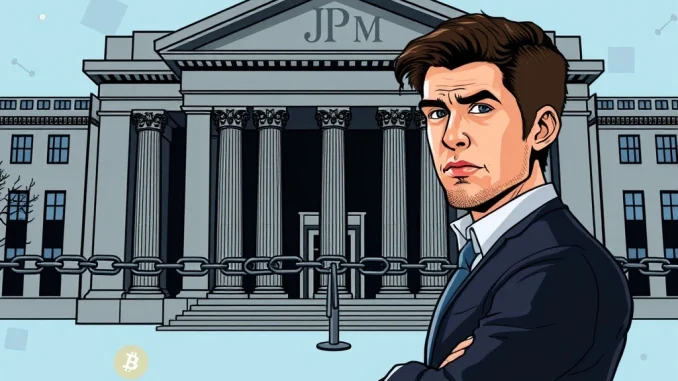
The cryptocurrency world is buzzing with a fresh controversy: Tyler Winklevoss, co-founder of the prominent Gemini exchange, has leveled a serious accusation against banking giant JPMorgan Chase. He claims the bank retaliated against Gemini by halting its re-onboarding as a banking client. This isn’t just a business disagreement; it’s a significant Winklevoss JPMorgan standoff that touches upon critical issues in digital finance and traditional banking.
The Core of the Gemini Banking Halt
At the heart of this dispute is JPMorgan’s recent policy shift regarding fintech companies. The bank announced it would require fees for fintechs to access customer bank data. Winklevoss swiftly criticized this, arguing it stifles competition and unfairly targets crypto platforms. Following his public comments, he alleges JPMorgan abandoned potential banking ties with Gemini. He described this move as part of a broader, concerning trend he calls “Operation ChokePoint 2.0.”
- JPMorgan’s New Policy: Fees for fintech companies to access customer bank data.
- Winklevoss’s Criticism: Believes the policy stifles competition and unfairly targets crypto platforms.
- The Allegation: JPMorgan halted Gemini’s re-onboarding as a banking client in retaliation for Winklevoss’s public criticism.
- “Operation ChokePoint 2.0”: A term used in the crypto community to describe perceived coordinated efforts by banks and regulators to restrict services for digital asset firms.
Unpacking the Fintech Data Fees Controversy
The controversy ignited after Winklevoss publicly criticized JPMorgan’s July 19 announcement about the new fintech data fees. He warned that this policy could severely impact third-party platforms, such as Plaid, which are essential for users to connect their bank accounts to crypto exchanges. This connectivity is a critical piece of infrastructure for the entire crypto industry.
Industry experts quickly noted that JPMorgan’s reported suspension of its relationship with Gemini could further isolate crypto firms from traditional banking systems. Over the past two years, many crypto platforms have struggled to maintain banking partners amid heightened regulatory scrutiny. This situation raises questions about whether traditional banks are leveraging their influence to suppress emerging competition from the digital asset sector. While the Federal Deposit Insurance Corporation (FDIC) has acknowledged general concerns about targeted banking practices, it has not directly implicated JPMorgan in this specific instance.
Is This “Operation ChokePoint 2.0” for Crypto Banking?
The term “Operation ChokePoint 2.0” resonates deeply within the crypto community, evoking a sense of historical precedent. The original “Operation Choke Point” was a U.S. Department of Justice initiative that scrutinized banks doing business with certain industries deemed high-risk, like payday lenders and firearms dealers. Critics argue that banks, under regulatory pressure, then broadly cut off services to these legal businesses.
Winklevoss argues that JPMorgan’s actions exemplify such tactics in the digital asset space. He believes these moves undermine consumer freedom by complicating access to essential services that link user bank accounts to crypto exchanges. This perceived strategy to limit access to traditional financial services is a major concern for the future of crypto banking in the United States, potentially creating a two-tiered financial system where digital asset firms face systemic disadvantages.
Broader Implications of the Crypto Banking Dispute
This crypto banking dispute intersects with broader tensions across the U.S. financial landscape. Gemini, launched in 2015, has consistently navigated complex regulatory challenges while expanding its services. The timing of this standoff also coincides with shifting political dynamics, including the U.S. House’s recent passage of a stablecoin regulation law, which was signed by President Donald Trump. This development signals growing political support for crypto, contrasting with the Biden administration’s more mixed regulatory approach.
Despite these political shifts, Winklevoss’s accusations highlight lingering skepticism about the role traditional banks play in shaping the future of digital finance. Industry observers suggest that JPMorgan’s stance could exacerbate existing divisions between legacy financial institutions and the burgeoning fintech and crypto sectors. This could have significant long-term implications for market access, innovation, and the overall integration of digital assets into the mainstream economy.
The standoff between Winklevoss and JPMorgan underscores a pivotal moment for crypto banking in the United States. If JPMorgan’s policies are perceived as discriminatory, they may accelerate calls for regulatory reforms to ensure equitable access to financial services for all legitimate businesses, including those in the digital asset space. Conversely, JPMorgan could argue its actions align with broader risk management and regulatory compliance efforts, especially given the evolving landscape of financial crime and consumer protection. As this situation unfolds, its resolution could set a crucial precedent for how traditional and digital financial systems interact, particularly in an era of rapid technological and policy shifts.
Frequently Asked Questions (FAQs)
1. What is the core accusation made by Tyler Winklevoss against JPMorgan?
Tyler Winklevoss alleges that JPMorgan Chase halted Gemini’s re-onboarding as a banking client in retaliation for his public criticism of JPMorgan’s new policy requiring fintech companies to pay fees for accessing customer bank data.
2. What is “Operation ChokePoint 2.0” in the context of cryptocurrency?
“Operation ChokePoint 2.0” is a term used by the crypto community to describe perceived coordinated efforts by traditional banks and regulators to restrict or deny banking services to digital asset firms, effectively ‘choking off’ their access to the traditional financial system.
3. How do JPMorgan’s new fintech data fees impact crypto exchanges?
Winklevoss argues that these new fintech data fees could cripple third-party platforms like Plaid, which are essential for users to link their bank accounts to crypto exchanges. This could complicate user access and hinder the operational infrastructure of the crypto industry.
4. What are the broader implications of this dispute for the crypto industry?
This dispute highlights the ongoing tension between traditional finance and the digital asset sector. It could lead to increased isolation for crypto firms from banking services, accelerate calls for regulatory reforms to ensure equitable financial access, and influence the future integration of crypto into the mainstream economy.
5. Has the FDIC taken a stance on JPMorgan’s actions?
The Federal Deposit Insurance Corporation (FDIC) has acknowledged general concerns about targeted banking practices that might restrict services to certain industries. However, the FDIC has not directly implicated JPMorgan in this specific dispute or commented on the details of the Winklevoss’s accusations.
6. What is the significance of the recent stablecoin regulation law mentioned in the article?
The U.S. House’s recent passage and President Trump’s signing of a stablecoin regulation law signal growing political support for crypto. This development creates a contrasting backdrop to the banking dispute, as it shows a legislative effort to legitimize parts of the crypto industry, even as banking relationships remain contentious.