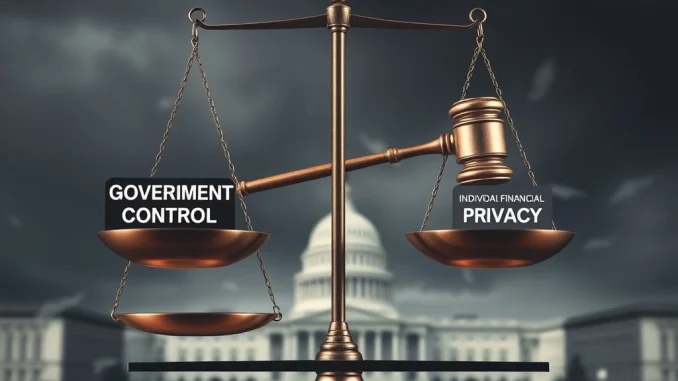
In a significant development that could reshape the future of digital currency in the United States, news has emerged that the CLARITY Bill is set to include robust anti-Central Bank Digital Currency (CBDC) provisions. This pivotal move, confirmed by Crypto in America host Eleanor Terrett and stemming from an Oval Office agreement, signals a clear intent from lawmakers to address growing concerns about government overreach in the digital financial sphere. For anyone invested in cryptocurrencies or concerned about financial privacy, this legislative push represents a crucial battleground in the ongoing debate over the nature of money in the 21st century.
Understanding the CLARITY Bill and Its New Focus
The CLARITY Bill, whose full scope has been keenly watched by the crypto community, is emerging as a key legislative vehicle for defining the boundaries of digital assets in the US. While its broader aim is to provide regulatory clarity for the digital asset space, the latest update indicates a sharp pivot towards explicitly curtailing the development and implementation of a US CBDC. This strategic inclusion of anti-CBDC provisions within the CLARITY legislation suggests a concerted effort by lawmakers to preemptively address potential risks associated with a government-controlled digital currency.
The House Rules Committee reconvening to specifically add these strong provisions underscores the urgency and bipartisan nature of this particular concern, reflecting a growing consensus against a fully centralized digital dollar. This development highlights a proactive stance by Congress to shape the future of digital finance in a way that prioritizes individual liberties and market innovation over centralized control. The CLARITY Bill, therefore, is not just about regulation; it’s about setting foundational principles for how digital currency will evolve in America.
The Growing Debate Around CBDC: Why the Opposition?
Central Bank Digital Currencies, or CBDCs, are digital forms of a country’s fiat currency, issued and controlled by its central bank. Proponents often highlight potential benefits like increased efficiency in payments, financial inclusion, and better monetary policy tools. However, a powerful and vocal opposition has emerged, driven by profound concerns over the fundamental principles of individual liberty and financial privacy. Critics argue that a CBDC could grant the government unprecedented surveillance capabilities over citizens’ spending habits, effectively turning money into a tool for control rather than a medium of exchange.
This debate is not merely theoretical; it touches upon the very definition of economic freedom. Many believe that the transparency and decentralization offered by cryptocurrencies like Bitcoin stand in stark contrast to the centralized, programmable nature of a CBDC, fueling the push for strong legislative safeguards. The fear of ‘programmable money’ – where the government could potentially dictate how, when, or where money is spent – is a significant driver behind the widespread resistance to a retail CBDC in the United States.
Crucial Anti-CBDC Provisions: Safeguarding Digital Currency
The newly agreed-upon anti-CBDC provisions within the CLARITY Bill are expected to be comprehensive, aiming to significantly restrict or even outright prohibit the Federal Reserve from issuing a retail CBDC. While the exact language is still being finalized, these provisions are anticipated to address several key areas:
Prohibition on Direct Issuance: Preventing the Federal Reserve from directly issuing digital currency to individuals, thus avoiding a direct relationship between the central bank and citizens’ accounts.
Limits on Programmability: Ensuring that any potential digital dollar cannot be ‘programmed’ to restrict how or when individuals spend their money, preserving economic freedom.
Protection of Privacy: Mandating strict privacy safeguards, making it clear that a CBDC cannot be used for surveillance or data collection on citizens’ transactions.
Requirement for Congressional Approval: Potentially requiring explicit Congressional authorization before any CBDC project can proceed, rather than allowing executive action alone, thereby ensuring democratic oversight.
These measures represent a significant victory for advocates of individual liberty and limited government, reinforcing the idea that any form of digital currency introduced by the state must uphold fundamental rights.
Protecting Financial Privacy: A Core Concern
At the heart of the anti-CBDC movement is the paramount concern for financial privacy. In a world increasingly reliant on digital transactions, the ability to conduct financial affairs without constant government oversight is viewed by many as a fundamental right. A retail CBDC, particularly one designed without robust privacy protections, could theoretically allow the government to monitor every transaction, track spending patterns, and even potentially freeze or restrict access to funds based on certain criteria.
This level of granular control is what proponents of the anti-CBDC provisions aim to prevent. The inclusion of strong financial privacy clauses in the CLARITY Bill is a direct response to these fears, seeking to ensure that America’s financial system, even in its digital evolution, remains a bastion of individual freedom rather than a tool for state surveillance. This focus on privacy aligns with the broader ethos of decentralized digital currency, which champions user autonomy and resistance to centralized control.
What This Means for the Future of Digital Assets in the US
This legislative development carries profound implications for the broader digital currency ecosystem in the United States. By taking a strong stance against a centralized CBDC, Congress is implicitly, and perhaps explicitly, signaling a preference for market-driven innovation in the digital asset space. It could potentially:
Boost Private Stablecoins: Reduce the competitive threat from a government-issued digital currency, potentially fostering innovation and adoption of private stablecoins regulated under clear frameworks.
Reinforce Bitcoin’s Narrative: Strengthen the narrative of decentralized cryptocurrencies like Bitcoin as a bulwark against centralized financial control, appealing to those who prioritize censorship resistance and autonomy.
Shape Regulatory Direction: Influence future regulatory discussions, pushing them towards consumer protection and innovation rather than state control, setting a precedent for a more crypto-friendly regulatory landscape.
This move could set a precedent for how other nations approach their own digital currency initiatives, particularly those grappling with the balance between innovation and state oversight. It underscores a legislative environment increasingly aware of the nuanced implications of digital money.
The Road Ahead: Navigating Digital Currency Policy
While the inclusion of these anti-CBDC provisions in the CLARITY Bill is a significant step, the journey for comprehensive digital currency policy is far from over. The bill still needs to pass through various legislative hurdles, and the specific details of the provisions will be crucial. This development highlights the dynamic nature of policy-making in the rapidly evolving digital asset landscape. It emphasizes the need for continued vigilance and advocacy from the crypto community to ensure that future legislation supports innovation while safeguarding fundamental rights.
The bipartisan nature of this agreement, originating from the Oval Office, suggests a serious commitment to addressing these concerns at the highest levels of government, offering a glimmer of hope for a future where digital finance thrives without compromising liberty. The ongoing debate around CBDCs and financial privacy will undoubtedly remain a central theme in Washington, with the CLARITY Bill serving as a key battleground.
The anticipated inclusion of robust anti-CBDC provisions in the CLARITY Bill marks a pivotal moment in the ongoing debate over the future of money in America. Driven by concerns over financial privacy and government control, this legislative effort aims to set clear boundaries for the development of a potential Central Bank Digital Currency. This decisive action, stemming from high-level agreements, signals a strong commitment to protecting individual liberties in the digital age. As the CLARITY legislation progresses, its impact will undoubtedly resonate across the entire digital currency landscape, influencing everything from private stablecoin development to the broader perception of decentralized assets. It’s a testament to the growing awareness and advocacy for a future where digital innovation coexists with fundamental freedoms.
Frequently Asked Questions (FAQs)
Q1: What is the CLARITY Bill?
A1: The CLARITY Bill is proposed legislation in the U.S. Congress aimed at providing regulatory clarity for digital assets. It is now set to include strong provisions specifically targeting Central Bank Digital Currencies (CBDCs).
Q2: What is a Central Bank Digital Currency (CBDC)?
A2: A CBDC is a digital form of a country’s fiat currency, issued and controlled by its central bank. Unlike cryptocurrencies, which are often decentralized, a CBDC is centralized and backed by the full faith and credit of the government.
Q3: Why are there strong anti-CBDC provisions being added to the CLARITY Bill?
A3: These provisions are being added primarily due to concerns about financial privacy, potential government surveillance over transactions, and the risk of programmable money that could limit individual spending freedoms. Lawmakers aim to prevent what they see as excessive government control over digital currency.
Q4: How does this affect financial privacy?
A4: The anti-CBDC provisions are designed to protect financial privacy by restricting the government’s ability to monitor or control individual spending habits through a centralized digital currency. They aim to ensure that any digital dollar would not be used for surveillance or data collection.
Q5: What does this mean for other digital currencies like Bitcoin or stablecoins?
A5: By taking a strong stance against a centralized CBDC, this legislative move could implicitly foster a more favorable environment for private sector innovation in digital assets, including stablecoins and decentralized cryptocurrencies like Bitcoin, as it reduces the potential for a direct government competitor in the digital money space.
Q6: What was the ‘Oval Office agreement’ mentioned?
A6: The ‘Oval Office agreement’ refers to a high-level agreement made between key political figures, including the President’s office, indicating a consensus to move forward with adding these specific anti-CBDC provisions to the CLARITY legislation, underscoring the bipartisan and serious nature of the effort.