The cryptocurrency market, known for its rapid shifts, is once again captivated by the latest developments surrounding XRP. Recent actions by Ripple co-founder Chris Larsen have sent ripples through the market, leading to a notable XRP Price Drop and sparking concerns among investors. This isn’t just about a few transactions; it’s about the potential for billions of dollars to influence the future trajectory of one of the market’s most watched digital assets. If you’re invested in XRP or simply following the broader crypto landscape, understanding these dynamics is crucial.
Understanding the Recent XRP Price Drop: What Triggered the Sell-Off?
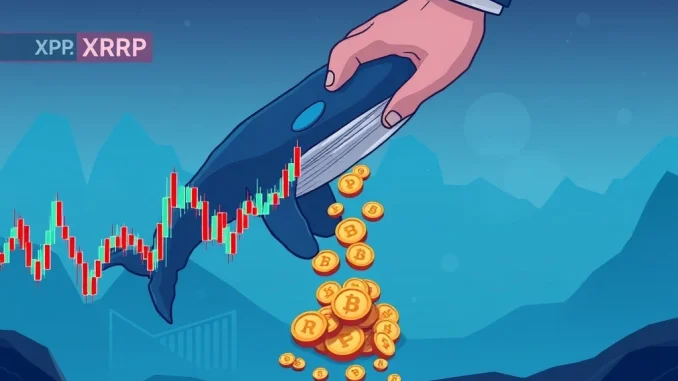
Recent reports have highlighted significant movements of XRP from wallets linked to Ripple co-founder Chris Larsen, reigniting investor anxiety. These transactions, often referred to as ‘whale movements’ due to their large scale, have a history of influencing market sentiment and price action. Specifically, two major transfers have caught the market’s attention:
- July 10, 2025: Wallets associated with Larsen moved approximately $140 million worth of XRP to exchanges.
- July 25, 2025: A further $175 million worth of XRP was transferred to exchanges from Larsen’s wallets.
These actions, totaling $315 million in just over two weeks, occurred shortly after XRP had reached a three-year high of $3.60 in early July. However, the subsequent selling pressure saw the token retreat below $3. Data from CoinGlass indicated a 10.33% decline in XRP’s value following the July 15 withdrawals (which likely refers to the cumulative effect or a specific mid-month event not explicitly detailed in the original source but implied by the timing). The July 25 transfer alone—a substantial 50 million XRP—reportedly triggered an immediate 14% decline in the XRP/USD pair. This immediate reaction underscores how sensitive the market is to large-scale liquidations, particularly from prominent figures within the ecosystem.
For investors, such events serve as a stark reminder of the inherent volatility in digital assets. While price surges can be exhilarating, the potential for rapid corrections due to significant sell-offs by large holders is a constant risk. The market often interprets such large transfers to exchanges as a precursor to selling, leading to pre-emptive price adjustments as traders anticipate increased supply.
Chris Larsen XRP Sales: A Whale’s Shadow Over the Market
The term ‘whale’ in cryptocurrency refers to an individual or entity holding a large amount of a particular digital asset, enough to significantly influence its price. Chris Larsen, as a co-founder of Ripple, naturally holds a substantial amount of XRP. The concern among analysts, particularly J. A. Maartunn from CryptoQuant, revolves around the sheer scale of Larsen’s remaining holdings. According to Maartunn, Larsen’s wallet still contains approximately 2.58 billion XRP, valued at an estimated $8.83 billion.
This massive reserve represents a concentrated liquidity risk for XRP. In simpler terms, if a significant portion of this $8.83 billion were to be sold, it could overwhelm market demand and lead to a more severe XRP Price Drop. Maartunn’s pointed question, “If $200 million was just the warm-up… what’s next?” reflects the apprehension that these recent sales might just be the beginning of a larger offloading strategy. He urged investors to avoid becoming “exit liquidity,” a term referring to market participants who buy up assets as large holders are selling, effectively providing the liquidity for those whales to exit their their positions.
The concentration of XRP in a few major wallets, including those of its founders and early investors, is a long-standing point of discussion within the XRP community. While some argue that these holdings represent long-term commitment, others view them as a potential overhang that could suppress price appreciation. The recent actions by Larsen have brought this debate back to the forefront, highlighting the delicate balance between concentrated ownership and market stability. The market’s reaction suggests that even partial sales from such large holdings can disproportionately impact price, given the token’s limited circulating supply relative to its overall market capitalization.
Decoding the Ripple XRP Dynamics: Beyond Price Swings
Understanding the broader context of Ripple XRP involves looking beyond immediate price fluctuations to the underlying legal and fundamental developments. Earlier in July, XRP experienced a significant price boost following a partial legal victory for Ripple against the U.S. Securities and Exchange Commission (SEC). This ruling, which clarified that XRP sold on exchanges was not an unregistered security, was hailed as a landmark decision for the broader crypto industry.
However, the euphoria from this legal win appears to be short-lived in the face of persistent selling pressure from major holders. This scenario illustrates a critical dichotomy: positive regulatory news can provide a strong fundamental tailwind, but concentrated liquidity risk from large, early investors can counteract these gains. The market’s inability to sustain the post-SEC ruling rally, particularly as it faces new selling pressure, highlights the complex interplay of factors influencing XRP’s value.
Ripple’s vision for XRP Ledger (XRPL) and its use cases in cross-border payments and tokenization remain strong. The company continues to forge partnerships and develop its ecosystem. However, market observers note that the potential for large-scale sales from high-profile wallets like Larsen’s remains a persistent risk factor that overshadows some of these positive developments. The market’s interpretation of these sales—whether opportunistic or reflective of changing long-term confidence—significantly shapes sentiment. It suggests that even if Ripple’s technology gains wider adoption, the shadow of potential sell-offs from early holders could linger.
Navigating Current Crypto Market Volatility: What Investors Need to Know
The recent events surrounding XRP are a prime example of the inherent Crypto Market Volatility. For investors, navigating such periods requires a blend of vigilance, analysis, and strategic thinking. Here are some key considerations:
- Understand Whale Behavior: Large transfers to exchanges, especially from known addresses, often signal potential selling. On-chain analytics tools can help track these movements, providing early warnings.
- Risk Management: Never invest more than you can afford to lose. Set stop-loss orders to limit potential downside during sharp price drops. Diversify your portfolio to reduce reliance on a single asset.
- Avoid ‘Exit Liquidity’: Be cautious about buying into sudden dips caused by large, identifiable sell-offs. While ‘buying the dip’ can be profitable, it’s crucial to distinguish between healthy corrections and liquidity provision for whales.
- Regulatory Landscape: Keep an eye on ongoing legal battles and regulatory clarity. While the SEC ruling was positive for XRP, the broader regulatory environment for cryptocurrencies remains dynamic and can introduce new uncertainties.
- Fundamental vs. Speculative: Differentiate between the fundamental value proposition of a project (like Ripple’s technology) and its speculative price movements. While fundamentals are important long-term, short-term prices are heavily influenced by supply/demand dynamics and market sentiment.
The market’s reaction to Larsen’s sales underscores the importance of liquidity and distribution in a token’s ecosystem. While centralized exchanges offer liquidity, concentrated holdings can create significant supply shocks when those holdings move. Investors should always consider the distribution of a token and the potential impact of large holders on its price stability.
What’s Next for XRP News Today? The Road Ahead
As of late July 2025, XRP News Today continues to be dominated by the twin pressures of regulatory uncertainty and the liquidity risks posed by major holders. The token trades significantly below its all-time highs, reflecting the market’s cautious stance. The future price stability of XRP may largely depend on two critical factors:
- Further Regulatory Clarity: While Ripple secured a partial victory, the broader legal landscape for XRP and the company itself remains unresolved. A definitive resolution or increased regulatory certainty could instill greater confidence and potentially attract more institutional adoption.
- Management of Large Holdings: The manner in which large holders, like Chris Larsen, manage their remaining XRP will be crucial. Whether future sales are executed strategically to minimize market impact, or if they continue to be perceived as aggressive offloading, will heavily influence market sentiment.
The $9 billion sellable portion in Larsen’s wallet represents a significant potential supply. If the market interprets future sales as opportunistic rather than reflective of long-term confidence, it could exacerbate downward momentum. Conversely, if these large holdings are managed with transparency and consideration for market health, it could alleviate some of the current anxieties.
For XRP to achieve sustained growth and stability, it will likely require not only continued development and adoption of its technology but also a more predictable supply-side dynamic. Investors will be closely watching for any further movements from large wallets and for updates on Ripple’s ongoing legal engagements, as these factors will continue to shape the narrative and price action of XRP.
The recent events surrounding Chris Larsen’s XRP sales serve as a powerful reminder of the unique challenges and opportunities within the cryptocurrency market. While XRP boasts strong technology and a significant legal win, the concentrated nature of its supply among early holders introduces a distinct layer of market risk. Investors must remain informed and adaptable, understanding that the actions of a few major players can have profound effects on the entire ecosystem. As the market continues to evolve, vigilance and a clear understanding of both fundamental and on-chain dynamics will be key to navigating the exciting yet volatile world of digital assets.
Frequently Asked Questions (FAQs)
1. Why are Chris Larsen’s XRP sales causing a price drop?
Chris Larsen, as a Ripple co-founder, holds a very large amount of XRP. When he transfers significant portions of his holdings to exchanges, the market often interprets this as an intent to sell. This anticipated increase in supply, especially from a major holder, can trigger fear among investors, leading to selling pressure and a subsequent price decline as the market reacts to the potential for more supply than demand.
2. How much XRP does Chris Larsen still hold?
According to on-chain analysts, wallets linked to Chris Larsen still hold approximately 2.58 billion XRP, which was valued at around $8.83 billion at the time of the article. This substantial amount represents a significant portion of XRP’s total supply, making his potential future sales a major factor for the market.
3. What is ‘exit liquidity’ in the context of whale sales?
‘Exit liquidity’ refers to smaller investors or new buyers who purchase an asset as large holders (whales) are selling off their positions. By buying, these investors provide the necessary liquidity for the whales to exit their large holdings without crashing the price too severely, effectively absorbing the supply that whales are offloading.
4. Did Ripple’s legal victory against the SEC not help XRP’s price?
Ripple’s partial legal victory against the SEC did initially provide a significant boost to XRP’s price in early July, as it clarified the status of XRP sold on exchanges. However, the positive momentum from this legal win has been partially offset by the subsequent large-scale sales from major holders like Chris Larsen, demonstrating that while regulatory clarity is crucial, concentrated supply risk can still exert downward pressure.
5. What should investors consider given the current XRP market conditions?
Investors should consider several factors: the potential impact of large holder sales, the ongoing regulatory landscape for XRP, and overall crypto market volatility. It’s advisable to practice strong risk management, diversify portfolios, and stay informed about on-chain movements and fundamental developments rather than reacting solely to short-term price swings.
6. Will Chris Larsen sell all his remaining XRP?
There is no public information confirming whether Chris Larsen intends to sell all his remaining XRP. However, the fact that such a large amount remains in his wallets means the potential for future sales continues to be a point of speculation and concern for the market. His past actions indicate a willingness to move large sums to exchanges, which will likely keep investors vigilant.