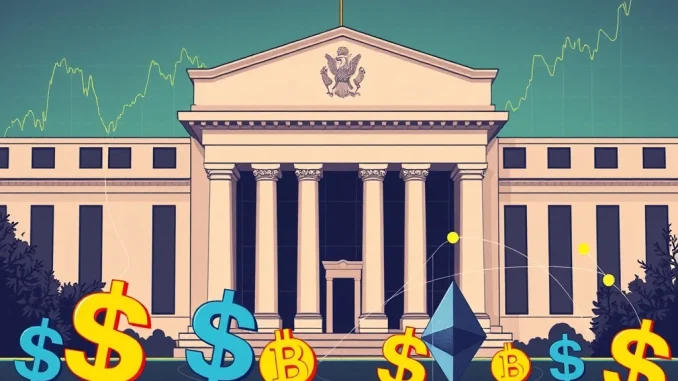
The cryptocurrency market, ever-sensitive to macroeconomic shifts, is once again holding its breath as signals emerge from the heart of global finance. Recent statements from a key Federal Reserve official suggest that the eagerly anticipated Fed interest rate cuts might not be on the immediate horizon. What does this mean for your digital assets and the broader financial landscape? Let’s dive in.
Bostic’s Crucial Stance on Fed Interest Rate Cuts
According to reports from JinSe Finance, citing the Wall Street Journal, Federal Reserve official Raphael Bostic has indicated that short-term interest rate cuts may prove challenging. This isn’t just a casual remark; it’s a significant statement from a voting member of the Federal Open Market Committee (FOMC), the body responsible for setting the nation’s monetary policy. Bostic’s perspective underscores a cautious approach within the Fed, suggesting that policymakers are not yet convinced the economic conditions warrant a swift pivot towards lower rates.
For months, market participants, including those in the volatile crypto space, have been speculating on the timing and magnitude of rate reductions. The prevailing sentiment was that inflation was cooling, and the Fed would soon ease its tight monetary policy. However, Bostic’s comments throw a wrench into these expectations, signaling that the path to rate cuts is far from straightforward. This prolonged period of higher rates could have profound implications across various asset classes.
Unpacking Raphael Bostic’s Perspective: Why the Caution?
Why would a Fed official express such caution regarding rate cuts? The Federal Reserve’s primary mandates are to achieve maximum employment and stable prices (low inflation). Bostic’s stance likely reflects ongoing concerns about:
- Persistent Inflation: While inflation has come down from its peaks, it might not be declining at the pace the Fed desires to confidently cut rates. Supply chain issues, geopolitical events, and strong consumer demand can all contribute to inflationary pressures.
- Resilient Labor Market: A strong job market, while positive for the economy, can also fuel wage growth and consumer spending, potentially contributing to inflation. The Fed might see this as a sign that the economy can withstand current interest rate levels.
- Economic Strength: If the economy continues to show robust growth, the urgency to stimulate it with lower rates diminishes. The Fed aims for a ‘soft landing’ – bringing inflation down without triggering a recession – and current rates might be seen as achieving this balance.
Bostic’s comments suggest that the Fed is prioritizing its inflation fight, even if it means delaying the much-anticipated rate reductions. This deliberate approach aims to ensure inflation is truly under control before loosening the reins on monetary policy.
Monetary Policy: The Fed’s Tightrope Walk
The Federal Reserve’s monetary policy decisions are a delicate balancing act. On one side, they combat inflation by raising interest rates, which makes borrowing more expensive, slows spending, and cools the economy. On the other, they risk stifling economic growth and potentially triggering a recession if rates are too high for too long.
Here’s a simplified look at how the Fed’s decisions ripple through the economy:
| Interest Rate Action | Impact on Economy | Potential Crypto Market Effect |
|---|---|---|
| Rates Held High (as per Bostic’s view) | Higher borrowing costs, slower economic growth, potentially stronger dollar. | Reduced appetite for risk assets, potential capital outflow, slower adoption. |
| Rates Cut (currently unlikely) | Lower borrowing costs, stimulated spending, weaker dollar. | Increased appetite for risk assets, potential capital inflow, bullish sentiment. |
Bostic’s comments suggest we are firmly in the ‘Rates Held High’ scenario for the near term, meaning investors need to adjust their strategies accordingly.
Understanding the Crypto Market Impact
So, how does the prospect of delayed Fed interest rate cuts affect the cryptocurrency market? Historically, crypto assets, often considered riskier investments, have thrived in environments of low interest rates and abundant liquidity. When rates are low, traditional investments like bonds offer lower returns, pushing investors towards higher-yield, higher-risk assets like stocks and cryptocurrencies.
Conversely, when interest rates are high or expected to remain high, the allure of ‘risk-free’ returns from bonds increases. This can lead to a rotation of capital out of risk assets and into safer havens. For the crypto market impact, this often translates to:
- Reduced Liquidity: Less ‘easy money’ flowing into the system can tighten market conditions for crypto.
- Increased Volatility: Uncertainty about future monetary policy can exacerbate price swings.
- Slower Growth: Companies and projects in the crypto space might find it harder to secure funding, potentially slowing innovation and adoption.
While Bitcoin and other cryptocurrencies have shown resilience and even significant rallies in recent times, largely driven by narratives like spot ETF approvals and the upcoming halving, they are not immune to broader economic forces. A hawkish Fed stance can act as a significant headwind, tempering bullish sentiment.
Navigating the Economic Outlook: What Lies Ahead?
The economic outlook, shaped heavily by the Fed’s actions, now seems to lean towards a ‘higher for longer’ interest rate environment. This implies that businesses and consumers will continue to face elevated borrowing costs for mortgages, car loans, and business investments. While this is intended to cool inflation, it also puts pressure on corporate earnings and consumer spending power.
For crypto investors, understanding this broader economic context is crucial. The narrative might shift from ‘when will rates be cut?’ to ‘how long can the economy withstand these rates?’ Key indicators to watch include:
- Inflation Data: Consumer Price Index (CPI) and Personal Consumption Expenditures (PCE) reports.
- Employment Figures: Non-farm payrolls, unemployment rates, and wage growth.
- GDP Growth: Quarterly economic output reports.
- Consumer Confidence: Surveys indicating spending intentions.
These data points will continue to inform the Fed’s decisions, and any significant shifts could alter Bostic’s (and the Fed’s) perspective on future rate adjustments.
Challenges and Opportunities for Crypto Investors
The current environment presents both challenges and potential opportunities for crypto investors:
Challenges:
- Sustained Pressure: Higher rates can continue to exert downward pressure on risk assets, making significant bull runs harder to sustain without strong catalysts.
- Reduced Speculation: Less liquidity might mean less speculative trading, impacting altcoin performance.
- Increased Scrutiny: Projects will face greater pressure to demonstrate real-world utility and sustainable business models in a tighter funding environment.
Opportunities:
- Focus on Fundamentals: A ‘higher for longer’ environment encourages a focus on projects with strong fundamentals, clear use cases, and robust technology. This can help weed out weaker projects.
- Long-Term Accumulation: For long-term believers, periods of market consolidation or downturns due to macro factors can present opportunities for dollar-cost averaging into preferred assets.
- Yield Opportunities: DeFi protocols might offer competitive yields, but these come with their own set of risks that require careful evaluation.
It’s a time for prudence and strategic planning rather than impulsive decisions. Diversification and a deep understanding of the assets you hold become even more critical.
Conclusion: Navigating the Uncharted Waters
Raphael Bostic’s recent comments serve as a powerful reminder that the path to lower interest rates is not guaranteed, and the Federal Reserve remains vigilant in its fight against inflation. For the crypto market, this implies that while internal catalysts like halving events and ETF flows are significant, the overarching macroeconomic environment, particularly the Fed’s monetary policy, will continue to play a crucial role in shaping market sentiment and price action. Investors must stay informed, adapt their strategies, and prepare for a potentially extended period where the cost of money remains elevated. The era of easy money may be behind us, at least for the short term, demanding a more mature and resilient approach from crypto participants.
Frequently Asked Questions (FAQs)
Q1: Who is Raphael Bostic and why are his comments important?
Raphael Bostic is the President and CEO of the Federal Reserve Bank of Atlanta. His comments are important because he is a key policymaker within the Federal Reserve System and a voting member of the Federal Open Market Committee (FOMC), which sets the nation’s interest rates. His views offer insight into the Fed’s collective thinking on monetary policy.
Q2: What does ‘short-term interest rate cuts may be difficult’ mean for the economy?
It suggests that the Federal Reserve believes the economy can withstand current interest rate levels without immediately needing stimulation. This implies the Fed is still primarily focused on bringing inflation down to its 2% target, even if it means maintaining higher borrowing costs for businesses and consumers for a longer period. It could lead to slower economic growth but aims to avoid a resurgence of inflation.
Q3: How do Fed interest rate cuts (or lack thereof) impact the crypto market?
When interest rates are high, traditional ‘safer’ investments like bonds become more attractive, potentially drawing capital away from riskier assets like cryptocurrencies. Higher rates also mean a tighter liquidity environment, which can reduce speculative activity and make it harder for crypto projects to secure funding. Conversely, rate cuts typically signal an environment of looser money, which can be bullish for crypto.
Q4: What should crypto investors do in response to this news?
Investors should consider adapting their strategies. This might involve focusing on fundamentally strong projects with clear utility, practicing dollar-cost averaging for long-term accumulation, and being prepared for continued volatility. It’s also crucial to stay informed about economic data and further Fed communications to anticipate potential shifts in the economic outlook.
Q5: Is there any scenario where the Fed might still cut rates soon?
While Bostic’s comments suggest difficulty, a significant deterioration in economic data (e.g., a sharp rise in unemployment, a severe recession, or a rapid and sustained fall in inflation below target) could prompt the Fed to reconsider and implement Fed interest rate cuts sooner. However, based on current statements, this would likely require a notable shift in the economic landscape.