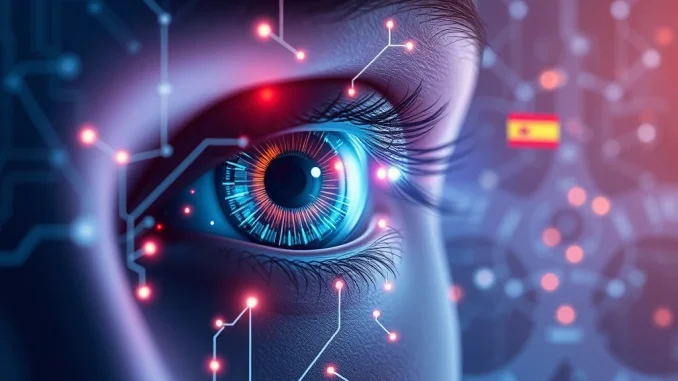
In a move that could redefine human potential, Elon Musk’s neurotechnology company, Neuralink, has announced an ambitious collaboration set to revolutionize how we perceive the world. Partnering with leading research teams in Spain and California, Neuralink is embarking on a groundbreaking “Smart Bionic Eye” project. This initiative leverages cutting-edge brain-computer interface (BCI) technology, promising to restore vision for blind patients and potentially unlock new sensory experiences. For anyone invested in the future of technology and human augmentation, this venture signifies a pivotal moment, aiming for a staggering $1 billion in annual revenue by 2031.
Neuralink’s Bold Leap: A Bionic Eye for Vision Restoration
Neuralink, widely known for its pioneering work in restoring motor function for paralyzed individuals, is now setting its sights on a new frontier: sight itself. The company’s latest endeavor, the “Smart Bionic Eye,” represents a significant expansion of its core mission to merge human cognition with advanced technology. This project is not merely about addressing vision impairment; it’s about pushing the boundaries of what’s possible, moving beyond therapeutic applications into the realm of sensory augmentation.
The clinical trial for this revolutionary device, officially listed on ClinicalTrials.gov under the University of California at Santa Barbara, is designed to investigate how artificial intelligence can seamlessly integrate with neural systems to enable visual perception. At its heart lies Neuralink’s ‘Blindsight’ vision chip, a sophisticated device engineered to process visual data and transmit it directly into the brain’s visual cortex. The ultimate goal of this **Neuralink bionic eye** is to empower users to perform everyday tasks such as recognizing faces, navigating complex outdoor environments, and reading text. Neuralink aims for a commercial launch of Blindsight by 2030, an ambitious timeline that reflects the company’s drive and confidence.
How Does BCI Technology Power This Vision?
The foundation of Neuralink’s bionic eye project lies in advanced **BCI technology**. But what exactly is BCI, and how can it give sight to the blind? Brain-Computer Interfaces are systems that create a direct communication pathway between the brain and an external device. In the context of vision restoration, this involves several complex steps:
- Data Acquisition: The bionic eye component captures visual information from the environment, much like a camera.
- Signal Processing: This visual data is then processed by an AI-powered chip, translating it into electrical signals that the brain can interpret. This is where the ‘smart’ aspect comes in, as AI algorithms learn to convert complex visual patterns into meaningful neural inputs.
- Neural Transmission: These processed signals are then transmitted directly to the visual cortex of the brain via tiny implanted electrodes. The brain, in turn, interprets these signals as visual perception, effectively bypassing damaged optic nerves or retinal structures.
This intricate dance between artificial intelligence, hardware, and the human nervous system is what makes the **BCI technology** so transformative. It’s not just about seeing light; it’s about enabling the brain to construct a coherent and interpretable visual world from artificial inputs.
Unpacking Neuralink’s Ambitious Neurotechnology Roadmap
The bionic eye project is just one facet of Neuralink’s expansive **neurotechnology** ambitions. The company has outlined a multi-pronged strategy, each project designed to push the boundaries of human-computer interaction:
- Blindsight (Smart Bionic Eye): As discussed, this is the primary focus, targeting 20,000 surgeries per year across five large clinics by 2031, with a projected annual revenue of $1 billion. This represents the pinnacle of their current revenue projections.
- Telepathy: This device aims to enable mind-controlled external devices, allowing users to interact with computers or smartphones purely through thought. Neuralink projects 2,000 surgeries annually by 2029, potentially generating $100 million in revenue.
- Deep: Still in earlier stages of development, ‘Deep’ is intended for the treatment of Parkinson’s disease and other neurological conditions. While revenue projections for Deep are not yet detailed, its potential impact on chronic neurological disorders is immense.
These ambitious plans are underpinned by Neuralink’s impressive $9 billion valuation and substantial investor funding of $1.3 billion. However, it’s crucial to note that none of these devices have yet received full FDA approval for permanent human use, a critical hurdle for widespread adoption.
Navigating the Hurdles: Challenges for Neuralink’s Bionic Eye
Despite the optimistic forecasts and groundbreaking potential, Neuralink faces significant challenges in bringing its **bionic eye** and other devices to market. The path from innovative concept to widespread clinical application is fraught with complexities:
- Regulatory Approval: The most immediate hurdle is securing FDA approval for permanent human implantation. This requires extensive safety and efficacy trials, a process known for its rigor and length. To date, Neuralink has conducted very limited human trials, with fewer than 10 individuals receiving implants, all for motor function restoration, not for the bionic eye or Parkinson’s projects.
- Technical Complexities: Translating complex visual signals into interpretable neural patterns is an immense scientific and engineering challenge. The brain’s plasticity is remarkable, but ensuring consistent, reliable, and high-fidelity visual perception from artificial inputs requires overcoming numerous technical obstacles.
- Scalability: Neuralink’s revenue projections are contingent on scaling to 20,000 surgeries per year. This requires not only manufacturing capabilities but also the establishment of specialized clinics, trained surgical teams, and post-operative care infrastructure, a monumental undertaking.
- Timeline Skepticism: Elon Musk’s ventures are often characterized by ambitious timelines that frequently get delayed. For instance, Tesla’s fully autonomous driving features, promised in 2015, only began road testing in 2024. This history raises questions about the feasibility of Neuralink’s aggressive launch targets for Blindsight.
The collaboration with Spain and California underscores a global effort to tackle these challenges. Spain’s growing expertise in neuroprosthetics research, combined with California’s entrenched leadership in tech-driven medical innovation, provides a robust ecosystem for this complex work. However, the absence of concrete clinical results for the bionic eye project and the inherent risks of pioneering neural interfaces necessitate a cautious outlook.
What Does This Mean for the Future of Vision Restoration?
The implications of Neuralink’s bionic eye project extend far beyond simply restoring sight. If successful, this technology could fundamentally alter our understanding of human perception and interaction with the digital world. The project marks a clear shift in Neuralink’s strategy towards sensory augmentation, potentially attracting not only medical patients but also a broader consumer market interested in enhanced capabilities.
Imagine a future where the bionic eye evolves beyond therapeutic use. It could enable real-time data visualization, seamlessly overlaying digital information onto our natural field of vision, akin to advanced augmented reality applications. This blurs the line between biology and technology, paving the way for a future where sensory inputs can be customized, enhanced, or even entirely new senses can be created. The promise of comprehensive **vision restoration** is just the beginning of what this **neurotechnology** could achieve.
Neuralink’s partnership with Spain and California for the Smart Bionic Eye project is a monumental step forward in the field of neurotechnology. While the ambitious revenue targets and launch timelines come with inherent skepticism given the complex regulatory and technical hurdles, the potential for transformative impact on human lives is undeniable. As research progresses and clinical trials unfold, the world watches closely to see if Neuralink can indeed turn its audacious vision of a bionic future into a tangible reality, forever changing the landscape of human perception.
Frequently Asked Questions (FAQs)
Q1: What is the primary goal of Neuralink’s Smart Bionic Eye project?
The primary goal is to restore vision for blind patients by leveraging brain-computer interface (BCI) technology. It aims to enable users to recognize faces, navigate environments, and read text by processing visual data and sending it directly to the brain’s visual cortex.
Q2: Which entities are collaborating with Neuralink on this bionic eye project?
Neuralink has partnered with research teams in Spain and California, with the clinical trial listed under the University of California at Santa Barbara.
Q3: What are Neuralink’s revenue projections for the bionic eye project?
Neuralink projects $1 billion in annual sales by 2031 for the Blindsight vision chip, contingent on scaling to 20,000 surgeries per year across five large clinics.
Q4: Has Neuralink’s bionic eye device received FDA approval for human use?
No, none of Neuralink’s devices, including the bionic eye, have yet received FDA approval for permanent human use. Human testing for the bionic eye remains pending regulatory approval, and enrollment is currently by invitation only.
Q5: What are some of the key challenges Neuralink faces with this project?
Key challenges include obtaining FDA approval, overcoming significant technical complexities in translating visual signals into interpretable neural patterns, scaling surgical operations to meet ambitious targets, and addressing skepticism due to past delays in Elon Musk’s other ventures.
Q6: How does the bionic eye project fit into Neuralink’s broader vision?
The bionic eye project is a pivotal step in Neuralink’s broader vision to merge human cognition with advanced technology, expanding beyond its earlier focus on motor function restoration. It signifies a shift towards sensory augmentation and could potentially lead to augmented reality applications beyond therapeutic use.