In the ever-evolving financial landscape, understanding where the big money is moving is crucial, even for those deeply immersed in the crypto world. A recent Goldman Sachs survey has sent ripples through the market, revealing a striking divergence in market sentiment among institutional investors. While the crypto market often dances to its own tune, these broader macroeconomic shifts can indirectly influence liquidity and investor appetite across all asset classes.
What Are Institutional Investors Saying About the S&P 500?
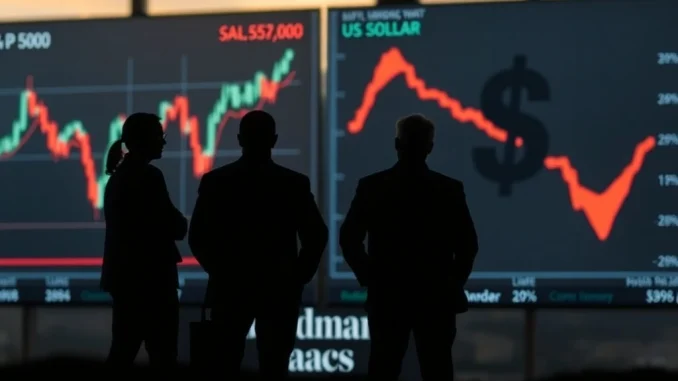
According to the latest report from Goldman Sachs, a significant majority of institutional investors are feeling confident about U.S. equities. The survey highlights that 51% of respondents view the S&P 500 favorably, with only 32% holding a bearish stance. This robust optimism marks a notable lean towards risk-on positioning in the market.
A key driver behind this confidence appears to be the performance of the so-called “Magnificent Seven” – Tesla, Meta, Alphabet, Amazon, Apple, Microsoft, and Nvidia. These tech giants are seen as driving a structural shift towards growth-oriented assets, cementing their role as focal points of investor belief. This sustained focus on high-growth sectors suggests a belief that innovation and technological advancement will continue to underpin market gains.
The Dollar’s Deep Dive: Unpacking the Dollar Bearishness
While equity optimism reigns, the survey paints a starkly different picture for the U.S. dollar. Dollar bearishness has surged to an unprecedented 7:1 ratio of bears to bulls. Oscar Östlund, a managing director at Goldman Sachs, described this shift as a “paradigm change” over recent months. This dramatic decline in sentiment towards the dollar is attributed to several factors:
- Persistent Fiscal Concerns: Rising U.S. debt continues to weigh on the dollar’s appeal.
- Geopolitical Uncertainties: Global instability amplifies questions about the dollar’s long-term role as a global reserve asset.
- Evolving Investor Priorities: Investors are increasingly prioritizing tech-led growth over traditional safe havens like the dollar.
This weakening appeal of the dollar suggests a fundamental re-evaluation of its strength and stability in the global financial system.
Goldman Sachs’ Warning: Is Market Sentiment Too One-Sided?
Despite the prevailing optimism, Goldman Sachs issues a word of caution. Östlund warned that such one-sided equity bullishness could signal market fragility. He noted, “A very strong consensus is not a reason for the market to turn, but it makes for a market that’s susceptible to relatively sudden changes based on even minor catalysts.” This caution aligns with broader concerns about concentrated positions in high-growth sectors and the potential for volatility triggered by macroeconomic shifts.
The report underscores the historical pattern: only three instances in the past decade have seen such a stark divergence between equity and dollar sentiment. This unique situation highlights the interplay between macroeconomic narratives and institutional decision-making. While equities benefit from a shift toward high-growth, innovation-driven sectors, the dollar’s struggles reflect broader debates over fiscal sustainability.
A Historical Look: Divergence in Market Sentiment
The current disconnect between bullish equity views and profound dollar pessimism is a rare event. Goldman Sachs’ data reveals this is only the third time in 9.5 years such a pronounced divergence has occurred. Analysts interpret this as a reflection of evolving priorities, with investors now favoring tech-led growth over traditional safe havens like the dollar. Short interest in Nasdaq securities has also declined, further signaling institutional confidence in equities [3].
This dynamic raises questions about the sustainability of current equity valuations and the potential for a reversal if macroeconomic conditions deteriorate. The report serves as a barometer of investor priorities, emphasizing the need for vigilance in markets where consensus-driven optimism may mask underlying vulnerabilities.
Implications for Your Portfolio: Navigating Equity and Currency Trends
For investors, particularly those with diversified portfolios including cryptocurrencies, these findings from Goldman Sachs offer crucial insights. The strong positive outlook on the S&P 500, driven by major tech companies, suggests a continued appetite for risk assets. However, the deep dollar bearishness signals potential headwinds for assets denominated in USD, or those heavily reliant on its global stability.
Consider the following implications:
- Equity Volatility: While confidence is high, concentrated positions in a few tech giants could lead to increased volatility if any negative catalysts emerge.
- Currency Hedging: Investors with significant international exposure might consider strategies to hedge against further dollar depreciation.
- Diversification: The report reinforces the importance of a well-diversified portfolio that can withstand shifts in both equity and currency markets.
Conclusion: Vigilance Amidst Divergent Sentiments
The latest Goldman Sachs survey paints a compelling picture of a financial market grappling with divergent forces. On one hand, institutional investors are displaying remarkable optimism towards the S&P 500, particularly the tech giants, reflecting a strong risk-on market sentiment. On the other, profound dollar bearishness points to underlying concerns about fiscal stability and the dollar’s global standing.
This unique confluence of factors highlights a period of potential fragility, where even minor catalysts could trigger significant shifts. While the report refrains from forecasting specific market outcomes, it serves as a critical reminder for all investors to remain vigilant, understand the underlying currents, and prepare for potential shifts in the macroeconomic landscape.
Source: [1] [Institutional Investors Express Rising Confidence in Stocks Amid Increased Bearishness on the US Dollar: Goldman Sachs Survey]( [2] [Can the US Stock Rally Persist as the Dollar Declines?]( [3] [Press Releases](
Frequently Asked Questions (FAQs)
Q1: What is the main finding of the Goldman Sachs survey regarding institutional investors?
The main finding is a significant divergence in market sentiment: 51% of institutional investors are bullish on the S&P 500, while dollar bearishness has reached a 7:1 ratio of bears to bulls.
Q2: Why are institutional investors so bullish on the S&P 500?
Their bullishness is largely driven by confidence in the “Magnificent Seven” tech giants (Tesla, Meta, Alphabet, Amazon, Apple, Microsoft, Nvidia), which are seen as leading a structural shift towards growth-oriented assets.
Q3: What factors are contributing to the dollar’s bearish sentiment?
The dollar’s waning appeal is tied to persistent U.S. fiscal concerns, including rising national debt, and broader geopolitical uncertainties, which question its long-term role as a global reserve asset.
Q4: Has this divergence between equity and dollar sentiment happened before?
Yes, but it’s rare. The Goldman Sachs report notes that this is only the third time in 9.5 years such a pronounced disconnect between equity optimism and dollar pessimism has emerged.
Q5: What is Goldman Sachs’ warning about the current market sentiment?
Goldman Sachs warns that the current one-sided equity bullishness could signal market fragility. A strong consensus, while not a direct cause for a downturn, makes the market susceptible to sudden changes triggered by even minor catalysts.