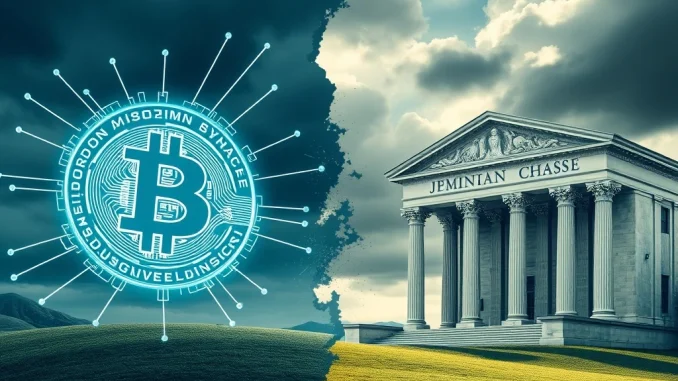
In a development that has sent shockwaves through the cryptocurrency world, Tyler Winklevoss, co-founder of the prominent crypto exchange Gemini, has leveled a grave accusation against banking giant JPMorgan Chase. This Bitcoin news has quickly become a focal point, alleging that JPMorgan halted Gemini’s customer onboarding process in retaliation for Winklevoss’s public criticism of the bank’s proposed data access fees. This incident isn’t just a corporate spat; it underscores the escalating tensions between the traditional financial sector and the burgeoning crypto ecosystem, particularly concerning the future of open banking and data accessibility.
The Heart of the Dispute: JPMorgan’s Data Fee Controversy
The core of this explosive accusation revolves around JPMorgan’s revised policy on data access fees. Tyler Winklevoss claims these new charges are exorbitant, designed to stifle competition, and could severely impact fintech platforms, especially smaller players and those in the crypto space. His public statements, particularly on social media, have painted a picture of traditional banks actively resisting the spirit of open banking reforms by attempting to monetize data feeds that were once freely accessible. This move, he argues, could effectively ‘bankrupt fintechs’ and consolidate control of financial data in the hands of a few large institutions.
- Alleged Retaliation: Winklevoss claims JPMorgan’s decision to pause Gemini’s integration was a direct response to his vocal opposition.
- Exorbitant Fees: The dispute centers on new, high-cost data-sharing models proposed by JPMorgan.
- Stifling Competition: Critics argue these fees could create an uneven playing field, hindering innovation in the financial sector.
While JPMorgan has remained silent on these specific allegations, the incident has ignited broader discussions about anti-competitive practices within the banking industry. Winklevoss explicitly described JPMorgan’s actions as an attempt to ‘silence crypto advocates’ by leveraging its market dominance and restricting access to vital banking services – a practice often referred to as ‘de-banking.’
Why This Matters for Gemini and the Broader Crypto Ecosystem
The implications of this alleged ‘de-banking’ tactic extend far beyond just Gemini. If true, it sets a dangerous precedent for how traditional financial institutions might interact with and potentially impede the growth of the cryptocurrency industry. For companies like Gemini, seamless integration with traditional banking services is crucial for institutional adoption and expanding their user base. Hindering such integration can slow down the mainstream acceptance of digital assets.
What Does This Mean for Crypto Banking and Institutional Adoption?
This dispute highlights a fundamental ideological divide. Traditional finance (TradFi) institutions, often represented by giants like JPMorgan, have historically approached cryptocurrencies with caution, prioritizing regulatory compliance and risk management. Crypto firms, on the other hand, advocate for open, decentralized systems and greater data accessibility. This incident suggests that as crypto seeks deeper integration with legacy financial systems, these tensions are intensifying.
The ability for crypto firms to access robust crypto banking services is paramount for their operational efficiency and growth. Disruptions like the one alleged by Winklevoss can deter institutional investors who rely on stable, integrated financial infrastructure. It also raises questions about the long-term viability of a truly open financial system if powerful incumbents can selectively deny services based on public criticism.
The Battle for Open Banking: A Critical Inflection Point
Open banking, designed to empower consumers by allowing third-party providers to access their financial data with consent, has faced significant resistance from large banks. These institutions often cite compliance and cybersecurity risks as reasons for their reluctance. However, crypto advocates like Tyler Winklevoss argue that these concerns are frequently overstated and serve as pretexts to maintain monopolistic control over data and financial services.
From an analytical standpoint, these allegations mark a critical inflection point for the financial sector. If JPMorgan’s policy changes and alleged actions are indeed found to suppress competition, they could trigger significant regulatory pushback. Authorities like the Federal Trade Commission (FTC) have demonstrated increasing interest in addressing anti-competitive practices within the fintech space. The outcome of this dispute could influence:
- Regulatory Scrutiny: Increased oversight on how large banks manage data access and interact with fintechs.
- Future of Open Banking: Whether truly open, interoperable financial systems can emerge, or if control remains centralized.
- Reputational Impact: How banks are perceived by the crypto community and innovators.
The broader implications for Bitcoin News and the entire digital asset market are substantial. A restrictive banking environment could slow innovation and make it harder for legitimate crypto businesses to operate, pushing some activities offshore or into less regulated spheres. Conversely, if regulators intervene to ensure fair access, it could pave the way for a more integrated and competitive financial landscape.
Conclusion: A Defining Moment for Crypto and TradFi
The accusation by Tyler Winklevoss against JPMorgan Chase is more than just a headline; it’s a stark illustration of the ongoing power struggle between the traditional financial establishment and the decentralized future promised by cryptocurrencies. This incident highlights the urgent need for clear regulatory frameworks that promote fair competition and prevent dominant players from stifling innovation under the guise of risk management. The resolution of this dispute will undoubtedly set precedents for how crypto firms and legacy banks interact, shaping the future trajectory of open finance and the broader adoption of digital assets.
Frequently Asked Questions (FAQs)
Q1: What is Tyler Winklevoss accusing JPMorgan Chase of?
Tyler Winklevoss, co-founder of Gemini, is accusing JPMorgan Chase of retaliating against his public criticism of their proposed data access fees by halting Gemini’s customer onboarding process. He alleges this is an anti-competitive move to silence crypto advocates and maintain monopolistic control over financial data.
Q2: What are JPMorgan’s proposed data access fees, and why are they controversial?
JPMorgan’s proposed data access fees are new charges for fintech platforms seeking access to banking data. They are controversial because critics, including Winklevoss, argue they are exorbitant and designed to stifle competition, undermine open banking initiatives, and potentially ‘bankrupt fintechs’ by making essential data access too expensive.
Q3: What is ‘de-banking’ in the context of this dispute?
‘De-banking’ refers to the practice where banks restrict or deny banking services to certain companies or individuals, often due to perceived risks or, as alleged in this case, as a retaliatory measure. Winklevoss claims JPMorgan is using its market dominance to ‘de-bank’ crypto firms that challenge traditional financial models.
Q4: How does this incident relate to open banking?
This incident is directly tied to the broader debate around open banking. Open banking aims to allow third-party providers to access customer data with consent, fostering innovation and competition. Winklevoss argues that JPMorgan’s actions are a direct resistance to the principles of open banking, designed to keep data centralized and profit-driven rather than freely accessible for innovation.
Q5: What are the potential implications of this dispute for the cryptocurrency industry?
The dispute could have significant implications, including deterring institutional adoption of cryptocurrencies, hindering the development of decentralized financial systems, and potentially leading to increased regulatory scrutiny on traditional banks for anti-competitive practices. It highlights the ongoing tension between TradFi and crypto ecosystems.
Q6: Has JPMorgan Chase commented on the allegations?
As of the information available, JPMorgan Chase has not publicly commented on Tyler Winklevoss’s specific allegations, leaving the claims unverified by the bank.