In a bizarre twist that perfectly encapsulates the unpredictable nature of both early internet culture and the modern cryptocurrency landscape, Ripple CTO David Schwartz has dropped a bombshell confession. He publicly admitted to fabricating parts of a live fan Q&A session with rock icon Ozzy Osbourne and Black Sabbath members back in the 2000s. This revelation comes amidst a dramatic surge in an Ozzy Osbourne meme coin, which skyrocketed by an astonishing 16,800% following the musician’s recent passing. It’s a tale of technical glitches, celebrity management, and the enduring power of cultural influence in the digital age, impacting everything from legendary rock stars to the volatile world of XRP and ongoing regulatory battles.
The Ripple CTO’s Unexpected Confession: A Blast from the Past
David Schwartz, the highly respected Chief Technology Officer at Ripple, recently took to X (formerly Twitter) to share a candid anecdote from his past that has since gone viral. He recounted his experience hosting a live fan Q&A with Ozzy Osbourne and Black Sabbath in the early 2000s, an event fraught with technical challenges. Schwartz admitted, “I cheated,” detailing how he resorted to using pre-written questions and even censoring Osbourne’s notoriously colorful language during the session, which was conducted using WebMaster’s outdated ConferenceRoom software.
The core issue, as Schwartz explained, was the overwhelming fan interest in Ozzy Osbourne alone. To ensure all band members received some attention, he felt compelled to script responses. The real-time interaction, intended to relay audience questions via a phone line, struggled due to poor audio quality and limited bandwidth. Schwartz noted that only a handful of genuine fan queries ever made it to the band. To compensate, he would cycle through prepared questions for the other musicians while attempting to transcribe Osbourne’s often profanity-laced replies. “I typed up Ozzy’s answer as closely as I could, probably getting it way off due to the poor connection quality. I censored the C-words,” he revealed, painting a vivid picture of the logistical hurdles of bridging celebrity and early digital platforms.
Ozzy Osbourne Meme Coin: A Post-Death Phenomenon and Crypto Market Volatility
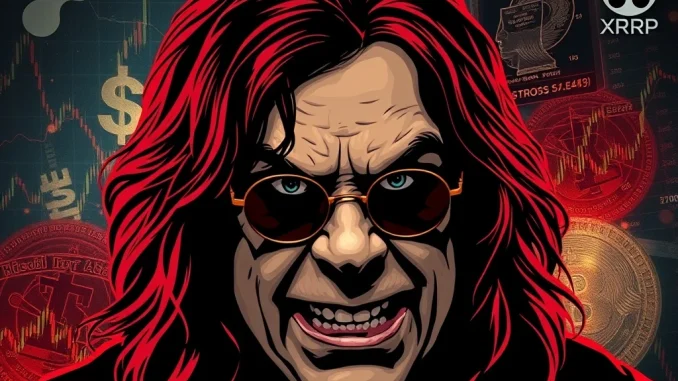
Schwartz’s humorous admission gained particular traction because of its timing. It coincided with the news of Ozzy Osbourne’s death in July 2025 at the age of 76, an event that, in a distinctly modern twist, triggered a massive surge in meme coins associated with the musician. One such token, ‘The Mad Man’ (OZZY), directly inspired by Osbourne, saw an incredible jump of over 16,800%. Its price soared to $0.003851, pushing its market capitalization to $3.85 million.
This dramatic spike in the Ozzy Osbourne meme coin highlights a peculiar aspect of the crypto market volatility: how cultural icons, even posthumously, can drive unexpected and significant movements in niche crypto assets. It underscores the powerful, often irrational, influence of pop culture and collective sentiment on digital currencies. While the connection between Schwartz’s past role and a meme coin surge might seem tenuous, it serves as a fascinating example of how disparate elements can converge in the fast-paced, interconnected world of crypto.
XRP and Ripple’s Ongoing Legal Saga with the SEC
Adding another layer of complexity to the narrative, Schwartz’s confession also comes amidst critical developments in Ripple’s protracted legal battle with the U.S. Securities and Exchange Commission (SEC). Just last month, Ripple CEO Brad Garlinghouse announced the company’s decision to withdraw its cross-appeal in the long-running lawsuit, signaling a potential path towards a final resolution of the agency’s enforcement action.
Despite a court ruling that upheld a $125 million civil penalty against Ripple for classifying institutional XRP sales as unregistered securities transactions, the token has shown remarkable resilience. According to CoinGlass, XRP’s notional open interest for perpetual futures contracts hit an all-time high of $8.8 billion in late July. This metric, which reflects the total value of outstanding leveraged trading positions, points to a renewed surge in speculative activity surrounding the token. The ongoing SEC lawsuit has been a major cloud over XRP for years, but recent developments and market indicators suggest a potential shift in investor sentiment, even as the broader crypto market continues to navigate regulatory uncertainties and unpredictable cultural phenomena.
What Does This Mean for the Crypto Market?
The convergence of these seemingly unrelated events – a historical tech confession, a celebrity’s passing triggering a meme coin explosion, and an ongoing high-stakes legal battle – offers several insights into the modern digital landscape:
- Cultural Impact on Crypto: The Ozzy Osbourne meme coin surge is a prime example of how cultural moments, even tragic ones, can be instantly tokenized and amplified within the crypto space, leading to significant, albeit often fleeting, market movements. This highlights the speculative and often sentiment-driven nature of certain crypto assets.
- Transparency in Tech: Schwartz’s candid admission, while humorous, underscores the inherent challenges of early internet moderation and the ongoing quest for authenticity in digital interactions. It’s a reminder that even seasoned tech leaders have navigated complex ethical and logistical dilemmas.
- Resilience Amidst Regulation: XRP’s recent performance, despite the lingering shadow of the SEC lawsuit, showcases the crypto community’s capacity for speculative interest and its ability to find optimism even in challenging regulatory environments. The market’s reaction to legal clarity, however partial, can be immediate and profound.
- The Unpredictability of Volatility: The entire scenario, from the meme coin’s explosion to XRP’s open interest surge, is a testament to the inherent crypto market volatility. Investors and enthusiasts must always be prepared for unexpected catalysts that can dramatically alter asset valuations.
David Schwartz’s surprising trip down memory lane, coupled with the dramatic performance of an Ozzy Osbourne-inspired meme coin and the evolving landscape for XRP, paints a vivid picture of the multifaceted world of cryptocurrency. It’s a space where historical anecdotes can collide with real-time market surges, where cultural legacies are reinterpreted as digital assets, and where the lines between technology, entertainment, and finance are increasingly blurred. This incident serves as a compelling reminder of the crypto market’s unique blend of innovation, speculation, and often, pure, unadulterated human fascination.
Frequently Asked Questions (FAQs)
1. Who is David Schwartz and what was his confession about?
David Schwartz is the Chief Technology Officer (CTO) at Ripple. He recently confessed to fabricating parts of a live fan Q&A session with Ozzy Osbourne and Black Sabbath in the early 2000s, using pre-written questions and censoring profanity due to technical limitations and overwhelming fan interest in Osbourne.
2. Why did an Ozzy Osbourne meme coin surge after his death?
The ‘Mad Man’ (OZZY) meme coin surged over 16,800% after news of Ozzy Osbourne’s death. This phenomenon is driven by speculative interest and the strong cultural influence of public figures, where fans and traders associate tokens with popular icons, leading to significant, often temporary, price increases in the highly volatile crypto market.
3. What is the latest update on the Ripple SEC lawsuit?
Ripple CEO Brad Garlinghouse recently announced the company would withdraw its cross-appeal in the ongoing lawsuit with the U.S. Securities and Exchange Commission (SEC). While a court ruling upheld a $125 million civil penalty for institutional XRP sales, this withdrawal signals a potential move towards resolving the prolonged legal dispute.
4. How has XRP’s performance been affected by these events?
Despite the ongoing SEC lawsuit, XRP’s notional open interest for perpetual futures contracts hit an all-time high of $8.8 billion in late July, according to CoinGlass. This indicates renewed speculative activity and leveraged trading interest in the token, suggesting a degree of investor confidence or renewed speculation even amidst regulatory uncertainty.
5. What does this incident tell us about crypto market volatility?
This incident vividly illustrates the extreme crypto market volatility. It shows how unexpected cultural events (like a celebrity’s death), historical revelations (like the Ripple CTO’s confession), and legal developments can all act as catalysts, leading to rapid and significant price movements in various digital assets, from established cryptocurrencies like XRP to niche meme coins.