In a fascinating turn of events that has caught the attention of the entire cryptocurrency community, Tron’s blockchain infrastructure has solidified its position as a powerhouse in the stablecoin sector. Recent reports indicate that over half of Tether (USDT)’s circulating supply now transacts on the Tron network, a development that signals a significant shift in the digital asset landscape. This remarkable achievement underscores Tron’s strategic importance and its growing influence within the global crypto market.
Tron USDT Dominance: A Game Changer for Stablecoins?
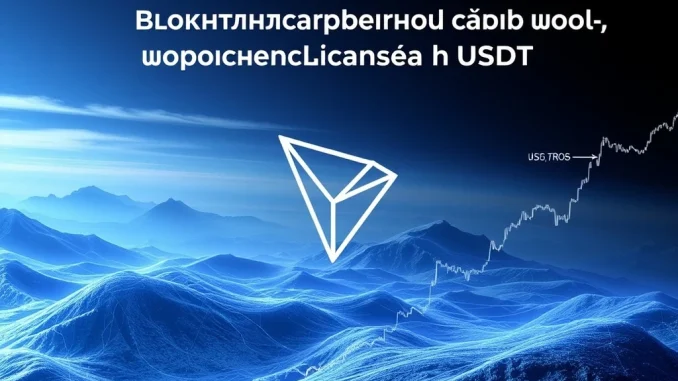
The rise of Tron as a dominant force in stablecoin transactions is undeniable. A report by Bitcoin.com highlighted that Tron now facilitates over 50% of all Tether (USDT) transactions. This is a monumental feat, especially considering the vastness of the stablecoin ecosystem. What makes Tron so appealing for such a crucial stablecoin like USDT? The answer lies in its robust infrastructure, offering high throughput and significantly lower transaction fees compared to other blockchains.
The ability to handle high-volume, low-cost transactions has made Tron a preferred choice for users and exchanges alike. In fact, Binance, a leading cryptocurrency exchange, noted in a July 2025 post that Tron’s infrastructure accounts for an astonishing 90% of USDT’s circulation. This level of concentration of Tron USDT transactions on a single network is unprecedented and raises important questions about blockchain scalability and the future of decentralized finance.
TRX Surge: What’s Fueling Tron’s Explosive Growth?
The network’s increasing utility has directly translated into impressive gains for its native token. The TRX surge has been nothing short of spectacular, with its circulating market capitalization jumping by 17% to reach $26.5 billion in Q2 2025. This significant growth is not merely speculative; it’s driven by Tron’s integral role as a backbone for a wide array of decentralized applications (dApps), particularly in the burgeoning sectors of decentralized finance (DeFi) and gaming.
Developers and users are flocking to Tron due to its efficiency. The platform’s high transaction speeds and minimal fees create an ideal environment for applications that demand quick and affordable interactions. From complex DeFi protocols to engaging blockchain games, Tron provides the necessary infrastructure for innovation. This growing adoption by both institutional and retail interest has been a key catalyst behind the consistent upward trajectory of TRX’s market value, solidifying its position as a top contender in the digital asset space.
Bitcoin News & Regulatory Scrutiny: Is Centralization a Risk for Stablecoin Dominance?
While Tron’s efficiency and growth are commendable, its increasing dominance in the stablecoin market has also ignited debates regarding potential challenges, particularly concerning regulatory oversight. In the context of broader Bitcoin News and global financial regulations, authorities are intensifying their scrutiny of stablecoin operations. The reliance on a single blockchain for a majority of USDT transactions could potentially amplify systemic risks if any disruptions or regulatory crackdowns occur on that specific network.
Furthermore, Tron’s governance model has often faced criticism for its perceived lack of decentralization. Critics argue that its centralized structure might conflict with the core ethos of decentralized finance, even though it offers significant technical advantages in terms of speed and cost. This ongoing tension between performance and decentralization remains a critical point of discussion within the crypto community, as it directly impacts the long-term stability and trustworthiness of major stablecoin operations.
Stablecoin Dominance on Tron: Weighing the Benefits and Challenges
The remarkable concentration of USDT on Tron highlights a fundamental tension in blockchain adoption: the trade-off between performance and decentralization. While Tron’s infrastructure offers clear advantages, it also presents unique challenges.
Benefits:
- Cost Efficiency: Tron’s low transaction fees make it highly attractive for frequent USDT transfers, saving users significant amounts compared to other networks.
- High Throughput: The network’s capacity to handle a large volume of transactions quickly ensures smooth and efficient stablecoin operations.
- Developer Appeal: Its robust infrastructure and active ecosystem attract developers building DeFi and gaming applications, further driving network utility.
Challenges:
- Centralization Concerns: The perceived centralized nature of Tron’s governance model raises questions about censorship resistance and single points of failure.
- Regulatory Risk: High concentration of a major stablecoin on one network could draw increased regulatory scrutiny, potentially leading to unforeseen compliance challenges.
- Systemic Vulnerability: Over-reliance on a single blockchain could expose the broader stablecoin ecosystem to systemic risks if Tron were to experience significant technical issues or security breaches.
Navigating the Crypto Market: What’s Next for Tron’s Future?
Looking ahead, Tron’s sustained growth and long-term viability within the dynamic crypto market will largely depend on its ability to adapt to evolving regulatory frameworks and maintain strong developer engagement. The platform has already begun to address some of these challenges through strategic initiatives.
Recent efforts to expand application programming interfaces (APIs) and foster cross-chain interoperability are crucial steps. These initiatives aim to mitigate the risks associated with an over-reliance on a single network by allowing for smoother interactions and asset transfers across different blockchains. Nevertheless, the sheer concentration of USDT on Tron underscores the pressing need for a more diversified stablecoin infrastructure. Distributing stablecoin liquidity across multiple robust and decentralized networks could significantly enhance overall market resilience and prevent systemic vulnerabilities, ensuring a more stable and secure future for digital assets.
Conclusion:
Tron’s ascendancy in the stablecoin arena, particularly with its significant share of USDT transactions, marks a pivotal moment in the cryptocurrency space. The impressive TRX surge, fueled by its utility in DeFi and gaming, highlights the network’s technical prowess. However, this dominance also brings forth critical discussions around decentralization and regulatory implications. As the crypto market matures, balancing efficiency with security and decentralization will be key for Tron and other blockchain projects navigating similar paths. The journey of Tron USDT dominance is a testament to its capabilities, yet it also serves as a crucial case study for the entire industry on the path towards broader adoption and regulatory integration.
Frequently Asked Questions (FAQs)
Q1: Why is Tron handling such a large percentage of USDT transactions?
Tron’s network has gained significant traction for USDT transactions primarily due to its high transaction speed and exceptionally low fees. These features make it highly efficient and cost-effective for users and exchanges to move large volumes of USDT, leading to its current dominance.
Q2: What is TRX, and what caused its recent surge in market capitalization?
TRX is the native cryptocurrency of the Tron blockchain. Its recent 17% surge in market capitalization to $26.5 billion is largely attributed to the increasing utility of the Tron network, especially in decentralized finance (DeFi) and gaming applications. Growing institutional and retail interest, drawn by the network’s efficiency, has also contributed to the TRX surge.
Q3: What are the main concerns associated with Tron’s dominance in USDT transactions?
The primary concerns include potential regulatory scrutiny due to the high concentration of a major stablecoin on a single network. Additionally, critics point to Tron’s perceived lack of decentralization, which could pose systemic risks if the network experiences disruptions or faces centralized control issues.
Q4: How does this development relate to broader Bitcoin News and the crypto market?
While focused on Tron and USDT, this development is significant for the broader crypto market because it highlights evolving infrastructure preferences for stablecoins. It underscores the ongoing debate between scalability/cost-efficiency and decentralization, which are critical factors influencing the future direction and regulatory landscape of all digital assets, including Bitcoin.
Q5: What is the future outlook for Tron and its role in the stablecoin ecosystem?
Tron’s long-term sustainability will depend on its ability to adapt to regulatory frameworks and maintain developer engagement. Efforts to expand APIs and foster cross-chain interoperability are crucial for mitigating risks associated with over-reliance on a single network. The industry will likely push for more diversified stablecoin infrastructure to enhance overall resilience.