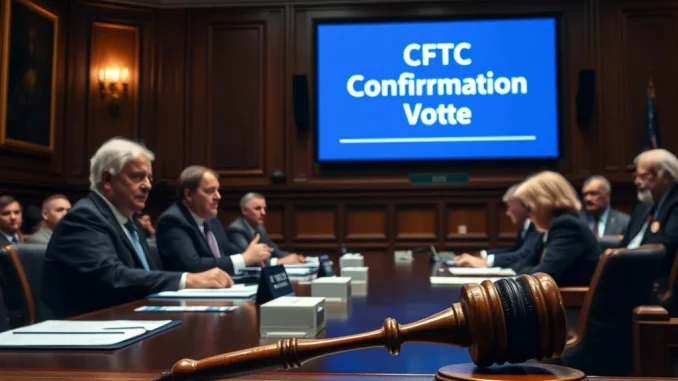
The landscape of digital assets is constantly evolving, and with it, the regulatory framework seeking to govern it. A pivotal moment for the future of digital asset oversight is fast approaching: the U.S. Senate Agriculture Committee is slated to cast its vote on the **CFTC confirmation** of Brian Quintenz as chairman. This crucial decision, following his confirmation hearing last month, holds significant implications for how cryptocurrencies will be regulated in the United States.
Why the **Senate Agriculture Committee** Vote Matters for Crypto
Many in the crypto community might wonder why the Senate Agriculture Committee is involved in the confirmation of a financial regulator. The answer lies in the Commodity Futures Trading Commission’s (CFTC) jurisdiction. The CFTC primarily oversees the derivatives markets, which include futures, options, and swaps. Cryptocurrencies, particularly Bitcoin and Ethereum, have often been classified as commodities by the CFTC, placing them under its regulatory purview in certain contexts. Therefore, the leadership of the CFTC directly influences the regulatory environment for a significant portion of the crypto market.
The committee’s vote is a critical step in ensuring that the individual leading this vital agency is deemed fit for the role. Their decision will set the tone for the CFTC’s approach to innovation, market integrity, and consumer protection within the digital asset space.
Who is **Brian Quintenz** and What’s His Stance?
Brian Quintenz, the nominee for CFTC chairman, is a familiar face within the regulatory sphere. Having previously served as a Commissioner at the CFTC, he brings a wealth of experience to the table. His past statements and actions offer insights into his potential approach to **cryptocurrency regulation**.
During his tenure as Commissioner, Quintenz often advocated for regulatory clarity and innovation. He has previously expressed views on the need for the U.S. to maintain its leadership in financial technology, suggesting a balanced approach that supports innovation while mitigating risks. His perspective on whether specific digital assets should be classified as securities or commodities has been a topic of interest, as this distinction heavily influences which regulatory body (CFTC or SEC) has primary jurisdiction. His confirmation could signal a particular direction for the agency’s stance on various crypto products and services.
The Path to **Confirmation**: What Happens Next?
The process for a high-level executive branch appointment like the CFTC chairman involves several stages. First, the President nominates an individual. Then, the relevant Senate committee, in this case, the Senate Agriculture Committee, conducts a hearing where the nominee answers questions from senators. This hearing allows senators to scrutinize the nominee’s qualifications, policy views, and potential conflicts of interest. Following the hearing, the committee holds a vote. If the committee approves the nomination, it then moves to the full Senate for a final confirmation vote.
The upcoming vote next Monday by the Senate Agriculture Committee is a crucial hurdle. A positive vote from the committee significantly increases the likelihood of a successful confirmation by the full Senate. This rapid progression indicates the urgency and importance placed on solidifying leadership at key regulatory bodies.
Shaping **US Crypto Policy**: The Broader Implications
The **CFTC confirmation** of its chairman is not an isolated event; it’s a significant piece of the larger puzzle concerning **US crypto policy**. The digital asset space has long sought clear and consistent regulatory guidance. The appointment of a new CFTC chairman, particularly one with prior experience, can provide much-needed direction.
Here’s why this matters for the broader crypto landscape:
- Jurisdictional Clarity: The ongoing debate between the CFTC and the Securities and Exchange Commission (SEC) over which agency has primary oversight of certain digital assets is a major challenge. A strong, clear stance from the CFTC under new leadership could help resolve some of these ambiguities.
- Market Development: Clear regulations can foster greater institutional adoption and investment in the crypto space, as it reduces uncertainty and perceived risk for traditional financial players.
- Consumer Protection: A well-defined regulatory approach can enhance consumer and investor protection, building trust in the digital asset markets.
- Global Competitiveness: The U.S. aims to remain a leader in financial innovation. A coherent regulatory strategy, partly shaped by the CFTC’s leadership, is vital for achieving this goal.
The outcome of this vote for **Brian Quintenz** will be closely watched by innovators, investors, and policymakers alike, as it will undoubtedly influence the trajectory of digital asset regulation in the coming years.
Conclusion
The upcoming vote by the U.S. Senate Agriculture Committee on the **CFTC confirmation** of Brian Quintenz as chairman marks a significant moment for the future of **US crypto policy**. This decision will not only shape the leadership of a key regulatory body but also influence the ongoing development of **cryptocurrency regulation**. As the digital asset space continues its rapid expansion, clear, consistent, and forward-thinking leadership at agencies like the CFTC is paramount for fostering innovation, ensuring market integrity, and protecting participants. All eyes will be on Capitol Hill next Monday as this crucial step unfolds, potentially charting a clearer course for digital assets in America.
Frequently Asked Questions (FAQs)
1. What is the CFTC?
The Commodity Futures Trading Commission (CFTC) is an independent agency of the US government that regulates the US derivatives markets, including futures, options, and swaps. It aims to promote market integrity, prevent systemic risk, and protect market participants.
2. Why is the Senate Agriculture Committee involved in this confirmation?
The Senate Agriculture Committee has jurisdiction over the CFTC because the agency regulates commodity futures and options markets, which traditionally included agricultural commodities. As cryptocurrencies like Bitcoin are often classified as commodities, the committee oversees the CFTC’s operations and nominations.
3. Who is Brian Quintenz?
Brian Quintenz is the nominee for CFTC chairman. He has previously served as a Commissioner at the CFTC, bringing prior experience and insights into the regulatory landscape of financial markets, including digital assets.
4. How might Brian Quintenz’s confirmation affect cryptocurrency?
His confirmation could bring a more defined regulatory approach to cryptocurrencies that are classified as commodities. Given his past emphasis on innovation and regulatory clarity, his leadership might lead to clearer guidelines for crypto derivatives and market participants, potentially fostering greater institutional adoption and stability.
5. What is the difference between CFTC and SEC jurisdiction over crypto?
The CFTC primarily regulates commodities and derivatives markets, including certain cryptocurrencies deemed commodities (like Bitcoin and Ethereum). The Securities and Exchange Commission (SEC) regulates securities markets. The distinction often depends on whether a digital asset is classified as a security (falling under SEC) or a commodity (potentially under CFTC), a debate that is still ongoing for many tokens.