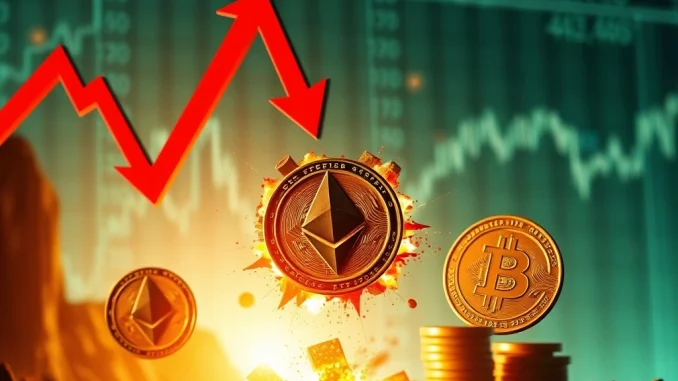
The cryptocurrency market is a wild, unpredictable beast, and nowhere is this more apparent than in the realm of perpetual futures. These high-stakes derivatives allow traders to bet on the future price of digital assets without an expiry date, amplifying both potential gains and losses. When the market moves sharply against leveraged positions, a cascade of events known as liquidation occurs, wiping out traders’ capital in an instant. Today, we delve into the crucial 24-hour crypto perpetual futures liquidation data, offering a stark reminder of the market’s inherent volatility and the significant futures trading risk involved.
Understanding Crypto Perpetual Futures Liquidation
What exactly is a perpetual future, and why does liquidation happen? In simple terms, a perpetual future is a type of derivative contract that allows traders to speculate on the price of a cryptocurrency without actually owning the underlying asset. Unlike traditional futures contracts, perpetual futures don’t have an expiration date, making them popular for continuous trading. However, they involve leverage, meaning traders can open positions much larger than their initial capital. While this amplifies profits, it also magnifies losses.
Liquidation occurs when a trader’s margin (the collateral held in their account) falls below a certain level required by the exchange to keep their leveraged position open. This typically happens during sudden, sharp price movements that go against the trader’s bet. To prevent further losses, the exchange automatically closes the position, often resulting in a complete loss of the trader’s margin. This mechanism is designed to protect both the exchange and other market participants from excessive risk, but it can be brutal for individual traders.
The Shocking 24-Hour Breakdown: Bitcoin, Ethereum, and DOGE
Over the past 24 hours, the crypto market has witnessed substantial liquidation events across major digital assets. Let’s break down the figures, which paint a vivid picture of market sentiment and the swift consequences of high leverage:
| Cryptocurrency | Total Liquidation (24h) | Long Positions Liquidated | Short Positions Liquidated |
|---|---|---|---|
| Bitcoin (BTC) | $41.50 million | 58.09% | 41.91% |
| Ethereum (ETH) | $150.27 million | 34.27% | 65.73% |
| Dogecoin (DOGE) | $19.94 million | 50.44% | 49.56% |
Bitcoin Liquidation: A Barometer of Market Sentiment
With Bitcoin liquidation totaling $41.50 million, and long positions accounting for 58.09% of that, it indicates that a significant number of traders were betting on BTC’s price to go up. When Bitcoin experienced a dip, these bullish bets were swiftly wiped out. BTC, being the market’s largest cryptocurrency, often sets the tone for the broader market. A high percentage of long liquidations suggests that market participants were caught off guard by a downward price movement, perhaps anticipating a rally that didn’t materialize. This highlights the ever-present challenge of predicting market direction, even for seasoned traders.
Ethereum Liquidation: The Short Squeeze That Wasn’t?
The most striking figure from the past 24 hours is the staggering Ethereum liquidation, which hit an astounding $150.27 million. What’s even more noteworthy is that 65.73% of these liquidations were short positions. This means a vast majority of traders were betting on ETH’s price to fall, likely anticipating a downturn or perhaps trying to hedge against potential losses in their spot holdings. When Ethereum’s price instead moved upwards, or simply failed to drop as expected, these short positions were decimated. This scenario often points to a ‘short squeeze’ like event, where an unexpected price increase forces short sellers to buy back, further fueling the price rise and leading to more liquidations. It underscores the immense volatility and unpredictability inherent in Ethereum’s price movements.
DOGE Liquidation: The Meme Coin’s Volatile Dance
Even meme coins like Dogecoin aren’t immune to the forces of liquidation. With DOGE liquidation reaching $19.94 million, and a near 50/50 split between long (50.44%) and short (49.56%) liquidations, it reflects the coin’s typically volatile and unpredictable nature. Dogecoin’s price movements are often driven by social media trends, celebrity endorsements, or sudden bursts of retail interest rather than fundamental analysis. This balanced liquidation ratio suggests that traders on both sides of the market were equally caught out by DOGE’s erratic price swings, reinforcing the notion that even popular assets carry significant risk in the leveraged derivatives market.
Why This Matters: Navigating Futures Trading Risk
These liquidation figures aren’t just abstract numbers; they represent real money lost by real traders. They serve as a powerful reminder of the inherent dangers and amplified futures trading risk associated with leveraged trading. Here are some key takeaways:
Leverage is a Double-Edged Sword: While leverage can amplify gains, it equally amplifies losses. Even small price movements can lead to liquidation if positions are over-leveraged.
Market Volatility is Constant: The crypto market is notoriously volatile. Prices can swing wildly in minutes, making it challenging to predict short-term movements accurately.
Risk Management is Paramount: Traders must employ strict risk management strategies, including setting stop-loss orders, managing position sizes, and never risking more than they can afford to lose.
Sentiment Shifts Rapidly: The high percentage of short liquidations in ETH and long liquidations in BTC show how quickly market sentiment can turn, catching many off guard.
Actionable Insights for Traders: How to Mitigate Risk
Given the significant risks, how can traders navigate the perpetual futures market more safely? Here are some actionable insights:
Start Small: If you’re new to futures, begin with very small position sizes and low leverage to understand the mechanics and volatility.
Implement Stop-Loss Orders: Always set a stop-loss order. This automatically closes your position if the price reaches a predetermined level, limiting your potential losses.
Understand Margin Requirements: Be aware of the initial margin and maintenance margin levels. Monitor your margin ratio closely to avoid unexpected liquidations.
Avoid Over-Leveraging: Resist the temptation to use maximum leverage. Higher leverage means a smaller price movement can lead to liquidation.
Stay Informed: Keep up-to-date with market news, technical analysis, and on-chain data to make more informed trading decisions.
Consider Hedging: For spot holders, using perpetual futures for hedging (taking a short position to offset potential losses in your spot holdings) can be a strategy, but it also comes with its own risks.
Conclusion: A Volatile but Evolving Landscape
The 24-hour crypto perpetual futures liquidation breakdown serves as a potent reminder of the inherent volatility and amplified risks in the derivatives market. While these instruments offer significant opportunities for profit, they demand a deep understanding of market dynamics, disciplined risk management, and a realistic expectation of potential losses. The figures for Bitcoin, Ethereum, and Dogecoin underscore that no asset is immune to sudden price swings that can trigger massive liquidations. As the crypto market continues to mature, so too must the strategies of its participants. Trading perpetual futures is not for the faint of heart, but with careful planning and a commitment to continuous learning, traders can navigate these treacherous waters with greater confidence.
Frequently Asked Questions (FAQs)
Q1: What is crypto perpetual futures liquidation?
A1: Crypto perpetual futures liquidation is the automatic closing of a trader’s leveraged position by an exchange when their margin balance falls below a certain threshold. This typically happens when the market moves significantly against their open position, preventing further losses for the exchange and other market participants.
Q2: Why did Ethereum (ETH) have such high short liquidations in the past 24 hours?
A2: The high volume of short liquidations for Ethereum suggests that a large number of traders were betting on ETH’s price to decline. When the price either held steady or moved upwards instead, these short positions were forced to close, leading to substantial losses for those traders.
Q3: How can I avoid liquidation when trading crypto perpetual futures?
A3: To minimize the risk of liquidation, you should always use stop-loss orders, avoid excessive leverage, manage your position sizes carefully, and maintain sufficient margin in your account. Understanding market volatility and having a solid risk management plan are crucial.
Q4: Are Bitcoin (BTC) and Dogecoin (DOGE) perpetual futures more volatile than others?
A4: Bitcoin, as the largest crypto, influences the entire market but can still experience significant volatility. Dogecoin, being a meme coin, is often subject to extreme and unpredictable price swings driven by social media and sentiment, making its perpetual futures particularly volatile.
Q5: What is the main difference between long and short liquidations?
A5: Long liquidations occur when traders betting on a price increase (long positions) are forced to close their positions due to a price drop. Short liquidations occur when traders betting on a price decrease (short positions) are forced to close their positions due to a price increase.