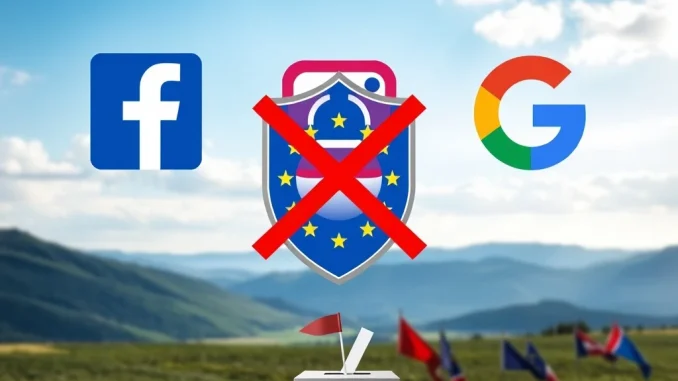
In the rapidly evolving digital landscape, where regulatory shifts can ripple across industries, a significant development is reshaping how political campaigns interact with online platforms. While cryptocurrency markets often grab headlines for their volatility, the world of digital advertising is experiencing its own profound transformation, particularly concerning Meta political ads in the European Union.
The Unprecedented Halt of Meta Political Ads in the EU
On July 16, 2025, Meta, the parent company of Facebook and Instagram, made a landmark announcement: it will cease all political advertising across the European Union starting October 2025. This decision, impacting platforms widely used for public discourse, stems from what Meta describes as “unworkable requirements” within forthcoming EU regulations. This move isn’t isolated; it echoes a similar step taken by Alphabet, Google’s parent company, which suspended political ads in November 2024.
So, what exactly does this ban entail? It applies to a broad spectrum of ads, including those related to political campaigns, electoral processes, and social issues. However, it’s crucial to understand that Meta explicitly stated it would not restrict political speech or election-related discussions on its platforms. The focus is specifically on paid advertising. This means while organic political content can still thrive, the ability to amplify messages through targeted Meta political ads will disappear.
Navigating New EU Digital Regulations: Why the Ban?
The catalyst for Meta’s decision lies in the EU’s new rules, set to take effect in October. These regulations mandate stringent transparency and targeting standards for political advertisers. Platforms must publicly disclose a wealth of information, including:
- The identity of advertisers.
- Exact spending amounts.
- Specific targeted demographics.
- Campaign objectives.
All this data must be stored in a searchable, publicly accessible database. Meta described these requirements as “unworkable,” arguing that they create operational and legal challenges that outweigh the benefits of maintaining a political advertising system. This highlights a growing tension between global tech firms and the bloc’s increasingly assertive approach to digital governance, driven by comprehensive EU digital regulations.
The Profound Impact on Online Political Advertising
The withdrawal of major platforms like Meta and Alphabet from the EU political ad market signals a significant shift. Political campaigns in the EU will need to pivot to alternative methods of outreach. The traditional models of large-scale, targeted digital advertising are vanishing, forcing campaigns to innovate. While alternatives exist, they often lack the scalability and precision of paid ads. Campaigns might increasingly rely on:
- Organic Content: Relying on virality and genuine engagement.
- Influencer Partnerships: Collaborating with individuals who have established online followings.
- Direct Audience Engagement: Utilizing email lists, messaging apps, and community building.
The absence of large-scale online political advertising will undoubtedly reshape election strategies, potentially leveling the playing field for smaller parties or grassroots movements that traditionally struggle to compete with well-funded ad campaigns.
Digital Services Act: A Catalyst for Tech Policy Shifts
Meta’s announcement underscores the ongoing tension between fostering democratic discourse and adhering to regulatory demands that some firms argue stifle innovation. This regulatory push is part of the EU’s broader Digital Services Act (DSA) framework, which seeks to enhance accountability for online content. While Meta’s action signals compliance with legal obligations, it also highlights the limitations of self-regulation in addressing concerns like misinformation and voter manipulation.
Analysts note that this decision is a clear example of how strict regulations can trigger significant tech policy shifts from global platforms. The prior suspension of political ads by Alphabet in 2024 demonstrated the sector’s sensitivity to these pressures. As Meta joins this trend, it signals a possible new era in how major platforms engage with democratic processes, especially in regions with stringent digital governance frameworks.
What’s Next for Online Campaigning in Europe?
By removing a key vector for political messaging, Meta leaves a void that smaller platforms, grassroots movements, or alternative digital ecosystems could fill. The decision builds on a pattern of tech companies adapting to EU regulations, setting a precedent for other regions considering similar digital governance frameworks. The future of online campaigning in Europe will likely involve more diversified strategies, emphasizing authenticity and direct community building over broad, algorithm-driven reach.
This evolving landscape presents both challenges and opportunities. While the immediate impact on established campaigns may be disruptive, it could also foster more genuine and less manipulated political discourse online. The long-term implications of these bans on election outcomes and democratic participation will be closely watched.
Frequently Asked Questions (FAQs)
1. What specific types of ads are banned by Meta in the EU?
Meta’s ban applies to political, electoral, and social issue-related ads. This includes any paid content promoting or opposing political candidates, parties, or specific policy stances. However, it does not restrict organic political speech or election-related discussions shared by users on platforms like Facebook and Instagram.
2. Why did Meta decide to ban political ads in the EU?
Meta stated that the decision was due to “unworkable requirements” in forthcoming EU regulations. These new rules mandate extensive transparency and targeting standards for political advertisers, including public disclosure of advertiser identity, spending, targeted demographics, and campaign objectives, all to be stored in a searchable database. Meta found these requirements too operationally and legally challenging to implement.
3. How do the new EU digital regulations impact tech companies?
The new EU digital regulations, particularly under the Digital Services Act (DSA) framework, impose stringent obligations on tech companies regarding content moderation, transparency, and accountability. They aim to combat misinformation, enhance user safety, and increase platform responsibility. This forces companies like Meta and Alphabet to re-evaluate their operational models and often leads to significant tech policy shifts, as seen with the political ad bans.
4. How will political campaigns in the EU adapt to the absence of online political advertising?
Political campaigns will need to pivot away from traditional targeted digital advertising. They are expected to increasingly rely on organic content creation, fostering genuine engagement, collaborating with online influencers, and utilizing direct audience engagement methods like email newsletters, messaging apps, and grassroots community building. The emphasis will likely shift from broad, paid reach to more authentic, direct communication.
5. Is this political ad ban exclusive to the EU?
Currently, Meta’s announced ban is specific to the European Union. However, the move by both Meta and Alphabet signals a broader trend where major tech companies are adapting to stricter digital governance frameworks globally. While this particular ban is EU-focused, similar regulatory pressures in other regions could lead to comparable decisions in the future.