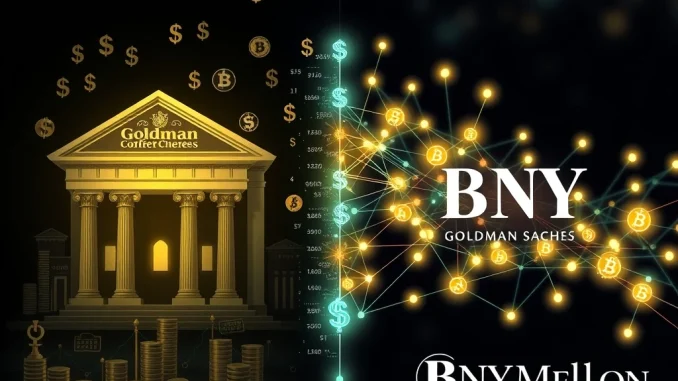
Get ready for a seismic shift in the financial world! The collaboration between banking giants Goldman Sachs and BNY Mellon to tokenize money-market shares is not just big news; it’s a groundbreaking move poised to redefine the $7 trillion money-market industry. This isn’t merely an upgrade; it’s a fundamental reimagining of how institutional cash assets are managed, promising enhanced efficiency, liquidity, and accessibility.
What Are Tokenized Money Market Shares and Why Do They Matter?
Imagine a world where your cash assets aren’t just numbers in a ledger but dynamic, programmable digital tokens. That’s the essence of tokenized money market shares. Goldman Sachs Group Inc. and Bank of New York Mellon Corp. are leading this charge, enabling institutional investors to access digital representations of 2a-7-regulated money-market fund shares. This initiative maintains traditional settlement frameworks while significantly expanding the utility of cash assets.
So, why is this such a big deal? JPMorgan Chase & Co. strategists describe it as a “significant leap forward.” Here’s why:
- Enhanced Competitiveness: Tokenized money funds can now compete more effectively with stablecoins, offering the benefits of digital assets without sacrificing the stability and regulatory oversight of traditional money markets.
- New Applications: This innovation unlocks novel uses, such as collateral for margin requirements. Teresa Ho, a JPMorgan strategist, highlights that these tokenized shares could replace traditional collateral like cash or Treasuries without losing interest income, underscoring their versatility.
- Industry Modernization: It’s a critical step in modernizing financial infrastructure, addressing long-standing inefficiencies like delayed settlements and opaque ownership tracking.
Goldman Sachs Tokenization and BNY Mellon’s Pivotal Role
The partnership between Goldman Sachs and BNY Mellon is a powerful alliance. While Goldman Sachs is a key player in the investment banking world, BNY Mellon brings its extensive expertise in fund administration and settlement. BNY Mellon will retain crucial oversight of fund records and settlements under existing regulatory guidelines, ensuring compliance with stringent investment safeguards. This collaborative approach ensures that the benefits of tokenization are realized within a secure and regulated environment.
This initiative involves major fund providers like BlackRock, Dreyfus, Federated Hermes, Fidelity, and Goldman Sachs itself – collectively managing a staggering 46% of taxable money-market assets. The sheer scale of participation from these industry titans underscores the seriousness and potential impact of Goldman Sachs tokenization efforts and the broader move towards digital assets in traditional finance. The commitment of BNY Mellon tokenization services to maintaining regulatory integrity is paramount, building trust in this evolving landscape.
The Ascent of Blockchain Finance in Traditional Markets
The tokenization trend is not an isolated event; it aligns with broader Wall Street efforts to integrate blockchain technology into traditional finance. Institutions are actively exploring digital-asset use cases to address inefficiencies inherent in legacy systems. These include:
- Delayed Settlements: Traditional settlements can take days, tying up capital. Blockchain promises near real-time settlement.
- Opaque Ownership: Tracing ownership in complex financial instruments can be cumbersome. Blockchain offers transparent, immutable records.
By tokenizing assets, the industry aims to achieve real-time liquidity and 24/7 settlement capabilities, streamlining operations for institutional clients. This transformation signifies a monumental shift towards a more agile and responsive financial ecosystem. The recent passage of the GENIUS Act, a legislative framework for stablecoin regulation requiring 1-to-1 backing with high-quality assets, further legitimizes this sector and paves the way for wider adoption of blockchain finance solutions.
Unlocking New Potential with Digital Assets
JPMorgan’s analysis highlights the urgency for innovation. Despite significant inflows into money funds in 2025, strategists warn that inaction could erode cash’s dominance. “Cash will lose its crown” if the industry fails to adapt, according to State Street Global Advisors’ CEO Yie-Hsin Hung, who emphasized tokenization as a critical enabler for the future. This points to the immense potential of digital assets to revolutionize how value is stored, transferred, and utilized.
The initiative also intersects with broader digital-asset trends, including banks’ exploration of deposit tokens and crypto loan programs. JPMorgan’s recent hiring of George Giatrakos, a former Citibank private equity dealmaker, signals the bank’s commitment to expanding its digital-asset footprint. While regulatory clarity and standardized frameworks remain challenges, the collaboration between Goldman Sachs and BNY Mellon represents a strategic step toward integrating tokenized assets into traditional finance, demonstrating a clear path for future innovation.
What’s Next for the $7 Trillion Industry?
As the market evolves, JPMorgan anticipates further developments in stablecoin integration and real-world asset tokenization. Banks, asset managers, and payment processors are strategically positioning themselves to capitalize on the sector’s immense potential. The success of this partnership could set a powerful precedent for broader adoption, reshaping global capital markets through enhanced efficiency and accessibility.
This move is more than just a technological upgrade; it’s a strategic pivot by major financial institutions to embrace the future of finance. It signals a growing confidence in blockchain’s ability to create more efficient, transparent, and innovative financial products, ensuring that money markets remain competitive and relevant in an increasingly digital world.
Conclusion: A New Era for Money Markets
The collaboration between Goldman Sachs and BNY Mellon to tokenize money-market shares is a landmark event. It signifies a profound shift in how the $7 trillion money-market industry will operate, leveraging blockchain technology to unlock unprecedented efficiencies and new applications. While challenges remain, particularly in regulatory clarity, this bold step by financial giants paves the way for a more integrated, digital, and dynamic future for global capital markets. The revolution is here, and money markets are at its forefront.
Frequently Asked Questions (FAQs)
Q1: What exactly does it mean to “tokenize money-market shares”?
Tokenizing money-market shares means converting traditional shares of money-market funds into digital tokens on a blockchain. These tokens represent ownership of the underlying assets and can be transferred, traded, and managed digitally, offering enhanced liquidity and efficiency compared to traditional paper-based or electronic records.
Q2: How will tokenized money-market shares benefit institutional investors?
Institutional investors will benefit from real-time liquidity, 24/7 settlement capabilities, and reduced counterparty risk. These tokenized shares can also be used for new applications, such as collateral for margin requirements, potentially replacing traditional assets like cash or Treasuries while still earning interest income.
Q3: What role do Goldman Sachs and BNY Mellon play in this transformation?
Goldman Sachs and BNY Mellon are collaborating to drive this initiative. Goldman Sachs is a key participant in offering these tokenized shares, while BNY Mellon provides crucial oversight of fund records and settlements, ensuring compliance with existing regulatory guidelines for money-market funds.
Q4: How does this initiative relate to stablecoins?
JPMorgan analysts suggest that tokenized money-market shares can enhance the competitiveness of money funds against stablecoins. They offer a similar digital asset experience but are backed by highly regulated and stable money-market funds, potentially providing a more secure and regulated alternative for institutional use.
Q5: What are the main challenges facing the widespread adoption of tokenized assets?
Key challenges include achieving greater regulatory clarity and developing standardized frameworks across different jurisdictions. Interoperability between various blockchain networks and traditional financial systems, as well as scalability and security concerns, also need to be continuously addressed for broader adoption.
Q6: Will this transformation affect individual investors?
Initially, this initiative is focused on institutional investors due to the complexities and regulatory requirements involved. However, successful institutional adoption often paves the way for broader innovation. In the long term, the efficiencies and new financial products developed could indirectly benefit individual investors through improved market infrastructure and potentially new retail offerings.