The cryptocurrency market, known for its unpredictable swings, recently delivered a harsh blow to XRP holders. In a startling turn of events, the XRP price drop sent shockwaves through the community, erasing gains and triggering millions in liquidations. What exactly caused this sudden downturn, and what does it mean for the future of one of crypto’s most talked-about assets? Let’s dive into the details.
The Ripple Co-Founder’s Shocking Sell-Off
The catalyst for XRP’s recent turmoil appears to be a significant move by none other than Ripple co-founder Chris Larsen. On-chain investigator ZachXBT, a well-known figure in the crypto community for uncovering suspicious transactions, reported that wallets associated with Larsen began transferring a massive 50 million XRP. This amount, valued at approximately $175 million at the time, started moving as early as July 17.
Crucially, a staggering $140 million of this XRP was allegedly directed to centralized exchanges. When large amounts of an asset are moved to exchanges, it often signals an intent to sell, increasing supply and potentially putting downward pressure on the price. This substantial transfer coincided almost perfectly with the sharp decline in XRP’s value, suggesting a direct correlation.
While the reasons behind Larsen’s purported sell-off remain speculative, the sheer volume of the transactions highlights the concentrated ownership of XRP. This concentration can make the asset particularly vulnerable to the actions of a few major holders, a point of ongoing debate within the crypto space.
Massive XRP Liquidations on Binance and Beyond
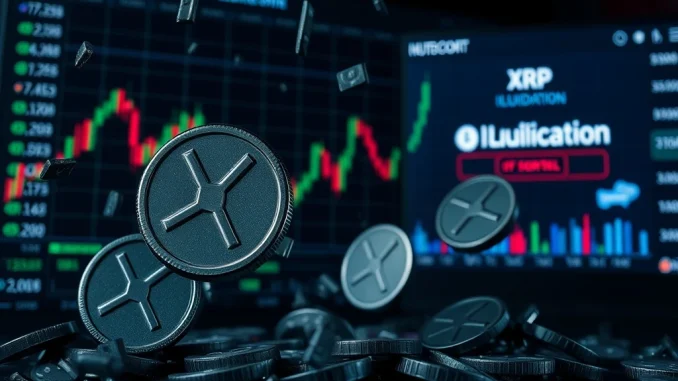
The immediate consequence of this large-scale selling was a cascade of XRP liquidations. As the price plummeted, many leveraged traders who had bet on XRP’s continued rise found their positions automatically closed by exchanges. Binance, one of the world’s largest crypto platforms, bore the brunt of these liquidations.
Data from Binance revealed that 2.3 million XRP, equivalent to a staggering $7.3 million, were liquidated on July 23 alone. This occurred as XRP’s price fell by nearly 10% within a 24-hour period. For traders, this meant significant losses, especially for those holding long positions with high leverage.
But Binance wasn’t the only platform affected. A separate, equally impactful event saw 75 million XRP liquidated on Upbit, a major South Korean exchange. This dual pressure on liquidity further exacerbated the price decline, creating a perfect storm for leveraged traders. The rapid price drop, from around $3.60 to under $3.05 within hours, forced many into forced closures, amplifying the market’s volatility.
Navigating Crypto Market Volatility: Expert Views
The recent crypto market volatility surrounding XRP has left analysts divided on its long-term implications. While the immediate impact was undeniably negative, some experts offered a more nuanced perspective:
- Downplaying the Dip: Pseudonymous analyst John Squire compared the July 24 drop to a ‘coffee break’ when viewed against XRP’s dramatic 2018 crash, suggesting that such pullbacks are a normal part of the crypto cycle.
- Healthy Correction? Armando Pantoja described the pullback as ‘healthy,’ projecting ambitious short-term targets of $4.10 and even $8–$12 by year-end. This perspective suggests that a price correction can flush out weak hands and create a stronger foundation for future growth.
- Bullish Counter-Signal: Chartist Ali Martinez pointed to a significant whale accumulation of 280 million XRP in the ten days prior to the sell-off. This ‘smart money’ movement could indicate institutional interest and potentially counterbalance the selling pressure, acting as a bullish signal for the asset.
Despite these differing views, the incident clearly underscores the inherent risks in the crypto market, especially for assets with concentrated ownership and ongoing regulatory scrutiny.
What’s Next for XRP? Beyond the Price Drop
While the recent XRP price drop was a harsh reminder of market realities, the future of XRP is multifaceted, influenced by several key factors:
- Regulatory Landscape: The ongoing investigation by the U.S. Securities and Exchange Commission (SEC) into whether XRP qualifies as a security remains a major overhang. A favorable resolution could provide significant clarity and boost investor confidence, while an unfavorable one could severely impact its trajectory.
- Institutional Adoption: Despite the volatility, some analysts see continued institutional interest as a potential long-term driver. If more institutions integrate XRP into their operations, it could provide the robust real-world use cases and diversified ownership structures that are currently lacking.
- Macroeconomic Factors: The broader economic climate, including inflation, interest rates, and global liquidity, will continue to play a role in XRP’s performance, as it does for the entire crypto market.
The ability of XRP to regain its pre-liquidation value and achieve its long-term potential will depend heavily on these factors aligning positively. While a July 16 forecast from CoinCentral speculated on a potential test of a $6 support level if the bearish trend reverses, this remains highly speculative and contingent on market conditions.
Staying Informed with XRP News and Market Dynamics
The recent events highlight the critical importance of staying updated on XRP news and understanding the complex market dynamics at play. The concentrated ownership of XRP, with Ripple’s co-founder controlling a significant portion of the 50 billion tokens issued, poses systemic risks. Critics argue that this structure makes XRP particularly susceptible to large-scale selling events, which can disproportionately affect liquidity and price stability.
This incident has reignited debates about governance structures in crypto markets, with increasing calls for reforms to mitigate risks stemming from major holders influencing liquidity. For now, XRP traders are advised to remain cautious, balancing the immediate impact of the $140 million sell-off against broader market conditions and the eventual resolution of ongoing litigation.
Conclusion: A Test of Resilience for XRP
The recent XRP price drop, triggered by a substantial sell-off from a Ripple co-founder and resulting in millions in liquidations, served as a stark reminder of the crypto market’s inherent volatility. While the immediate aftermath was painful for many traders, the incident has also sparked crucial discussions about market structure, centralized ownership, and regulatory clarity. As XRP navigates these complex waters, its future trajectory will depend on a delicate balance of institutional interest, macroeconomic trends, and the pivotal outcome of its regulatory battles. For investors and enthusiasts alike, staying informed and understanding these dynamics will be key to navigating the exciting yet challenging world of digital assets.
Frequently Asked Questions (FAQs)
Q1: What caused the recent XRP price drop?
The recent XRP price drop was primarily triggered by a reported $140 million sell-off of XRP tokens by wallets linked to Ripple co-founder Chris Larsen. This large transfer to centralized exchanges increased selling pressure, leading to a significant decline in price and subsequent liquidations.
Q2: What are XRP liquidations, and how do they occur?
XRP liquidations occur when leveraged trading positions are automatically closed by exchanges because the market price moves against the trader’s bet, causing their margin to fall below a required level. In this case, as XRP’s price plummeted, many traders who had ‘long’ (buy) positions with borrowed funds saw their positions liquidated, leading to further selling pressure.
Q3: How much XRP was liquidated on Binance?
According to Binance data, approximately 2.3 million XRP, valued at $7.3 million, were liquidated on July 23 as the asset dropped nearly 10% in 24 hours.
Q4: What is the significance of Chris Larsen’s wallets holding 2.8 billion XRP?
The fact that Chris Larsen’s wallets still hold over 2.8 billion XRP (valued at $8.4 billion) raises concerns about potential future dumping. Such a large concentration of ownership means that any significant move by a single entity can drastically impact XRP’s price and market stability, highlighting systemic risks for the asset.
Q5: How does the SEC investigation affect XRP’s price?
The ongoing U.S. Securities and Exchange Commission (SEC) investigation into whether XRP qualifies as a security adds significant regulatory uncertainty to the token’s future. This unresolved status creates a persistent overhang, influencing investor sentiment and potentially limiting institutional adoption until a clear resolution is reached.