Bitcoin, the undisputed king of cryptocurrencies, finds itself at a pivotal juncture in July 2025. The digital asset’s trajectory is currently being shaped by a fascinating interplay of global macroeconomic forces and intricate technical indicators. For anyone invested in the crypto market, understanding these dynamics – from the Federal Reserve’s delicate balancing act to the surprising strength of the Japanese Yen and critical on-chain signals – is paramount for tactical positioning. This isn’t just another market cycle; it’s a strategic crossroads demanding a nuanced approach from every investor.
How Does Fed Policy Impact Bitcoin’s Trajectory?
The Federal Reserve’s stance is always a significant determinant for global financial markets, and Bitcoin is no exception. In Q2 2025, the Fed maintained a neutral policy, keeping interest rates unchanged following a December 2024 cut. While this cautious approach prevented immediate market tremors, it also fueled speculation about future monetary easing.
- Future Rate Cuts: Traders are now pricing in approximately 76 basis points of reductions for 2026, signaling expectations for a potentially weaker U.S. Dollar. Historically, a weaker USD tends to support Bitcoin’s price, making it more attractive as a hedge against inflation or currency debasement.
- Yen-Dollar Yield Differential: However, the narrative is complicated by the yen-dollar yield differential. The spread between 30-year U.S. and Japan bond yields has reached its lowest point since 2022. This narrowing gap reduces the incentive for capital to flow into dollar-denominated assets, thereby bolstering the Japanese Yen.
- Tug-of-War: This creates a powerful tug-of-war. While a weaker dollar might push Bitcoin up, the strong yen can cap gains for the BTC/JPY pair, illustrating the intricate dance of global currencies and their influence on crypto valuations. Understanding this aspect of Fed policy is vital.
Decoding Yen Strength: A Double-Edged Sword for BTC/JPY?
The resilience of the Japanese Yen against the U.S. Dollar is a critical, yet often overlooked, factor for the BTC/JPY trading pair. A strong yen means that even if Bitcoin’s dollar price increases, its value when converted to yen might not rise as much, or could even decline.
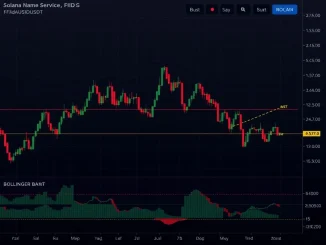
- Descending Triangle Pattern: On the bitFlyer exchange, the BTC/JPY pair has formed a distinct descending triangle pattern. This technical formation typically indicates a bearish continuation or reversal. The horizontal support level sits at 17,160,000 JPY, which translates to approximately $117,000.
- Breakout vs. Breakdown: A decisive break below this crucial support could trigger a significant bearish reversal for the pair. Conversely, a strong breakout above the triangle’s upper trendline could propel BTC/JPY to new record highs, signaling a surge in yen-denominated buying interest.
- Yield Differential Impact: The continued narrowing of the U.S.-Japan yield differential suggests that the yen’s strength is likely to persist. This underlying strength could limit the upside potential for BTC/JPY unless the Federal Reserve adopts an even more dovish stance, creating a challenging environment for yen-based Bitcoin holders. Navigating this Yen strength requires careful observation.
What Technical Signals Are Guiding Bitcoin’s Path?
Beyond macroeconomic forces, a deep dive into technical signals reveals a market in a state of fragile equilibrium. These indicators provide crucial clues about short-term price movements and investor sentiment for Bitcoin.
| Indicator | Current Signal | Implication |
|---|---|---|
| Relative Strength Index (RSI) | Hidden Bearish Divergence | Upward momentum is waning; similar pattern preceded a 20% correction in March 2024, raising concerns for a potential pullback. |
| Moving Average Convergence Divergence (MACD) | Hints at Bearish Pressure | Flattening histogram indicates weakening buying conviction and potential for further downside. |
| Volume Trends | Subdued Retail, Robust Institutional | Lack of broad retail participation despite strong institutional buying (e.g., MicroStrategy’s $2 billion offering) suggests market consolidation. |
| CME Gap | Unfilled Gap ($114,380 – $115,635) | A common target for price action; failure to fill this gap could trigger a short-term correction. |
This consolidation between $115,961 and $120,000, coupled with the lack of conviction from broader market participants, suggests that a short-term correction is a distinct possibility, especially if key support levels are breached.
Navigating the Broader Crypto Market: Institutional Confidence vs. Regulatory Uncertainty
The overall health and direction of the crypto market are not solely dictated by technical charts or central bank decisions. Broader themes, particularly institutional adoption and the evolving regulatory landscape, play a pivotal role.
- Institutional Confidence: Giants like Michael Saylor’s Strategy (formerly MicroStrategy) continue to signal unwavering confidence in Bitcoin through aggressive accumulation. Their recent $2 billion preferred stock offering underscores a long-term bullish outlook. Similarly, large transfers, such as Galaxy Digital’s 3,420 bitcoin movement, are often seen as leading indicators of institutional activity and sentiment.
- Capital Reallocation: While Bitcoin commands attention, other major cryptocurrencies also reflect market sentiment. Surges in Ethereum withdrawals during the Asian session, for instance, can indicate significant capital reallocation within the broader digital asset ecosystem, perhaps in response to specific regional news or trading strategies.
- Regulatory Uncertainty: A significant cloud hanging over the market is regulatory ambiguity. The pending White House crypto policy report is eagerly awaited, as its findings and proposed oversight could dramatically impact investor sentiment. Stricter regulations or unfavorable policy could dampen enthusiasm, potentially exacerbating volatility across BTC/JPY and other major pairs. The interplay of institutional conviction and regulatory hurdles will continue to define the immediate future of the crypto market.
Actionable Insights for Bitcoin Investors in a Volatile Climate
Given the complex interplay of macroeconomic factors and technical signals, a disciplined and tactical approach is essential for Bitcoin investors. Here are actionable insights to navigate the current volatility:
- Short-Term Hedges: With the RSI showing bearish divergence and MACD hinting at pressure, consider implementing short-term hedges. This could involve using options to protect long BTC/JPY positions or simply reducing leverage to minimize exposure to potential sharp pullbacks.
- Monitor Key Price Levels: The 17,160,000 JPY ($117,000) support level for BTC/JPY is critical. A decisive break below this could target $115,739. Conversely, a breakout above the descending triangle’s resistance could test $121,181, and potentially higher towards the long-term target of $135,000 if $120,000 is firmly breached.
- Strategic Diversification: To mitigate risks associated with sustained yen strengthening, consider allocating a portion of your crypto portfolio to yen-stable assets or strategies that benefit from yen appreciation. This can help balance overall portfolio exposure.
- Follow Institutional Flows: Keep a close eye on large institutional movements, such as significant bitcoin transfers by major players like Galaxy Digital. These can often precede broader market shifts and provide insights into where smart money is positioning itself.
Bitcoin’s strategic crossroads in 2025 demands a nuanced understanding of Fed policy, yen dynamics, and technical signals. While the long-term bullish case for Bitcoin remains robust – with a potential target of $135,000 if it decisively breaks above $120,000 – near-term volatility is an inevitable companion. Investors who navigate this complex landscape with disciplined tactical positioning and a keen eye on both macro and micro indicators will be better positioned to capitalize on emerging opportunities in a market defined by uncertainty and resilience.
Frequently Asked Questions (FAQs)
1. What is the significance of the Fed’s neutral policy stance for Bitcoin?
The Fed’s neutral stance (unchanged interest rates) avoids immediate market volatility but fuels speculation about future rate cuts. While potential future rate cuts could weaken the U.S. Dollar and typically support Bitcoin, the narrowing U.S.-Japan yield differential complicates this by strengthening the Japanese Yen, creating mixed signals for Bitcoin’s price.
2. How does the Japanese Yen’s strength affect the BTC/JPY pair?
A stronger Japanese Yen reduces the yen-based value of Bitcoin, even if its dollar price rises. This dynamic is evident in the BTC/JPY descending triangle pattern, where sustained yen strength, driven by the narrowing U.S.-Japan yield differential, can cap gains for the pair unless the Fed adopts a more dovish stance.
3. What key technical indicators should Bitcoin investors monitor?
Key technical indicators to monitor include the Relative Strength Index (RSI), which is showing a hidden bearish divergence suggesting waning upward momentum, and the Moving Average Convergence Divergence (MACD), which hints at bearish pressure with a flattening histogram. Volume trends, contrasting strong institutional buying with subdued retail participation, and the presence of an unfilled CME gap, also provide crucial insights into potential short-term corrections.
4. How do institutional actions and regulatory developments influence the crypto market?
Institutional actions, such as MicroStrategy’s aggressive Bitcoin accumulation and large transfers by entities like Galaxy Digital, signal strong long-term confidence and can act as leading indicators. Conversely, regulatory developments, particularly the pending White House crypto policy report, introduce uncertainty. Stricter oversight could dampen investor sentiment and increase volatility across the broader crypto market.
5. What tactical strategies can investors employ in this volatile Bitcoin market?
Investors can consider several tactical strategies: implementing short-term hedges (e.g., options, reduced leverage) given bearish technical signals; closely monitoring key support and resistance levels (like 17,160,000 JPY) for breakout or breakdown scenarios; diversifying portfolios with yen-stable assets to mitigate currency risks; and aligning strategies with observed institutional movements.