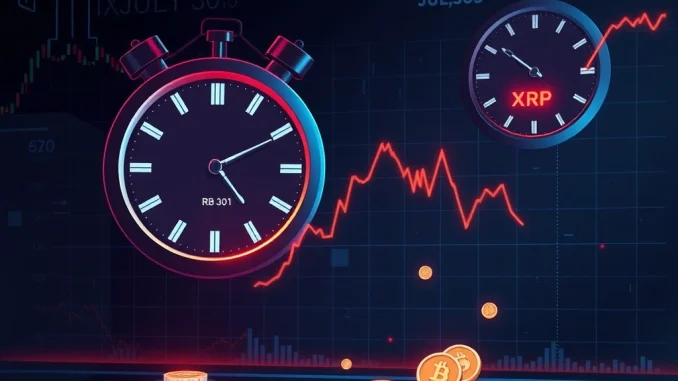
The cryptocurrency market is a dynamic arena, often characterized by rapid shifts and unexpected movements. When headlines scream about an “XRP selloff news!” with an urgent date like July 30th, it’s natural for investors to feel a surge of concern. Understanding the underlying factors and preparing a robust investor strategy is paramount to navigating such volatile periods. This article delves into what an XRP selloff might entail, its potential impacts, and how you can position yourself amidst the market’s ebbs and flows, especially when specific dates trigger heightened alerts.
Understanding the Potential for an XRP Selloff
An XRP selloff refers to a significant decline in the price of XRP, often accompanied by a surge in selling volume. Such events can be triggered by a multitude of factors, ranging from macro-economic trends to specific developments within the Ripple ecosystem or the broader cryptocurrency market. For a digital asset like XRP, which has faced its share of regulatory scrutiny, news can have an amplified effect on price action.
Several elements could contribute to a sudden downturn:
- Regulatory Updates: Ongoing legal battles or new regulatory frameworks can significantly impact investor sentiment towards XRP. Unfavorable rulings or restrictive policies could prompt large-scale selling.
- Whale Movements: Large holders (often called ‘whales’) selling substantial amounts of XRP can flood the market with supply, pushing prices down.
- Broader Market Correction: If the entire cryptocurrency market experiences a downturn (e.g., Bitcoin correction), XRP typically follows suit due to its correlation with other major digital assets.
- Negative News or FUD: Unverified rumors, security breaches, or negative press can create fear, uncertainty, and doubt (FUD), leading to panic selling.
- Technical Breakdowns: If XRP’s price breaks key support levels on technical charts, it can trigger automated sell orders and further downside momentum.
The mention of a specific date, like July 30th, often implies a scheduled event, a deadline for a legal filing, or perhaps a significant economic announcement that could influence the market. While the original source provided minimal context, such dates serve as critical markers for investors to remain vigilant.
Decoding Recent XRP News and Market Sentiment
Staying informed with the latest XRP news is crucial. The market’s reaction to information, whether factual or speculative, can be swift and unforgiving. Historically, XRP’s price has been particularly sensitive to developments concerning Ripple’s legal standing with the SEC. Any new filing, court date, or settlement talk can send ripples through its valuation.
Market sentiment around XRP is a complex blend of:
- Optimism about Utility: Many believe in XRP’s potential for cross-border payments and its adoption by financial institutions.
- Regulatory Uncertainty: The ongoing legal battle casts a shadow, creating a risk premium for holding XRP.
- Community Engagement: A passionate community often rallies behind XRP, but extreme FUD can also originate from within.
When an urgent date like July 30th is highlighted, it’s a signal for investors to scrutinize all available information. Is there a major court hearing? A product launch? Or is it simply a speculative date being circulated? Discerning credible information from noise is vital to making sound decisions.
Analyzing the Ripple Price Action and Future Outlook
The Ripple price, represented by XRP, is influenced by a myriad of factors beyond just news headlines. Supply and demand dynamics, trading volume, overall crypto market capitalization, and even global economic indicators play a role. A selloff, while potentially alarming in the short term, can also present opportunities for long-term investors.
When analyzing XRP’s price action, consider:
- Support and Resistance Levels: Identify key price points where XRP has historically found buying interest (support) or faced selling pressure (resistance). A selloff often involves breaking through support.
- Trading Volume: High volume during a price drop can indicate strong selling pressure and confirm the validity of a selloff.
- Market Cap Dominance: How does XRP’s market capitalization compare to other cryptocurrencies? A shrinking dominance could signal a shift in investor preference.
- On-Chain Metrics: Look at active addresses, transaction counts, and whale movements for insights into network activity and large holder behavior.
While past performance is not indicative of future results, understanding historical price reactions to similar events can provide context. For instance, how did XRP react to previous court dates or major market corrections?
Strategic Approaches for the Cryptocurrency Market
Navigating the volatile cryptocurrency market requires a well-defined strategy, especially when faced with urgent news like an impending selloff. Panic selling is often the worst decision, leading to locked-in losses. Instead, consider these strategic approaches:
1. Do Your Own Research (DYOR)
Before reacting to any news, verify the source and the facts. In the digital age, misinformation spreads rapidly. Cross-reference information from multiple reputable sources, and be wary of sensationalized headlines without substance.
2. Risk Management is Key
Never invest more than you can afford to lose. Implement stop-loss orders to automatically sell your XRP if it drops to a certain price, limiting potential losses. Diversify your portfolio across different cryptocurrencies and asset classes to mitigate risk.
3. Dollar-Cost Averaging (DCA)
If you’re a long-term believer in XRP, a selloff can be an opportunity. Dollar-cost averaging involves investing a fixed amount of money at regular intervals, regardless of the asset’s price. This strategy averages out your purchase price over time and can be particularly effective during market dips.
4. Re-evaluate Your Investment Thesis
A significant price drop is a good time to revisit why you invested in XRP in the first place. Has your fundamental outlook changed? Is the technology still promising? Are the regulatory hurdles manageable in the long run? Your investment thesis should guide your decisions, not short-term price fluctuations.
Developing Your Investor Strategy Amidst Volatility
Developing a robust investor strategy is not just about reacting to news, but about having a pre-planned approach for various market scenarios. For XRP holders, this means understanding the unique dynamics of the asset and preparing for its inherent volatility.
Here are actionable insights to refine your strategy:
- Set Clear Goals: Define your short-term and long-term objectives for your XRP holdings. Are you looking for quick gains or long-term growth?
- Define Your Risk Tolerance: How much loss are you comfortable with? This will dictate your position sizing and use of stop-losses.
- Stay Updated on Regulatory Landscape: The outcome of Ripple’s legal cases will significantly impact XRP’s future. Follow reliable legal news sources.
- Monitor On-Chain Data: Tools that track whale movements, exchange inflows/outflows, and network activity can provide early signals of potential selloffs or accumulation.
- Avoid Emotional Decisions: Fear and greed are powerful emotions in trading. Stick to your pre-defined strategy and avoid impulsive actions based on market FUD or FOMO (Fear Of Missing Out).
While the original source was a brief alert, the implications of an “urgent July 30th date” for an XRP selloff underscore the need for preparedness. The crypto market doesn’t wait, and informed decisions are your best defense against potential losses and your best avenue for capitalizing on opportunities.
Disclaimer: The news articles available on this platform are generated in whole or in part by artificial intelligence and may not have been reviewed or fact-checked by human editors. While we make reasonable efforts to ensure the quality and accuracy of the content, we make no representations or warranties, express or implied, as to the truthfulness, reliability, completeness, or timeliness of any information provided. It is your sole responsibility to independently verify any facts, statements, or claims prior to acting upon them. Coin Pulse Fintech Inc expressly disclaims all liability for any loss, damage, or harm arising from the use of or reliance on AI-generated content, including but not limited to direct, indirect, incidental, or consequential damages.
Frequently Asked Questions (FAQs)
Q1: What does an “XRP selloff” mean for me as an investor?
An XRP selloff means a rapid and significant decrease in its price due to widespread selling. For investors, this can result in a decrease in the value of their holdings. It can be a cause for concern if you are holding XRP, but it can also present a buying opportunity for long-term investors looking to acquire XRP at a lower price.
Q2: Why is the date July 30th mentioned as urgent for XRP news?
Specific dates in crypto news often relate to significant events like regulatory deadlines, court hearings, major economic announcements, or even planned token unlocks. While the original source did not specify the exact nature of the July 30th urgency, such dates typically signal a period where increased market volatility or important news is anticipated, prompting investors to be extra vigilant.
Q3: How can I protect my XRP investments during a selloff?
To protect your investments, consider implementing risk management strategies such as setting stop-loss orders, diversifying your portfolio, and only investing what you can afford to lose. Avoid making emotional decisions, and always verify news from multiple reputable sources before taking action. For long-term holders, dollar-cost averaging can be a useful strategy during dips.
Q4: Is an XRP selloff necessarily a bad thing for all investors?
Not necessarily. While a selloff can cause short-term losses for existing holders, it can be seen as an opportunity for new investors or those looking to increase their holdings. Lower prices allow investors to buy more XRP for the same amount of capital, which can lead to greater returns if the price recovers in the future. It’s crucial to have a long-term investment thesis and stick to it.
Q5: Where can I find reliable XRP news and market analysis?
For reliable XRP news and market analysis, refer to established financial news outlets, reputable crypto news websites, official Ripple announcements, and blockchain analytics platforms. Be cautious of unverified information from social media or less credible sources, especially during periods of high volatility. Always cross-reference information to ensure accuracy.