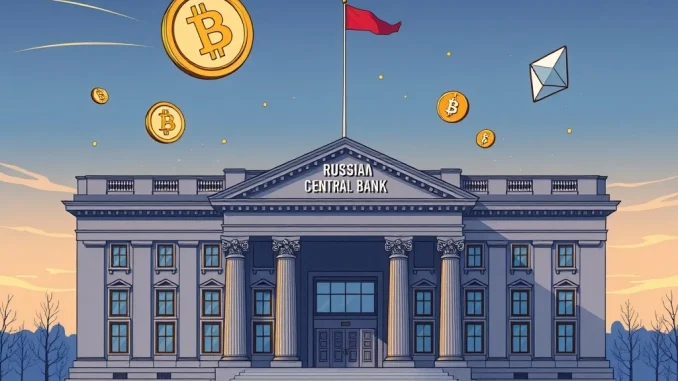
A seismic shift is underway in Russia’s approach to digital assets, poised to reshape the investment landscape for sophisticated market players. The Central Bank of Russia (CBR) has announced groundbreaking plans to permit the creation of crypto mutual funds for qualified investors by 2026. This move signals a notable departure from its traditionally cautious stance, opening new avenues for institutional engagement with cryptocurrencies. For anyone tracking the evolution of digital finance, this development in Russia crypto regulation is a must-watch.
Russia’s Pivotal Shift: Embracing Crypto Mutual Funds
After years of stringent restrictions and a generally wary attitude towards digital currencies, the Central Bank of Russia (CBR) is finally bowing to market demands. Olga Shishlyannikova, director of the CBR’s Department of Investment Financial Intermediaries, confirmed ongoing discussions aimed at allowing asset management companies to launch collective investment funds with exposure to cryptocurrencies. This initiative, first reported by Russian business news agency Prime, marks a significant policy reversal, reflecting a growing global trend where institutional investors are increasingly integrating digital assets into diversified portfolios.
While the exact implementation date remains fluid, the CBR anticipates regulatory revisions won’t be finalized until its 2026 annual plan. This timeline underscores the regulator’s cautious yet determined approach to integrating crypto into mainstream finance. For years, direct crypto ownership by individuals was largely restricted, though an ‘experimental legal regime’ (ELR) introduced in March 2023 permitted derivatives trading. The introduction of crypto mutual funds represents a significant step beyond these initial allowances, offering a more structured and regulated pathway for investment.
Decoding Russia Crypto Regulation: A Cautious Evolution
The journey of Russia crypto regulation has been one of careful deliberation, balancing innovation with systemic risk management. Historically, Russian authorities have expressed concerns about the volatility and potential regulatory challenges associated with direct cryptocurrency exposure, especially for individual investors. Current rules, updated in May 2024, already permit financial firms to offer crypto derivatives to ‘highly qualified’ investors. However, direct asset ownership has remained largely prohibited, setting Russia apart from some other major economies.
The proposed mutual fund structures necessitate a comprehensive regulatory overhaul, as existing circulars do not currently cover collective investment vehicles for digital assets. This means the CBR is not merely tweaking old rules but creating an entirely new framework. This cautious, incremental integration aligns with Russia’s broader strategy to manage financial stability while exploring the potential benefits of digital assets. It’s a pragmatic approach designed to formalize a regulated pathway for crypto investments, potentially encouraging domestic financial institutions to develop compliant products and attract institutional capital.
CBR Digital Assets Strategy: Balancing Innovation and Risk
The CBR’s evolving stance on CBR digital assets is a testament to a complex balancing act. On one hand, there’s a clear desire to foster innovation within the financial sector and leverage digital tools for economic resilience, particularly in the context of international sanctions. On the other, the bank remains acutely aware of the inherent risks: volatility, potential for illicit use, and the need for robust investor protections. The mutual fund framework is seen as a way to mitigate some of these risks by channeling investments through regulated entities and limiting access to sophisticated investors.
Key aspects of the CBR’s strategy include:
- Controlled Exposure: Limiting direct asset ownership for retail investors while allowing qualified institutions to manage diversified crypto portfolios.
- Regulatory Overhaul: Developing entirely new guidelines for collective investment vehicles, rather than shoehorning crypto into existing frameworks.
- Risk Mitigation: Focusing on how volatility, custody, and liquidity issues will be managed within these new fund structures.
- Digital Ruble Integration: The move coincides with the planned 2026 launch of the digital ruble and stricter enforcement of the ELR framework, aiming for a cohesive digital financial ecosystem.
This measured approach contrasts with the fragmented regulatory landscapes seen in other major economies, highlighting Russia’s preference for a centralized and structured integration of digital assets.
Who are the Qualified Crypto Investors?
A crucial element of the CBR’s plan is the restriction of these new crypto mutual funds to ‘qualified investors.’ But who exactly falls into this category in Russia? Typically, qualified investors are individuals or entities who meet specific criteria related to their financial sophistication, asset holdings, and experience in financial markets. This distinction is vital because it ensures that only those with a higher capacity to understand and absorb the risks associated with volatile assets like cryptocurrencies can participate.
While the specific criteria for ‘qualified investors’ in the context of these new crypto funds are yet to be fully detailed, they will likely align with existing definitions used for other complex financial products. This focus on qualified investors underscores the CBR’s commitment to investor protection, preventing widespread retail exposure to potentially high-risk assets while still allowing institutional capital to flow into the burgeoning digital asset space. It’s a strategic move to foster market growth without compromising financial stability for the broader public.
Boosting Russian Fintech Innovation: What’s Next?
The decision to greenlight crypto mutual funds holds immense potential for stimulating Russian fintech innovation. By formalizing a regulated pathway for crypto investments, the CBR could catalyze a wave of new product development and service offerings from domestic financial institutions. This move is expected to:
- Encourage Product Development: Inspire asset management companies to design compliant and attractive crypto investment vehicles.
- Attract Institutional Capital: Provide a secure and regulated channel for large-scale investors to gain exposure to digital assets.
- Foster Expertise: Drive the development of specialized knowledge and infrastructure within Russia’s financial sector for managing digital assets.
- Enhance Market Liquidity: Potentially increase the overall liquidity and maturity of the domestic crypto market.
However, the absence of detailed guidelines at this stage raises important questions about investor protections and mechanisms for managing crypto volatility within these new structures. Market analysts are eagerly awaiting final regulatory clarity to issue more precise forecasts for the policy’s economic impact. This initiative, alongside the planned launch of the digital ruble and stricter enforcement of the ELR framework in 2026, positions Russia at a unique juncture in its digital financial evolution, seeking to leverage innovation while maintaining robust control.
Conclusion
Russia’s Central Bank is charting a new course in the world of digital finance, with its decision to permit crypto mutual funds for qualified investors by 2026 marking a pivotal moment. This strategic shift in Russia crypto regulation reflects a pragmatic approach to integrating digital assets into the mainstream financial system, balancing the imperative for Russian fintech innovation with robust risk management. While the focus remains on qualified crypto investors, this move could democratize access to digital assets for sophisticated players and significantly influence the future of CBR digital assets policy. As the global regulatory landscape for cryptocurrencies continues to evolve, Russia’s incremental yet determined integration offers a unique case study in managing the complexities of digital finance under a centralized authority. The success of this policy will hinge on clear regulatory guidelines and the financial industry’s ability to navigate both innovation and risk.
Frequently Asked Questions (FAQs)
Q1: What exactly are crypto mutual funds?
Crypto mutual funds are collective investment schemes that pool money from multiple investors to invest in a diversified portfolio of cryptocurrencies or crypto-related assets. They are managed by professional asset management companies and aim to provide investors with exposure to the digital asset market without requiring direct ownership or management of individual cryptocurrencies.
Q2: Why is Russia’s Central Bank allowing these funds now?
The CBR’s decision comes after repeated requests from market participants for expanded investment avenues in digital assets. It reflects a global trend of institutional investors seeking regulated ways to integrate crypto into their portfolios. The move also aligns with Russia’s broader strategy to manage its economy under sanctions by leveraging digital assets as a tool for financial resilience and fostering domestic fintech innovation.
Q3: Who qualifies as a ‘qualified investor’ for these funds in Russia?
While the exact criteria are still being finalized, ‘qualified investors’ in Russia typically refer to individuals or entities that meet specific thresholds for financial assets, investment experience, and professional knowledge. This ensures that only sophisticated investors who can understand and bear the risks associated with volatile assets like cryptocurrencies can access these funds.
Q4: How will the CBR manage the risks associated with crypto volatility in these funds?
The CBR acknowledges the risks of volatility, custody, and liquidity. The new mutual fund structures will require a separate regulatory overhaul, implying that new guidelines will be developed to address these issues. This could involve specific rules for asset allocation, risk management, valuation, and investor protection mechanisms within the fund framework.
Q5: What other changes are expected in Russia’s crypto space by 2026?
In addition to crypto mutual funds, 2026 is expected to see the launch of Russia’s digital ruble, accompanied by a universal QR code for payments. There will also be stricter enforcement of the experimental legal regime (ELR) for crypto, with penalties introduced for using crypto in non-sanctioned transactions, such as everyday purchases, to reinforce compliance.