The automotive landscape in South Asia is on the cusp of a significant transformation. Imagine a future where electric vehicles are not just imported luxuries but locally manufactured realities, driving sustainable mobility across the nation. This vision is rapidly becoming tangible with the recent announcement from Chinese electric vehicle giant BYD. The company is set to launch its first locally assembled BYD Pakistan EV models by mid-2026, signaling a bold entry into one of the region’s most promising markets. This move isn’t just about selling cars; it’s about reshaping the entire Pakistan EV Market, fostering local industry, and accelerating the shift towards a greener future.
Unpacking BYD’s Grand Entry into the Pakistan EV Market
BYD Co. Ltd., a global leader in electric vehicle manufacturing, is making a strategic push into Pakistan, a market ripe for EV adoption. Their plan is comprehensive and ambitious, aiming to capture a substantial share of the burgeoning Pakistan EV Market within its initial years of operation. Here’s a closer look at the key details:
- Launch Timeline: BYD expects its first locally assembled vehicles to roll off the production lines between July and August 2026. This mid-2026 target marks a crucial milestone in their South Asian expansion.
- Strategic Partnership: To facilitate this ambitious project, BYD has partnered with Mega Motor Company, a subsidiary of Hub, a well-established entity in Pakistan’s automotive sector. This collaboration leverages local expertise for production and distribution.
- Production Facility: A new production plant is currently under construction near Karachi. This facility is designed to produce 25,000 units annually, indicating BYD’s serious commitment to meeting the rising demand for electric and plug-in hybrid vehicles in the region.
- Market Share Ambition: BYD Pakistan’s vice president of sales and strategy has set an ambitious target: capturing 30-35% of the market within its first years of operation. This aggressive goal highlights BYD’s confidence in its product and strategy.
This initiative is more than just a business expansion; it’s a strategic move that aligns with global trends towards sustainable transportation and local manufacturing.
What Drives BYD’s Vision for BYD Local Assembly in Pakistan?
The decision for BYD Local Assembly in Pakistan is not arbitrary; it’s a meticulously calculated strategy designed to overcome various market entry barriers and maximize competitive advantages. BYD’s approach is multi-faceted, focusing on cost efficiency, market penetration, and global diversification.
- Mitigating Import Tariffs: By assembling vehicles locally, BYD can significantly reduce the impact of import tariffs, which often make imported EVs prohibitively expensive for the average consumer. This allows for more competitive pricing.
- Reducing Logistical Challenges: Local production streamlines the supply chain, reducing transportation costs and lead times. This efficiency translates into quicker delivery and better responsiveness to market demands.
- Competitive Pricing: Lower production costs enable BYD to offer more attractive prices, making Electric Vehicles Pakistan more accessible to a broader segment of the population. This is crucial for mass adoption.
- Diversifying Global Footprint: This expansion into Pakistan is part of BYD’s broader strategy to diversify its global manufacturing base. It helps the company reduce reliance on single markets and navigate geopolitical complexities more effectively.
- Leveraging Local Expertise: Partnering with Mega Motor Company allows BYD to tap into established local knowledge, distribution networks, and a skilled workforce, accelerating their market integration.
This strategic move underscores BYD’s adaptability and foresight in navigating the complexities of emerging markets.
Navigating the Future of Electric Vehicles Pakistan: Opportunities and Challenges
The landscape for Electric Vehicles Pakistan is dynamic, presenting both immense opportunities and notable challenges. The country is witnessing a surge in demand for alternative-energy vehicles, driven by a confluence of factors:
Opportunities:
- Rising Environmental Awareness: A growing consciousness about climate change and air pollution is pushing consumers towards greener transportation options.
- Government Incentives: The Pakistani government has increasingly incentivized EV adoption through various policies, including tax breaks and reduced duties, making EVs more appealing.
- Fuel Cost Savings: With fluctuating fossil fuel prices, the promise of lower running costs for EVs is a significant draw for consumers and businesses alike.
- Emerging Infrastructure: While still nascent, investments in EV charging infrastructure are slowly gaining momentum, which is vital for long-term growth.
Challenges:
- Infrastructure Gaps: A widespread and reliable EV charging network is still under development, which can cause range anxiety for potential buyers.
- Regulatory Hurdles: While incentives exist, consistent and long-term regulatory frameworks are needed to provide stability and confidence for investors and consumers.
- Initial Cost: Despite local assembly efforts, the upfront cost of EVs can still be higher than traditional internal combustion engine (ICE) vehicles, posing a barrier for some segments.
- Consumer Awareness and Education: Many consumers are still unfamiliar with EV technology, maintenance, and benefits, requiring significant educational campaigns.
BYD’s success will largely hinge on its ability to effectively navigate these challenges while capitalizing on the existing opportunities within the Pakistan EV Market.
The Mega Motor Company Partnership: A Strategic Alliance
The collaboration between BYD and Mega Motor Company is a cornerstone of BYD’s entry strategy. This partnership is designed to blend BYD’s global EV manufacturing prowess with Mega Motor’s deep understanding of the local Pakistani automotive landscape.
- Local Expertise: Mega Motor Company brings invaluable local market insights, established distribution channels, and a skilled workforce essential for efficient production and market penetration.
- Production and Distribution: Mega Motor will be responsible for the assembly operations at the Karachi plant and managing the distribution network across Pakistan.
- Technical Support: BYD will provide the necessary technical support, supply-chain integration, and advanced EV technology to ensure high-quality local production.
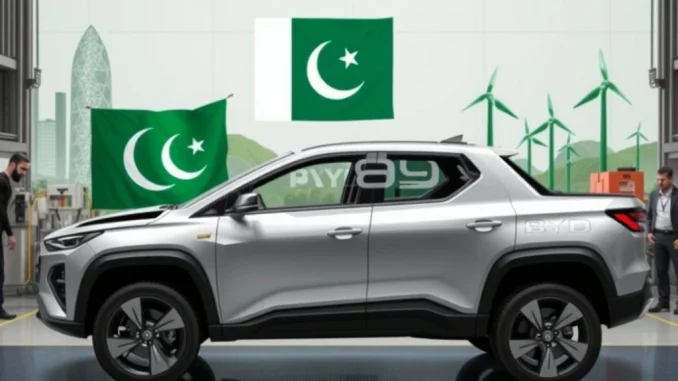
- Product Focus: The initial product lineup is expected to include plug-in hybrid models, with a strong emphasis on utility vehicles. The Shark 6 pickup truck, a plug-in hybrid, is specifically mentioned as a likely candidate. This choice reflects BYD’s recognition of Pakistan’s market dynamics, where commercial and multi-purpose vehicles hold significant appeal.
This strategic alliance ensures that the BYD Pakistan EV models are not only technologically advanced but also well-suited to local preferences and conditions.
Is the 30-35% Target for Pakistan EV Market Share Realistic?
BYD’s ambition to capture 30-35% of the Pakistan EV Market within its first few years is certainly bold. While challenging, several factors could contribute to its realization:
- First-Mover Advantage (Local Assembly): Being among the first major global players to establish significant local EV assembly provides a crucial competitive edge, especially against fully imported models.
- Competitive Pricing: The ability to offer competitive pricing due to local assembly will be a significant draw for cost-conscious Pakistani consumers.
- Product Diversity: Starting with plug-in hybrids like the Shark 6 pickup truck caters to a practical segment of the market, offering a bridge for consumers hesitant to fully commit to pure EVs due to charging concerns.
- Brand Reputation: BYD’s global reputation as a leading EV manufacturer provides a strong foundation of trust and quality.
- Market Growth: The Pakistan EV Market is projected to experience rapid growth. Capturing a large percentage of a rapidly expanding pie is more feasible than taking share from a stagnant market.
However, the success hinges on factors such as rapid infrastructure development, consistent government support, and effective consumer education campaigns. If BYD can effectively address the charging infrastructure challenge and maintain competitive pricing, its ambitious target could indeed be within reach.
Conclusion: Powering Pakistan’s Green Future
BYD’s entry into Pakistan with local assembly plans by mid-2026 marks a pivotal moment for the country’s automotive industry and its green energy aspirations. The partnership with Mega Motor Company and the ambitious goal of capturing 30-35% of the Pakistan EV Market signify a profound commitment. This strategic move is poised to accelerate the adoption of Electric Vehicles Pakistan, reduce reliance on fossil fuels, and create new economic opportunities through BYD Local Assembly. While challenges related to infrastructure and consumer awareness remain, BYD’s proven global strategy of localized production positions it strongly for success. As the world shifts towards sustainable mobility, Pakistan is set to play a crucial role, powered by global leaders like BYD, driving towards a cleaner, more electrified future.
Frequently Asked Questions (FAQs)
Q1: When will BYD’s locally assembled EVs be available in Pakistan?
A1: BYD plans to launch its first locally assembled electric vehicles in Pakistan by mid-2026, with models expected to roll off the assembly line between July and August 2026.
Q2: Which company is BYD partnering with for local assembly in Pakistan?
A2: BYD is partnering with Mega Motor Company, a subsidiary of Hub, to establish its production facility and manage local assembly and distribution in Pakistan.
Q3: What is BYD’s target market share in Pakistan?
A3: BYD Pakistan aims to capture 30-35% of the electric vehicle market within its first years of operation.
Q4: What types of vehicles will BYD initially produce in Pakistan?
A4: The initial product lineup is expected to include plug-in hybrid models, such as the Shark 6 pickup truck, tailored to meet regional preferences for utility and efficiency.
Q5: What are the main benefits of BYD’s local assembly strategy for Pakistan?
A5: Local assembly will help mitigate import tariffs, reduce logistical challenges, allow for more competitive pricing, create local jobs, and accelerate the adoption of greener transportation solutions in Pakistan.