Are you ready for the next monumental leap in the world of decentralized finance? The Ethereum network is constantly evolving, and a significant milestone is on the horizon. Get ready for the Ethereum Fusaka Fork, a pivotal upgrade scheduled for November 2025, poised to dramatically enhance the network’s capacity and efficiency. This isn’t just another update; it’s a strategic move designed to future-proof Ethereum, making it faster, more robust, and even more accessible for everyone.
Understanding the Ethereum Fusaka Fork: A Backend Revolution
The Ethereum Fusaka Fork, set to activate in early November 2025, marks a crucial strategic step in Ethereum’s continuous evolution. Unlike some previous upgrades that focused on user-facing features, Fusaka prioritizes profound backend optimizations. This upgrade is a testament to Ethereum’s commitment to foundational strength, implementing 11 Ethereum Improvement Proposals (EIPs) aimed at boosting scalability, fortifying security, and refining gas efficiency. Crucially, it’s designed to achieve these enhancements while meticulously maintaining compatibility with existing smart contracts and decentralized applications (dApps).
While forks like Pectra introduced groundbreaking innovations such as account abstraction, Fusaka’s philosophy is different. It zeroes in on refining core protocol parameters, addressing the growing demand on the network without disrupting the user experience. This focus on the underlying architecture ensures that as Ethereum expands, its foundation remains solid and capable of supporting a global ecosystem of applications and users.
Key Objectives of the Fusaka Fork:
- Enhanced Scalability: Processing more transactions per block to reduce congestion.
- Improved Security: Strengthening network resilience against various attacks.
- Greater Gas Efficiency: Optimizing how gas is consumed, potentially leading to lower fees.
- Maintaining Compatibility: Ensuring existing smart contracts and dApps continue to function seamlessly.
Boosting the Ethereum Gas Limit: More Transactions, Less Congestion
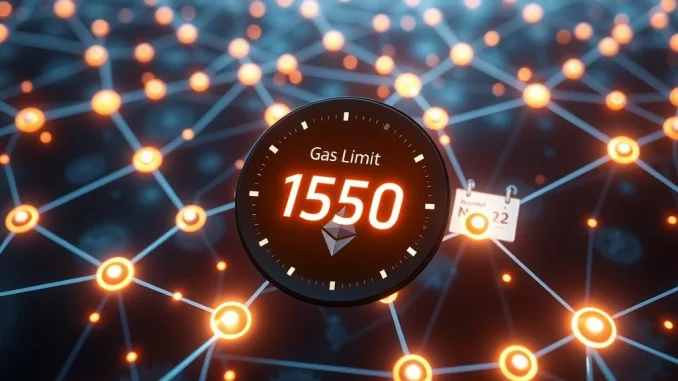
One of the most impactful changes introduced by Fusaka is the significant increase of the block Ethereum gas limit to 150 million units. To put this into perspective, the current gas limit typically hovers around 30 million units. This five-fold increase is not merely a number; it represents a massive expansion of each block’s capacity to process transactions. Imagine a highway suddenly expanding from three lanes to fifteen – that’s the kind of throughput improvement we’re talking about.
This elevated gas limit is designed to allow each block to process substantially more transactions, a critical factor in reducing fees during periods of peak network demand. For users, this could translate into more predictable and potentially lower transaction costs, especially during times of high activity in the DeFi or NFT sectors. For developers, it means more room for complex smart contract interactions without hitting immediate gas limits.
Benefits of an Increased Ethereum Gas Limit:
- Reduced Transaction Fees: More transactions per block can alleviate network congestion, leading to lower average gas prices.
- Faster Transaction Confirmations: With more capacity, transactions can be processed and confirmed more quickly.
- Enhanced Throughput: The network can handle a significantly higher volume of operations simultaneously.
- Improved User Experience: Less waiting, lower costs, and smoother interactions with dApps.
However, it’s crucial to acknowledge the trade-offs that come with such a significant adjustment. A higher gas limit means larger blocks, which can lead to:
- Slower Block Propagation: Larger blocks take slightly longer to travel across the network to all nodes.
- Increased Data Storage Requirements: Nodes will need to store more data, potentially increasing the barrier to entry for running a full node.
Ethereum developers are meticulously balancing these factors, understanding that sustained growth requires careful consideration of network health and decentralization.
Driving Ethereum Scalability Forward: Competing in a Dynamic Ecosystem
The Fusaka Fork is a powerful statement about Ethereum’s commitment to bolstering its core infrastructure to achieve true Ethereum scalability. In a rapidly evolving blockchain landscape, where new Layer 1s and Layer 2 solutions constantly emerge, enhancing the base layer’s capacity is paramount. This upgrade directly addresses foundational challenges such as transaction throughput and network robustness, which are vital for supporting the burgeoning decentralized finance (DeFi) applications and increasingly interactive use cases.
By increasing the block gas limit and implementing other efficiency-focused EIPs, Ethereum aims to solidify its position as the leading smart contract platform. This iterative approach to upgrades is essential for maintaining the network’s reliability and adaptability, ensuring it remains competitive with faster Layer 2 solutions (like Arbitrum, Optimism, zkSync) and other Layer 1 blockchains (like Solana, Avalanche, BNB Chain) that often boast higher transaction speeds or lower fees.
Why Scalability Matters for Ethereum’s Future:
- DeFi Growth: Higher capacity supports more complex and frequent DeFi transactions without crippling gas fees.
- NFT Ecosystem: Enables smoother minting, trading, and interactions within the vibrant NFT market.
- Gaming & Metaverse: Provides the necessary throughput for high-interaction applications requiring real-time updates.
- Enterprise Adoption: A more stable and scalable network is more attractive for large-scale enterprise blockchain solutions.
Analysts consistently emphasize that such iterative upgrades are indispensable for Ethereum. They allow the network to balance innovation with stability, ensuring it can gracefully adapt to the demands of a rapidly expanding and diversifying ecosystem. Fusaka’s focus on infrastructure over flashy new features underscores a mature development philosophy: build a strong, reliable backbone first.
A Closer Look at Key EIPs Ethereum is Implementing
The EIPs Ethereum Improvement Proposals (EIPs) are the lifeblood of the network’s evolution, formalizing standards and changes to the protocol. The Fusaka Fork will integrate 11 distinct EIPs, each contributing to the overarching goals of scalability, security, and efficiency. While the original content highlights EIP-7825 and mentions the deferral of EIP-7907, understanding the nature of these proposals gives insight into the upgrade’s comprehensive approach.
EIP-7825: Bolstering Network Resilience
EIP-7825 is a critical inclusion, specifically designed to protect nodes from spam attacks. In a decentralized network, preventing malicious actors from overwhelming nodes with junk data is paramount for maintaining network health and stability. This EIP introduces new checks and validation mechanisms that strengthen network resilience, making it harder for attackers to disrupt service or slow down transaction processing. This focus on core security ensures that as the network scales, it doesn’t become more vulnerable.
The Deferred EIP-7907: Future Potential for Contract Code Size
Initially, EIP-7907 was proposed for inclusion in Fusaka. This proposal aimed to double the contract code size limit and introduce new gas metering rules. Doubling the contract code size would offer significant benefits for developers, allowing for more complex and feature-rich smart contracts without hitting existing size constraints. However, to avoid potential testing delays and ensure a smooth rollout of the Fusaka Fork, EIP-7907 was deferred. This decision reflects the Ethereum team’s pragmatic approach: prioritize timely execution and stability for the immediate upgrade, while keeping more ambitious changes on the roadmap for future implementations. This demonstrates a careful balance between innovation and ensuring the integrity of the upgrade process.
The Role of the Other 9 EIPs: Incremental Improvements
While specific details for all 11 EIPs are often technical and not always highlighted in public-facing announcements, their collective impact is significant. These EIPs typically cover a range of areas including:
- Gas Cost Optimizations: Adjusting the gas costs of certain operations to make them more efficient.
- State Management Improvements: Enhancing how Ethereum’s state (account balances, contract storage) is managed and accessed.
- Networking Enhancements: Optimizing peer-to-peer communication between nodes.
- Minor Protocol Adjustments: Small, yet crucial, tweaks that improve overall network performance and security.
The philosophy here is one of incremental improvement. By avoiding disruptive code rewrites, these EIPs minimize risks for developers and users, while steadily addressing foundational challenges like transaction throughput and network robustness. This ensures a stable, predictable, yet continuously improving environment for the Ethereum ecosystem.
The Road to the Ethereum Upgrade 2025: Timeline and Testing
The journey to the Ethereum upgrade in November 2025 follows Ethereum’s increasingly accelerated six-month upgrade cycle, a testament to the development team’s efficiency and dedication. This rapid pace ensures that the network can adapt quickly to evolving demands and technological advancements.
The timeline for Fusaka has been meticulously planned to ensure a smooth and secure deployment:
- Mid-July 2025: Developer-Only Devnet Launch. This initial phase saw the launch of a private development network, or Devnet. This environment is exclusively for core developers to test the proposed changes in isolation, identify any immediate bugs, and fine-tune the EIP implementations before broader testing begins. It’s the critical first step in validating the technical soundness of the fork.
- September and October 2025: Public Testnets. Following successful Devnet trials, the changes will be rolled out to public testnets. These testnets, such as Sepolia and Goerli (or their future equivalents), allow a wider community of developers, node operators, and dApp creators to test their applications against the new protocol. This crucial phase helps identify any unforeseen issues, ensures compatibility, and builds confidence within the ecosystem. Community testing is vital for identifying edge cases and ensuring broad readiness.
- Early November 2025: Mainnet Activation. The final mainnet activation is contingent on successful testnet validation and strict alignment with the Ethereum team’s target. The goal is to deploy the fork before the Devconnect conference in Buenos Aires (November 17-22, 2025). This deadline adds a layer of urgency and ensures that the upgrade is completed before a major community gathering, allowing for immediate discussions and feedback.
This rigorous schedule reflects the project’s emphasis on timely execution and seamless integration. Community members, including protocol support experts like Nixo, have consistently advocated for strict adherence to the timeline to ensure the upgrade proceeds without unnecessary delays. The methodical approach, moving from private testing to public testnets, is designed to minimize risks and maximize the chances of a successful mainnet activation.
Why This Matters: Benefits for Users and Developers
While the Fusaka upgrade might seem like a highly technical backend overhaul, its implications for both everyday users and developers are profound and overwhelmingly positive. It’s an investment in Ethereum’s future, ensuring it remains the leading platform for innovation.
For Users:
- Potentially Lower Gas Fees: The increased block gas limit means more transactions can fit into each block. In times of high network demand, this increased capacity can help alleviate congestion, which is a primary driver of high gas fees. While not a guaranteed permanent solution to all fee issues (which also depend on overall network demand), it provides significant relief.
- Faster Transaction Confirmations: With more room in each block, transactions are less likely to be stuck in a pending state, leading to quicker confirmations for transfers, DeFi interactions, and NFT trades.
- Smoother DApp Experience: Applications that are gas-intensive or require frequent on-chain interactions will perform more reliably and responsively, improving the overall user experience across the Ethereum ecosystem.
For Developers:
- More Predictable Network Conditions: A more scalable network with a higher gas limit offers a more stable and predictable environment for deploying and operating dApps. This reduces the risk of applications becoming prohibitively expensive to use during peak times.
- Greater Design Flexibility: While EIP-7907 (doubling contract code size) was deferred, the overall increase in network capacity still provides developers with more leeway to design complex smart contracts and dApps without constantly battling gas limits or network congestion.
- Enhanced Security Features: EIPs like EIP-7825 contribute to a more secure and resilient network, providing a stronger foundation for developers to build upon, with reduced risks of spam attacks affecting their dApps.
- Continued Innovation: By strengthening the base layer, Fusaka enables the continued growth and innovation of Layer 2 solutions, which rely on the security and finality of the Ethereum mainnet. This symbiotic relationship ensures a robust multi-layered scaling strategy.
The absence of immediate user-facing features in Fusaka aligns with Ethereum’s broader strategy of prioritizing fundamental infrastructure. While the upgrade will not alter smart contract behavior or introduce brand-new functionalities visible to the end-user, its backend optimizations are absolutely crucial for sustaining long-term growth and maintaining Ethereum’s competitive edge. This pragmatic approach has been well-received by the community, with discussions on platforms like Reddit frequently highlighting the importance of regular protocol maintenance to ensure Ethereum’s resilience amid increasing adoption.
Navigating the Challenges and Trade-offs
While the Fusaka Fork brings immense benefits, it’s important to acknowledge that no significant network upgrade comes without its challenges and trade-offs. Ethereum’s development philosophy involves careful consideration of these factors to ensure the network’s long-term health and decentralization.
Key Challenges and Considerations:
- Increased Node Requirements: The primary trade-off of increasing the block gas limit to 150 million units is the corresponding increase in data storage requirements and processing power needed for full nodes. Larger blocks mean more data to download, verify, and store. This could potentially raise the barrier to entry for individuals running full nodes, which is a crucial aspect of decentralization. Developers are working to mitigate this through efficiency improvements, but it remains a continuous balancing act.
- Block Propagation Time: Larger blocks inherently take slightly longer to propagate across the network. While the increase might be milliseconds, in a high-speed network, this can have implications for transaction finality and consensus mechanisms. Ethereum’s robust P2P network and future developments in block propagation techniques aim to minimize this impact.
- Complexity of Coordination: Implementing 11 EIPs simultaneously requires immense coordination among diverse developer teams, client implementations (Geth, Nethermind, Erigon, etc.), and the broader ecosystem. Ensuring all components are ready and compatible by the target date is a significant logistical challenge.
- Security Audits and Testing: With increased complexity comes the need for rigorous security audits and extensive testing. While Devnets and public testnets are designed for this, the sheer scale of Ethereum means that every potential vulnerability must be meticulously addressed before mainnet deployment.
The Ethereum community, through its transparent development process and active discussions, continuously addresses these challenges. The deferral of EIP-7907 is a prime example of the development team prioritizing stability and timely execution over immediate feature expansion, demonstrating a pragmatic approach to managing complexity.
By openly acknowledging and working to mitigate these trade-offs, Ethereum reinforces its commitment to building a resilient, decentralized, and truly scalable blockchain for the future. The Fusaka Fork is not just about raw capacity; it’s about intelligent growth.
Conclusion: A Resilient Path Forward for Ethereum
As the November 2025 deadline approaches, the focus remains squarely on seamless execution of the Ethereum Fusaka Fork. This pivotal upgrade, with its emphasis on backend optimizations and a significant boost to the Ethereum gas limit, underscores Ethereum’s philosophy of incremental yet impactful improvements. By integrating 11 crucial EIPs Ethereum is setting a new benchmark for its foundational strength, directly addressing critical needs for enhanced Ethereum scalability and security.
Developers will meticulously monitor testnet results and finalize the activation block height, ensuring all nodes upgrade simultaneously and without disruption. This methodical approach minimizes risks and maximizes the chances of a smooth transition. Fusaka’s strategic importance cannot be overstated; by reinforcing its technical foundation, Ethereum is proactively positioning itself to handle the ever-growing demands of decentralized finance, NFTs, gaming, and countless other innovative applications. It’s a clear statement of intent: Ethereum is committed to continuous improvement, ensuring its long-term viability and leadership in the blockchain space. The future of decentralized applications looks brighter and more accessible than ever before.
Frequently Asked Questions (FAQs)
Q1: What is the main purpose of the Ethereum Fusaka Fork?
The primary purpose of the Ethereum Fusaka Fork is to enhance the network’s scalability, security, and gas efficiency through backend optimizations. It aims to significantly increase the block gas limit to 150 million units, allowing more transactions per block and potentially reducing fees, while maintaining compatibility with existing smart contracts.
Q2: How does the Ethereum Fusaka Fork improve Ethereum scalability?
The Fusaka Fork improves Ethereum scalability primarily by increasing the block gas limit to 150 million. This allows each block to process a much larger volume of transactions, increasing network throughput and reducing congestion. This makes Ethereum more competitive with other blockchains and Layer 2 solutions.
Q3: What is the Ethereum gas limit, and why is its increase important?
The Ethereum gas limit is the maximum amount of ‘gas’ (a unit of computational effort) that can be consumed within a single block. Increasing it to 150 million units is important because it directly translates to more transactions and complex operations being processed per block. This can lead to lower transaction fees during peak demand and faster transaction confirmations for users.
Q4: What are EIPs Ethereum is implementing in Fusaka?
EIPs, or Ethereum Improvement Proposals, are standards and specifications for changes to the Ethereum protocol. The Fusaka Fork will implement 11 EIPs. One notable inclusion is EIP-7825, designed to protect nodes from spam attacks. While EIP-7907 (for larger contract code size) was deferred, the collective EIPs aim to improve gas efficiency, state management, and overall network resilience.
Q5: When is the Ethereum Fusaka Fork scheduled to happen?
The Ethereum Fusaka Fork is scheduled for mainnet activation in early November 2025. This follows a rigorous testing phase, including a developer-only Devnet in mid-July 2025 and public testnets in September and October 2025.
Q6: Will the Fusaka Fork introduce new user-facing features or change smart contract behavior?
No, the Fusaka Fork primarily focuses on backend optimizations and infrastructure improvements. It will not introduce new user-facing features or alter existing smart contract behavior. Its goal is to enhance the network’s underlying capacity and efficiency without disrupting current functionalities, ensuring a stable and reliable platform for future growth.