While the crypto world often focuses on the future of finance and decentralized innovation, every so often, a seismic event from the broader entertainment landscape reminds us of the profound impact individuals can have on culture and global phenomena. Today, that reverberation comes from the world of professional wrestling, as news breaks of the passing of an undisputed **Hulk Hogan**, a name synonymous with an entire generation of sports entertainment. His death at 71 marks the end of an era, leaving behind a legacy that transcended the wrestling ring and reshaped popular culture.
The Unstoppable Rise of a WWE Legend
Terry Bollea, known globally as **Hulk Hogan**, the mustachioed, bandana-wearing powerhouse, passed away on July 24, 2025, at his Clearwater, Florida home, following a cardiac arrest. Florida police confirmed the tragic incident, stating first responders found him unresponsive before he was pronounced dead at a local hospital. His passing at 71 years old sends shockwaves through the sports and entertainment industries, marking the definitive close of a chapter in professional wrestling history that he single-handedly helped write.
Hogan’s career spanned decades, transforming him from a wrestling competitor into a cultural phenomenon. He was a cornerstone of WWE’s (then WWF) ascent to mainstream prominence, turning a niche sport into a global spectacle. His larger-than-life persona, coupled with high-stakes storytelling, redefined what professional wrestling could be. He didn’t just participate in the sport; he amplified it, making it an essential part of the 1980s and 1990s cultural fabric.
What Defined the “Hulkamania” Era?
The 1980s belonged to **Hulkamania**. This period saw Hogan’s influence explode, propelling professional wrestling into households across America and beyond. It was a time of unprecedented growth for the industry, largely thanks to Hogan’s magnetic charisma and the simple, yet powerful, message of “say your prayers, take your vitamins, and train.”
- WrestleMania I (1985): Hogan headlined the inaugural WrestleMania, teaming with pop culture icon Mr. T to defeat Roddy Piper and Paul Orndorff. This event was a game-changer, drawing an estimated 1 million closed-circuit viewers and proving wrestling’s mainstream appeal.
- WrestleMania III (1987): His legendary rivalry with Andre the Giant culminated in a main event that remains one of the most iconic matches in wrestling history. The rematch on NBC attracted an astounding 33 million viewers, a record for televised wrestling at the time.
- Championship Dominance: Hogan appeared in seven of the first eight WrestleMania main events and held the WWF World Heavyweight Championship for over 1,474 days, a record second only to Bruno Sammartino. His title reigns weren’t just about wins; they were about carrying the entire company on his broad shoulders.
The impact of **Hulkamania** extended far beyond the ring. Hogan became a symbol of American strength and heroism, a character that resonated deeply with audiences of all ages. He was more than a wrestler; he was a superhero in neon yellow and red, inspiring millions and setting the stage for wrestling’s future.
Hulk Hogan: A Pro Wrestling Icon’s Evolution and Reinvention
Just when many thought his career might be winding down, **Hulk Hogan** proved his unparalleled ability to adapt and reinvent. In 1996, a pivotal “heel turn” saw him join the New World Order (NWO) in World Championship Wrestling (WCW). This move was nothing short of revolutionary, repositioning him as a villain and injecting a jolt of energy that revitalized the entire industry during the mid-to-late 1990s.
This character shift, coupled with his rekindled feud with Randy Savage, drew massive audiences and redefined wrestling’s narrative potential. It proved that a **pro wrestling icon** could shed his heroic skin and embrace a darker, edgier persona, captivating fans who were eager for something new and rebellious. The NWO storyline became one of the most successful and influential in wrestling history, demonstrating Hogan’s enduring appeal and willingness to take risks.
Hogan returned to WWE in 2002, proving he still had drawing power. He became a champion again, and his 2004 match with The Rock at WrestleMania X8—where fans surprisingly cheered his “bad guy” persona over the new hero—symbolized a generational passing of the torch while simultaneously affirming his timeless connection with the audience.
Beyond the Ropes: An Entertainment Era Defined
Hulk Hogan’s influence wasn’t confined to the squared circle; his persona seeped into broader pop culture, defining an **entertainment era**. He leveraged his wrestling fame into a successful career in film and television, becoming a household name even for those who didn’t follow wrestling.
- Film Appearances: Hogan famously starred as Thunderlips in Rocky III, showcasing his charisma on the big screen. He also had roles in films like No Holds Barred and Mr. Nanny.
- Television Ventures: He starred in the popular TV show Thunder in Paradise and later in reality shows like Hogan Knows Best, which offered a glimpse into his family life.
- Signature Promos: His “promos,” energetic hype sessions where he addressed the audience directly, became a signature element of WWE’s entertainment model. These unscripted, passionate speeches were masterclasses in engaging and manipulating crowd reactions.
His ability to connect with audiences, whether as a hero or a villain, was unparalleled. He understood the theatricality of professional wrestling and translated that into a broader appeal that made him one of the most recognizable faces globally. He wasn’t just a wrestler; he was an actor, a performer, and a brand, embodying the very essence of sports entertainment.
The Controversies and Later Years: A Complex Legacy
While his career was filled with triumphs, Hogan’s legacy was not without controversy. Like many public figures, he faced personal and legal challenges that cast a shadow over his otherwise sterling public image.
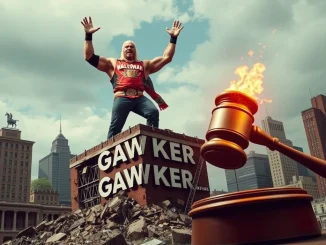
- Sex Tape Leak and Legal Battles: A 2012 sex tape leak led to a highly publicized legal battle against Gawker Media. Hogan ultimately won a significant $115 million lawsuit in 2018, a landmark case that highlighted issues of privacy and media ethics.
- Racial Remarks: In 2015, transcripts from the sex tape surfaced containing racial slurs, leading to his temporary removal from WWE’s Hall of Fame and a period of public scrutiny. He later apologized and was reinstated.
- Political Involvement: In recent years, Hogan waded into politics, most notably at the 2024 Republican National Convention. Merging WWE theatrics with President Donald Trump’s rhetoric, he famously shouted “Let Trumpamania run wild!” and tore off a T-shirt to reveal a Trump-Vance campaign shirt, echoing his 1980s-era fervor while aligning with a prominent political figure. This appearance, like many of his later public actions, drew mixed reactions.
His ability to adapt to shifting cultural currents—from the family-friendly 1980s to the edgier 1990s and into the polarizing political landscape of the 2020s—underscored his enduring, albeit sometimes controversial, appeal. Even in his later years, with ventures like his Real American Beer brand in 2025 sometimes receiving mixed public reactions, his presence remained undeniable.
Hulk Hogan’s Unparalleled Legacy in Sports Entertainment
Analysts universally agree that **Hulk Hogan’s** legacy lies in his unique ability to blend athleticism, entertainment, and cultural commentary. His career demonstrated the unparalleled power of character-driven storytelling in sports, a strategy that remains central to wrestling’s enduring appeal. He understood the art of connecting with an audience, making them believe in the drama unfolding before their eyes, whether in an arena or on a television screen.
His impact on the wrestling industry is irrefutable. He was the prototype for the modern wrestling superstar, a global ambassador who brought the sport to unprecedented heights. WWE’s statement emphasized his role in achieving “global recognition” during the 1980s, calling him “one of pop culture’s most recognizable figures.”
Hogan is survived by his family and a fanbase that continues to celebrate his immense contributions to professional wrestling. His passing truly marks the end of an era, but his influence will continue to resonate through every wrestling show, every larger-than-life character, and every roar of the crowd. He taught us to believe, to dream big, and to always remember to say our prayers, take our vitamins, and train. Rest in peace, Hulkster.
Frequently Asked Questions (FAQs)
Q1: When and how did Hulk Hogan pass away?
Hulk Hogan, real name Terry Bollea, passed away on July 24, 2025, at the age of 71. He died of cardiac arrest at his home in Clearwater, Florida, after first responders found him unresponsive.
Q2: What was Hulk Hogan’s biggest contribution to professional wrestling?
Hulk Hogan’s biggest contribution was transforming professional wrestling into a global mainstream phenomenon, particularly during the 1980s with the “Hulkamania” era. He headlined the first WrestleMania and popularized wrestling through his larger-than-life persona and engaging storytelling.
Q3: What was the New World Order (NWO) and why was Hogan’s involvement significant?
The New World Order (NWO) was a villainous faction in World Championship Wrestling (WCW). Hogan’s decision to turn heel and join the NWO in 1996 was a groundbreaking moment, revitalizing the wrestling industry and proving his versatility as a performer, redefining what a wrestling superstar could be.
Q4: Did Hulk Hogan have a career outside of wrestling?
Yes, Hulk Hogan extended his fame beyond wrestling. He starred in films like Rocky III and TV shows such as Thunder in Paradise and the reality series Hogan Knows Best. His energetic “promos” also became a signature part of the WWE entertainment model, influencing pop culture broadly.
Q5: What were some of the controversies surrounding Hulk Hogan?
Hulk Hogan faced controversies including a 2012 sex tape leak that led to a successful $115 million lawsuit against Gawker Media. He also faced scrutiny for racial remarks that surfaced in 2015, leading to a temporary removal from the WWE Hall of Fame, and later for his involvement in politics.
Q6: What is Hulk Hogan’s lasting legacy?
Hulk Hogan’s lasting legacy is his unparalleled ability to blend athleticism, entertainment, and cultural commentary, making him one of pop culture’s most recognizable figures. He pioneered character-driven storytelling in sports, laying the groundwork for modern professional wrestling’s global appeal and influencing generations of performers and fans alike.