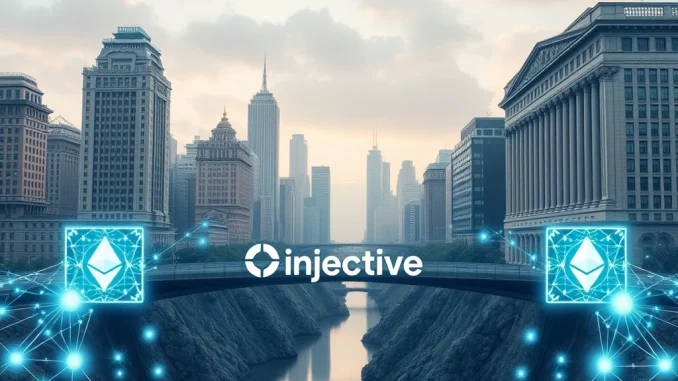
The world of finance is constantly evolving, and today, we’re witnessing a truly groundbreaking moment that could redefine how institutions manage their assets. In a significant development for the blockchain and DeFi sectors, Injective Protocol has announced a landmark initiative: the tokenization of SharpLink Gaming’s substantial $1.3 billion Ethereum treasury. This isn’t just another transaction; it’s a pivotal step in seamlessly connecting the established world of traditional institutional finance with the dynamic, decentralized ecosystems of Web3. Get ready to explore how this move is set to unlock unprecedented liquidity and operational efficiency.
Ethereum News: Injective’s Bold Move to Tokenize SharpLink Gaming’s ETH Treasury
Injective Protocol, a prominent layer-one blockchain built for finance, has made waves with its recent announcement concerning SharpLink Gaming. Utilizing its innovative iAssets framework and the SBET initiative, Injective has enabled the transformation of SharpLink Gaming’s impressive $1.3 billion Ethereum (ETH) treasury into programmable, on-chain assets. This means that what was once a static holding of ETH can now become a dynamic, interactive component within decentralized finance (DeFi) protocols.
Here’s a closer look at what this tokenization entails:
- Digital Wrapper: The SBET token acts as a digital representation or ‘wrapper’ for SharpLink’s underlying Ethereum treasury. This allows the assets to move and interact within the Injective blockchain.
- Programmable Assets: By tokenizing, these ETH holdings are no longer just dormant capital. They become programmable, capable of interacting with various DeFi applications like decentralized exchanges (DEXs), lending protocols, and staking mechanisms.
- Unlocking Liquidity: For SharpLink Gaming, this transition from a traditional treasury to a tokenized format offers immense benefits, including fractional ownership, real-time trading capabilities, and significantly reduced reliance on intermediaries. It aligns perfectly with the broader trend towards greater financial innovation and efficiency.
Unlocking Potential: How Tokenization DeFi is Revolutionizing Institutional Finance
The implications of Injective’s move extend far beyond a single company or a single transaction. This successful tokenization of a large-scale institutional asset demonstrates a growing trust in blockchain technology’s ability to solve long-standing challenges in traditional finance. It highlights several key advantages that make tokenization a game-changer for institutional players:
- Enhanced Liquidity: Tokenized assets can be traded 24/7 on global decentralized markets, offering far greater liquidity than traditional assets, which are often subject to limited trading hours and geographical restrictions.
- Transparency: On-chain transactions are publicly verifiable (though participant identities can remain pseudonymous), fostering a new level of accountability and reducing the potential for opaque dealings.
- Global Accessibility: Blockchain breaks down geographical barriers, allowing institutions and participants from anywhere in the world to access and interact with these assets, democratizing access to institutional-grade financial tools.
- Operational Efficiency: Smart contracts can automate processes that typically require weeks of manual coordination, paperwork, and multiple intermediaries in legacy financial systems. This streamlines operations and reduces costs.
This development underscores the immense potential of Tokenization DeFi to revolutionize how large organizations manage their capital, paving the way for more efficient, transparent, and globally accessible financial operations.
Navigating the Future: Addressing Challenges in Institutional Finance Integration
While the path towards integrating blockchain with institutional finance is incredibly promising, it’s not without its hurdles. As with any nascent technology disrupting established systems, challenges remain that require careful consideration and robust solutions:
- Regulatory Frameworks: The regulatory landscape for tokenized assets and institutional DeFi integration is still evolving. Clear, consistent guidelines across various jurisdictions are crucial to ensure compliance and foster widespread adoption.
- Security Risks: Smart contract vulnerabilities, private key management, and potential cyberattacks are ongoing concerns in the blockchain space. Robust auditing, advanced security infrastructure, and best practices for asset custody are paramount.
Injective Protocol, with its focus on institutional-grade security and interoperability, is well-positioned to address many of these challenges. However, broader industry collaboration—involving regulators, technology providers, and financial institutions—will be critical for long-term success and mass adoption. Building trust and demonstrating resilience will be key to overcoming these obstacles.
The Ripple Effect: What Does This Mean for the Future of Injective Protocol?
This initiative perfectly aligns with a broader narrative: blockchain’s maturation as a foundational infrastructure for established financial entities. By transforming static treasuries into dynamic, programmable assets, Injective Protocol is not just facilitating a transaction; it’s demonstrating the tangible advantages of DeFi for capital efficiency and innovation on a grand scale.
SharpLink Gaming’s participation sets a powerful precedent for other institutions considering on-chain asset management. We could soon see a catalytic wave of similar tokenizations across diverse asset classes, including:
- Real estate
- Private equity
- Corporate bonds
- Commodities
The success of SBET could significantly accelerate the adoption of DeFi solutions within the traditional financial sector, reshaping global asset management practices and reinforcing blockchain’s role as a foundational technology for the future of finance. Injective’s iAssets framework is emerging as a key enabler of this transformative shift.
The tokenization of SharpLink Gaming’s $1.3 billion Ethereum treasury by Injective Protocol marks a truly pivotal moment in the convergence of traditional and decentralized finance. It’s a testament to the growing recognition among institutions of the operational and financial benefits that blockchain technology offers. As more entities recognize these advantages, Injective’s framework is poised to be a driving force in this transition, accelerating the adoption of DeFi and fundamentally reshaping how assets are managed globally. The future of finance is here, and it’s decentralized.
Frequently Asked Questions (FAQs)
1. What is the significance of Injective tokenizing SharpLink Gaming’s ETH treasury?
This initiative marks a significant milestone in bridging traditional institutional finance with decentralized ecosystems. It demonstrates how large-scale, static institutional assets can be transformed into dynamic, programmable assets on the blockchain, unlocking new levels of liquidity and operational efficiency.
2. How does Injective’s iAssets framework facilitate this tokenization?
Injective’s iAssets framework provides the technical infrastructure that enables the creation of digital representations (like the SBET token) for real-world or digital assets. This framework allows assets like SharpLink’s ETH treasury to be wrapped, making them compatible and interactive within the Injective blockchain and broader DeFi ecosystem.
3. What are the key benefits for institutions like SharpLink Gaming in tokenizing their assets?
Key benefits include enhanced liquidity (24/7 global trading), increased transparency through public on-chain verifiability, greater operational efficiency via smart contracts, reduced reliance on intermediaries, and the potential for yield generation through various DeFi protocols like lending and staking.
4. What challenges does the widespread adoption of tokenized institutional assets face?
Primary challenges include the evolving regulatory landscape across different jurisdictions, which requires clear guidelines for compliance. Additionally, security risks such as smart contract vulnerabilities and the complexities of private key management demand robust auditing and secure infrastructure.
5. How does this development impact the broader DeFi and institutional finance landscape?
This move sets a powerful precedent for other institutions to explore on-chain asset management, potentially catalyzing a wave of similar tokenizations across diverse asset classes (e.g., real estate, private equity). It reinforces blockchain’s maturation as a foundational technology and accelerates the convergence of traditional and decentralized finance.
6. What is SBET?
SBET is the specific token created by Injective Protocol to function as a digital wrapper for SharpLink Gaming’s Ethereum treasury. It facilitates the seamless integration of these assets into the Injective blockchain, allowing them to interact with various decentralized applications.