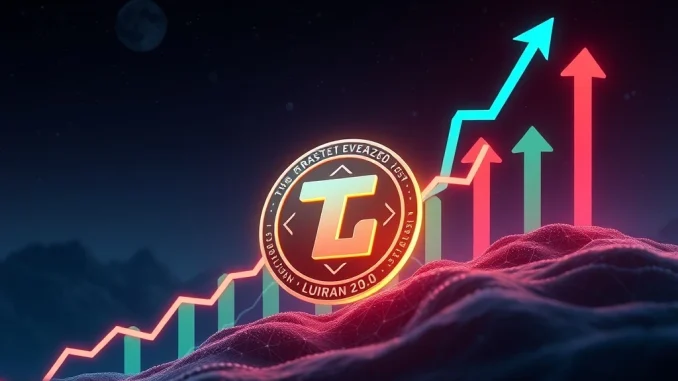
The cryptocurrency world is no stranger to dramatic comebacks and ambitious predictions. For many, the mention of Terra brings back memories of one of the industry’s most significant downturns. Yet, whispers of a resurgence persist, with bold Terra LUNA 2.0 price forecasts emerging that suggest a potential climb to $3.75 by 2030. But what’s fueling this optimism, and can the reborn Terra truly rise from its ashes?
What Drives the Terra LUNA 2.0 Price?
The journey of Terra LUNA 2.0 price has been closely watched since its inception, aiming to separate itself from the legacy of Terra Classic (LUNC). Unlike its predecessor, LUNA 2.0’s value is now tied to a re-engineered ecosystem focusing on stability and long-term viability. Analysts point to several factors underpinning the more optimistic outlook for LUNA 2.0:
- Rebranding Efforts: A deliberate move to distance itself from the UST collapse, focusing on a new identity and mission.
- Improved Tokenomics: Emphasis on staking incentives designed to attract and retain long-term holders, fostering a more stable supply and demand dynamic.
- Annual Growth Assumption: Many projections, including those from analysis by Binance and Kraken, factor in a conservative 5% annualized growth rate from its current estimated price. This steady growth is seen as a baseline for potential appreciation.
Analyzing the LUNA 2.0 Forecast for the Coming Years
When we delve into the LUNA 2.0 forecast, a spectrum of analyst perspectives emerges, blending cautious optimism with market realities. These projections explicitly distinguish LUNA 2.0 from its predecessor, Terra Classic (LUNC), which has faced more bearish outlooks.
- Short-term Outlook (2025): According to Binance’s July 2025 analysis, LUNA 2.0 could reach $1.29 by 2025, building on an estimated price of $0.190325 and a 5% annualized growth rate. Kraken and MEXC offer similar trends, indicating a gradual increase.
- Long-term Outlook (2030): The more ambitious predictions suggest LUNA 2.0 could potentially hit $3.75 by 2030. This hinges significantly on broader market adoption of the Terra ecosystem and continued technological advancements within the project. It’s important to note that these long-term figures are highly speculative, lacking extensive historical data for validation due to the token’s relatively recent reboot.
Is This Crypto Price Prediction Realistic?
While the numbers for crypto price prediction can certainly ignite excitement, it’s crucial to approach them with a healthy dose of skepticism. The cryptocurrency market is inherently volatile, and numerous factors can influence a token’s trajectory.
- Market Volatility: Macroeconomic factors like global interest rates, inflation, and regulatory shifts can profoundly impact the entire crypto landscape, including LUNA 2.0. Binance’s 2025–2030 overview for trending crypto coins underscores the sector’s unpredictability, with wide price ranges for unspecified assets.
- Rebuilding Trust: The most significant hurdle for Terra remains rebuilding investor trust after the 2022 UST collapse. This isn’t just a technical challenge but a psychological one.
- Competition: The crypto space is highly competitive, with new projects constantly emerging and established ones evolving. LUNA 2.0 must continually innovate to maintain relevance.
- Lack of Historical Data: Given LUNA 2.0’s relatively short lifespan post-relaunch, long-term assumptions about its market behavior and resilience are speculative. Current indicators often diverge from analyst expectations, underscoring the speculative nature of all projections.
Rebuilding the Terra Ecosystem: Challenges and Opportunities
The core of any long-term price appreciation for LUNA 2.0 lies in the successful rebuilding of the Terra ecosystem. This involves more than just a new token; it requires a robust, secure, and actively used blockchain.
Challenges: The shadow of the 2022 collapse looms large, making it difficult to attract new developers and users who might be wary. For example, Gate.com’s analysis of Terra Classic USD (USTC) notes that even a partial recovery of the token’s functionality as a niche stable-value asset by 2030 would require significant technical and community-driven efforts. Macroeconomic headwinds could also disrupt short-term trajectories.
Opportunities: Terra’s rebranding focuses on leveraging its foundational strengths, such as its developer community (pre-collapse) and its potential for decentralized applications. Staking incentives are a key mechanism to encourage long-term holding and network security. The emphasis on improved tokenomics aims to create a more sustainable economic model for the network. Analysts at Kraken acknowledge the project’s foundational strengths.
The Path to Renewed Investor Trust
Ultimately, the success of Terra LUNA 2.0 and its ambitious price targets hinges on its ability to regain and solidify investor trust. This is a multi-faceted endeavor that goes beyond technical upgrades.
- Transparency and Communication: Open and consistent communication from the Terra development team and foundation will be paramount. Addressing past vulnerabilities and demonstrating a clear roadmap for the future can help alleviate concerns.
- Community Engagement: A vibrant and supportive community is vital for any decentralized project. Active engagement, addressing user feedback, and fostering a sense of shared ownership can help rebuild loyalty.
- Demonstrated Utility: The true test will be the development and adoption of dApps and services within the Terra ecosystem that provide tangible value. Price predictions are one thing, but real-world utility drives sustained demand.
- Risk Mitigation: Investors will be looking for clear strategies to prevent a repeat of past failures, particularly concerning algorithmic stablecoins or other potential points of fragility.
The journey of Terra LUNA 2.0 is a compelling narrative of resilience and ambition in the crypto space. While forecasts up to $3.75 by 2030 are certainly optimistic, they are rooted in the project’s rebranding efforts, improved tokenomics, and an assumed annual growth rate. However, the path forward is fraught with challenges, primarily the monumental task of rebuilding investor trust in a highly competitive and volatile market. As with all cryptocurrency investments, thorough due diligence and a healthy skepticism towards long-term predictions are essential. The future of LUNA 2.0 will ultimately be determined not just by analyst models, but by the tangible progress of its ecosystem and its ability to truly learn from the past.
Frequently Asked Questions (FAQs)
What is Terra LUNA 2.0?
Terra LUNA 2.0 is the rebranded cryptocurrency token launched after the collapse of the original Terra (LUNA) and its algorithmic stablecoin, UST, in May 2022. It aims to create a new, more stable ecosystem with improved tokenomics.
What caused the original Terra (LUNA) collapse?
The original Terra (LUNA) collapsed primarily due to the de-pegging of its algorithmic stablecoin, TerraUSD (UST), from the US dollar. This led to a death spiral where both LUNA and UST lost almost all their value.
What are the key differences between LUNA 2.0 and Terra Classic (LUNC)?
LUNA 2.0 is a new chain and token, launched without an algorithmic stablecoin, aiming to start fresh. Terra Classic (LUNC) is the original chain and token that remains active but is largely viewed as a legacy asset with a more bearish outlook.
What are the main factors driving LUNA 2.0 price predictions?
Key factors include the project’s rebranding efforts, improved tokenomics with staking incentives, and an assumed 5% annual growth rate. Optimistic forecasts also depend on broader market adoption and technological advancements within the Terra ecosystem.
Is investing in Terra LUNA 2.0 risky?
Yes, investing in Terra LUNA 2.0, like any cryptocurrency, carries significant risk. The market is highly volatile, and the project faces the challenge of rebuilding investor trust after its previous collapse. Long-term predictions are speculative.
How does Terra LUNA 2.0 plan to rebuild investor trust?
Terra LUNA 2.0 aims to rebuild trust through transparent communication, fostering strong community engagement, developing real-world utility for its ecosystem, and implementing robust risk mitigation strategies to prevent past vulnerabilities.