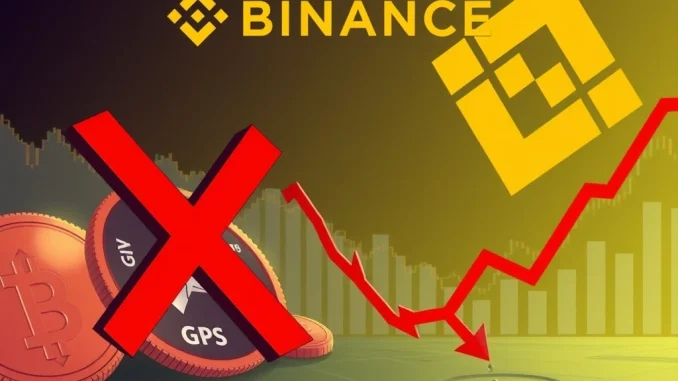
In the fast-paced world of cryptocurrency, changes are constant, and staying informed is key. Binance, one of the world’s largest crypto exchanges, recently made an announcement that has caught the attention of traders and investors alike: the strategic delisting of specific trading pairs. Effective July 25, 2025, at 03:00 UTC, the GPS/FDUSD and HIVE/FDUSD pairs will no longer be available for trading on the platform. This move, primarily driven by concerns over low crypto liquidity, underscores Binance’s ongoing commitment to maintaining a robust and efficient trading environment. If you’re holding GPS or HIVE, or simply curious about how such decisions impact the broader market, read on to understand the full implications of this Binance delisting.
What Does the Binance Delisting Mean for Traders?
The core of Binance’s recent announcement revolves around the removal of two specific FDUSD pairs: GPS/FDUSD and HIVE/FDUSD. For those unfamiliar, FDUSD is a stablecoin, and pairing it with other cryptocurrencies allows for stable trading. The delisting means that while the GPS and HIVE tokens themselves will remain tradable on Binance, you won’t be able to exchange them directly for FDUSD after the specified date. This is a significant operational adjustment, not a complete removal of the assets from the platform.
According to Binance’s official communication, this decision is part of their continuous effort to refine their cryptocurrency offerings and uphold high operational standards. This includes ensuring that the assets listed on their platform meet certain criteria for liquidity and user demand. Beyond spot trading, Binance also confirmed that algorithmic trading services, such as grid trading and Dollar-Cost Averaging (DCA), for these specific pairs will also be terminated simultaneously. This ensures a clean break and prevents users from incurring unexpected losses due to illiquid automated strategies.
For traders who actively used these specific pairs, it means re-evaluating their strategies. If you had open orders for GPS/FDUSD or HIVE/FDUSD, it’s crucial to cancel them before the deadline. Any remaining open orders will be automatically canceled by the system. This proactive measure helps mitigate potential risks for users once the pairs are removed.
The Critical Role of Crypto Liquidity in Exchange Operations
Why is crypto liquidity such a big deal for exchanges like Binance? Imagine trying to sell a rare antique in a deserted market – you might struggle to find a buyer, or you might have to accept a much lower price than you wanted. The same principle applies to cryptocurrencies. Liquidity refers to how easily an asset can be converted into cash (or another asset) without significantly affecting its price. High liquidity means there are plenty of buyers and sellers, making transactions smooth and efficient. Low liquidity, on the other hand, can lead to:
- High Slippage: When large orders significantly move the market price, causing your order to fill at a less favorable price than expected.
- Wider Spreads: A larger gap between the highest bid price and the lowest ask price, making it more expensive to trade.
- Difficulty in Execution: Struggling to find counterparties for your trades, leading to delays or unfulfilled orders.
- Increased Volatility: Small trades can cause disproportionately large price swings.
Binance’s decision to delist the GPS/FDUSD and HIVE/FDUSD pairs directly addresses these concerns. By removing less active pairs, the exchange streamlines its operations, enhances the overall user experience, and minimizes the trading risks associated with illiquid assets. This strategy aligns with broader industry practices where major exchanges continuously review and adjust their listings to maintain a healthy and efficient market environment. It’s about optimizing the trading landscape for the majority of users, ensuring that popular and liquid assets remain easily accessible.
Understanding the Impact on GPS HIVE Holders and FDUSD Pairs
If you’re an investor holding GPS HIVE tokens, it’s important to understand that this is not a complete removal of these assets from Binance. The core tokens, GPS and HIVE, will still be available for trading against other supported cryptocurrencies. The delisting specifically targets their pairings with FDUSD.
GPS and HIVE are decentralized governance tokens linked to niche blockchain ecosystems. While they serve specific functions within their respective projects, their trading activity against FDUSD has evidently fallen below Binance’s operational thresholds. For users who primarily relied on these FDUSD pairs, the change means they will need to convert their GPS or HIVE to another supported cryptocurrency (like USDT, BTC, or BNB, if available) before converting to FDUSD, or vice versa. This adds an extra step but does not render the tokens untradable on Binance.
The broader market impact from this specific delisting is expected to be minimal. GPS and HIVE, while important to their communities, have limited overlap with major cryptocurrencies like Bitcoin (BTC) or Ethereum (ETH). Their niche adoption and relatively limited trading activity mean that the ripple effect on the overall crypto market stability is negligible. Historically, similar delistings of smaller, less liquid pairs on major exchanges have shown minimal long-term effects on the price stability of high-cap assets.
What Should GPS and HIVE Holders Do?
If you hold GPS or HIVE and wish to trade them on Binance after July 25, here are your options:
- Check Other Pairs: Verify which other trading pairs (e.g., GPS/USDT, HIVE/BTC) remain available on Binance.
- Convert: If you need to convert to FDUSD, you might first need to trade GPS/HIVE for a more liquid asset like USDT, and then trade USDT for FDUSD.
- Withdraw: If you prefer not to trade on Binance, you can withdraw your GPS or HIVE tokens to an external wallet or another exchange that supports these assets.
Navigating the Landscape of Crypto Trading Pairs
Binance’s decision reflects a broader trend in the cryptocurrency industry: exchanges are increasingly focusing on high-liquidity assets to streamline operations and enhance user experience. This strategic pruning of less active trading pairs is a common practice, not just for Binance, but for many major exchanges globally. It’s a sign of a maturing market where efficiency and risk management are paramount.
Analysts often note that such actions stem from a combination of factors, including:
- Trading Volume: Pairs with consistently low trading volume offer little value to the exchange or its users.
- Market Relevance: The general interest and adoption of the underlying asset.
- Compliance Needs: Ensuring all listed assets meet regulatory standards, though Binance stated this delisting was not due to regulatory pressure.
- Performance and Stability: Assets that frequently experience technical issues or extreme volatility without corresponding volume.
While Binance has not publicly specified the exact criteria for this particular decision beyond low liquidity, it aligns with these general industry considerations. For traders, this highlights the dynamic nature of the crypto market. Exchange policies and asset popularity can evolve rapidly, and staying adaptable is crucial.
Challenges for Smaller Tokens
This delisting also underscores the significant challenges faced by smaller tokens in retaining visibility and liquidity on major exchanges. Projects like GPS and HIVE, while innovative in their own right, must continuously address liquidity constraints and demonstrate sustained utility and community engagement to maintain relevance. Such actions by leading exchanges can prompt other platforms to reassess their listing criteria, potentially making it harder for nascent projects to gain widespread exposure.
Ultimately, this move by Binance reinforces the importance of strong fundamentals and consistent market demand for any cryptocurrency project aiming for long-term success. Traders and developers are well-advised to focus on projects with clear value propositions, robust technology, and active, engaged communities to better adapt to such market adjustments.
Conclusion: A Proactive Step Towards a Healthier Market
The Binance delisting of GPS/FDUSD and HIVE/FDUSD pairs is a clear indicator of the exchange’s proactive approach to maintaining a high-quality trading environment. It’s a strategic move driven by the need for better crypto liquidity, ensuring a smoother and safer experience for the vast majority of its users. While it impacts specific holders of GPS HIVE tokens and those using particular FDUSD pairs, the broader market remains insulated from direct consequences due to the niche nature of these assets.
This event serves as a valuable reminder for all participants in the crypto space: the market is constantly evolving. Exchanges will continue to optimize their offerings based on market conditions, user demand, and operational efficiency. For traders, staying informed about exchange announcements, diversifying portfolios, and understanding the liquidity of your chosen trading pairs are paramount. As the industry matures, expect more such strategic adjustments aimed at fostering a more robust and sustainable digital asset ecosystem.
Frequently Asked Questions (FAQs)
1. What exactly is being delisted by Binance?
Binance is delisting the GPS/FDUSD and HIVE/FDUSD spot trading pairs. This means you will no longer be able to directly trade GPS for FDUSD or HIVE for FDUSD on the platform after July 25, 2025, 03:00 UTC. Algorithmic trading services for these pairs will also be terminated.
2. Why did Binance delist these specific pairs?
The primary reason cited by Binance is low crypto liquidity. Trading pairs with insufficient liquidity can lead to poor user experience, high slippage, and increased trading risks. Binance aims to optimize its offerings by focusing on assets with consistent liquidity and user demand.
3. Can I still trade GPS and HIVE on Binance after the delisting?
Yes, GPS and HIVE tokens themselves are not being fully removed from Binance. They will remain tradable against other supported pairs (e.g., GPS/USDT or HIVE/BTC, if available). Only their specific FDUSD pairs are being delisted.
4. What should I do if I hold GPS or HIVE tokens that I was trading against FDUSD?
If you have open orders for GPS/FDUSD or HIVE/FDUSD, it is strongly advised to cancel them before the delisting date. After July 25, you will need to use alternative trading pairs for GPS and HIVE (if available) or withdraw your tokens to an external wallet or another exchange that supports them.
5. Will this delisting affect other major cryptocurrencies like Bitcoin (BTC) or Ethereum (ETH)?
No, the delisting of GPS/FDUSD and HIVE/FDUSD pairs is unlikely to impact major cryptocurrencies like BTC or ETH. These tokens hold limited overlap with high-cap assets, and their niche adoption means the broader market remains insulated from direct consequences.
6. Is this delisting a result of regulatory pressure on Binance?
Binance has stated that the decision adheres to standard operational protocols and that there is no indication of regulatory pressure influencing this specific move. It is primarily an operational decision based on market conditions and liquidity.