The cryptocurrency market is buzzing with anticipation as the next major bull run looms. For savvy investors, the question isn’t just if prices will soar, but which assets will deliver the most impressive returns. With Ethereum News Today constantly highlighting advancements and ecosystem growth, attention is increasingly turning to promising altcoins, especially those still trading for under a dollar. Imagine discovering the next crypto giant before it skyrockets – that’s the exciting prospect we’re diving into.
Ethereum News Today: The Landscape for Under $1 Cryptos
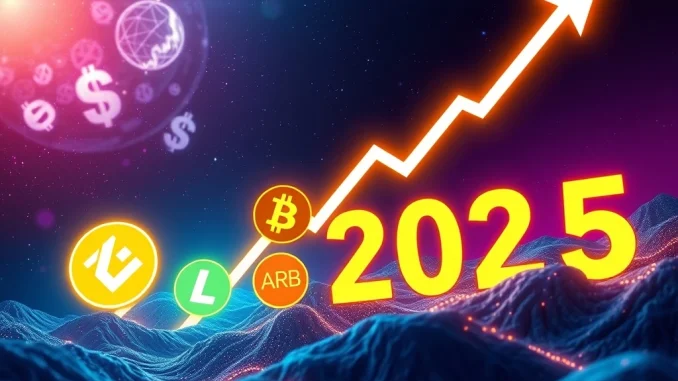
The crypto market is entering a phase of significant momentum, with many analysts pointing towards 2025 as a pivotal year for substantial gains. While Bitcoin and Ethereum often grab headlines, the real potential for exponential returns can sometimes lie within the vast ocean of smaller-cap altcoins. Specifically, tokens priced at less than a dollar present an accessible entry point for many investors, offering the allure of high percentage growth if they gain traction. The continued evolution of the Ethereum ecosystem, including its scaling solutions and dApp development, often creates a ripple effect, benefiting projects that are either built on Ethereum or offer competitive alternatives.
Five Under $1 Cryptos Poised for 2025 Breakouts
As the market gears up for what could be a historic bull cycle, several assets stand out due to their utility, innovation, and strategic positioning. Here are five notable contenders that could see significant appreciation:
Little Pepe (LILPEPE)
Emerging as a unique contender, Little Pepe (LILPEPE) is currently in its presale phase, priced attractively at $0.0014. It distinguishes itself as a dedicated Layer 2 chain built specifically for memecoins. LILPEPE combines EVM compatibility, ensuring ease of integration for developers, with low transaction fees and a robust, sniper bot-resistant architecture. Its ecosystem includes a Launchpad for new meme tokens and features 0% buy/sell taxes, supported by deep liquidity and plans for major exchange listings. Analysts suggest LILPEPE could emulate the success of predecessors like Dogecoin or Shiba Inu, but with the added advantage of operating on its own optimized blockchain.
Solana (SOL)
Despite its price being well above $1, Solana is included here due to its strong potential to regain significant ground and its competitive stance against Ethereum. Solana leverages a unique proof-of-history consensus mechanism, enabling high scalability and remarkably low transaction costs. Its recovery post-FTX and expanding DeFi and NFT ecosystems position it as a robust alternative for smart contracts. With growing institutional interest and a pivotal role in mainstream crypto adoption, Solana’s long-term value remains compelling.
Polygon (POL)
Polygon (POL) remains a dominant force among Ethereum’s Layer 2 scaling solutions. It provides scalable infrastructure vital for a wide array of DeFi and NFT projects. As Ethereum continues its journey towards full scalability, Polygon’s low fees and developer-friendly environment are expected to drive substantial growth. Currently, POL is seen by many as undervalued relative to its 2021 highs, suggesting considerable potential for price correction and upward movement during the next bull cycle.
Chainlink (LINK)
Chainlink (LINK) is critical for connecting smart contracts to real-world data through its decentralized oracle network. The recent launch of its Cross-Chain Interoperability Protocol (CCIP) significantly expands its use cases, enabling seamless communication between various blockchains and enterprise systems. Analysts foresee a major breakout for LINK in 2025, driven by increasing institutional demand for reliable, data-driven DeFi applications. Despite its current price being below 2021 peaks, its fundamental utility continues to strengthen.
Arbitrum (ARB)
Arbitrum (ARB) has solidified its position as a leading Ethereum Layer 2 solution, utilizing optimistic rollup technology to reduce network congestion while maintaining high security standards. The project benefits from an active developer community and a substantial $7 billion DAO treasury, which fuels its expansion and innovation. As Ethereum scales further, Arbitrum’s cost-efficient infrastructure is expected to attract even greater adoption, reinforcing its dominance in the Layer 2 space.
Decoding 2025 Crypto Predictions: Why These Assets Stand Out
What makes these specific cryptocurrencies strong candidates for significant growth in 2025? It boils down to a combination of factors: innovative technology, real-world utility, strong community support, and strategic market positioning. Each of these projects addresses a specific need within the blockchain ecosystem, whether it’s scaling, interoperability, or creating niche markets like memecoins on a dedicated chain. Their ability to solve current blockchain challenges positions them for increased adoption and, consequently, price appreciation as the market matures and expands. The confluence of technological readiness and increasing market liquidity often fuels the most exciting 2025 Crypto Predictions.
Navigating the Bull Market Cryptos: Opportunities and Considerations
Investing in Bull Market Cryptos requires a balanced approach. While the potential for high returns is exciting, it’s crucial to understand the underlying technology and market dynamics. Diversification across different types of assets – from established Layer 1s like Solana to critical infrastructure providers like Chainlink, and even high-risk, high-reward plays like Little Pepe – can help mitigate risk. Always consider your personal risk tolerance and conduct thorough research. The projects highlighted here offer a blend of utility and innovation, making them compelling choices for investors looking to capitalize on the next wave of crypto growth. Remember, market cycles can be volatile, and patience is often key to realizing long-term gains.
The Crucial Role of Layer 2 Blockchain Solutions
The importance of Layer 2 Blockchain solutions cannot be overstated, especially for the Ethereum ecosystem. As Ethereum continues to be the dominant platform for decentralized applications, its mainnet often faces challenges with high transaction fees and network congestion. Layer 2s like Polygon and Arbitrum are designed to alleviate these issues by processing transactions off-chain and then batching them back to the Ethereum mainnet. This significantly increases transaction throughput and reduces costs, making DeFi, NFTs, and other dApps more accessible and user-friendly. Their continued development and adoption are fundamental to Ethereum’s long-term scalability and the broader growth of the decentralized web.
The anticipated 2025 bull cycle presents a diverse landscape of investment opportunities. From high-utility tokens like LILPEPE to established infrastructure providers such as Solana and Polygon, these assets offer varying risk profiles but share the common thread of innovation and market readiness. By balancing ecosystem innovation with strategic market positioning, these cryptocurrencies stand out as top picks for investors seeking substantial returns in the coming years. As always, thorough due diligence is essential before making any investment decisions in the dynamic world of crypto.
Frequently Asked Questions (FAQs)
Q1: What makes a crypto an “under $1” breakout candidate?
An “under $1” breakout candidate typically refers to a cryptocurrency with a low per-token price but significant underlying utility, strong development, and potential for high percentage growth. Their low price point often makes them attractive to a broader range of investors, and if their market capitalization grows, even a small price increase per token can lead to substantial returns.
Q2: How does Ethereum’s ecosystem influence these altcoins?
Ethereum’s ecosystem plays a crucial role. Many altcoins are built on Ethereum or are Layer 2 solutions designed to enhance Ethereum’s capabilities (like Polygon and Arbitrum). Even competitors like Solana often benefit from the overall growth and innovation within the broader crypto space, much of which is driven by developments originating from or influenced by Ethereum’s vibrant dApp and DeFi landscape.
Q3: What are Layer 2 solutions and why are they important?
Layer 2 solutions are protocols built on top of a main blockchain (like Ethereum) to increase its scalability and efficiency. They process transactions off the main chain, bundle them, and then settle them on the main chain. This significantly reduces transaction fees and increases transaction speed, making decentralized applications more practical and affordable for everyday use. They are vital for widespread blockchain adoption.
Q4: What are the risks of investing in under $1 cryptos?
Investing in under $1 cryptos carries higher risks compared to more established assets. They often have lower liquidity, higher price volatility, and can be more susceptible to market manipulation or project failure. It’s crucial to research the project’s fundamentals, team, technology, and community before investing.
Q5: How can investors prepare for the 2025 bull market?
To prepare for the 2025 bull market, investors should focus on research, diversification, and risk management. Identify projects with strong fundamentals and real-world utility, consider allocating investments across different sectors (e.g., DeFi, NFTs, Layer 2s), and avoid over-investing in any single asset. Setting clear profit targets and stop-loss limits can also be beneficial.
Q6: Is Little Pepe (LILPEPE) a high-risk, high-reward investment?
As a new presale project and a memecoin-focused Layer 2, Little Pepe (LILPEPE) falls into the higher-risk, higher-reward category. While it offers innovative features like 0% taxes and a dedicated memecoin chain, new projects inherently carry more uncertainty regarding adoption and long-term viability. Its potential for significant returns is matched by a higher degree of speculative risk.