For those navigating the dynamic world of digital assets and disruptive technologies, understanding shifts in major tech companies like Tesla is crucial. Just as market sentiment influences crypto valuations, a company’s strategic pivots can signal broader economic trends. While you might typically find news about digital currencies on platforms like Coin World, today we’re diving into a fascinating development from an unexpected corner: the launch of the first Tesla Diner. This isn’t just about food; it’s a compelling look at how a tech giant is adapting its Tesla Brand Strategy in the face of significant challenges, including a notable EV Sales Decline.
The Genesis of the Tesla Diner: A Bold Leap into Hospitality
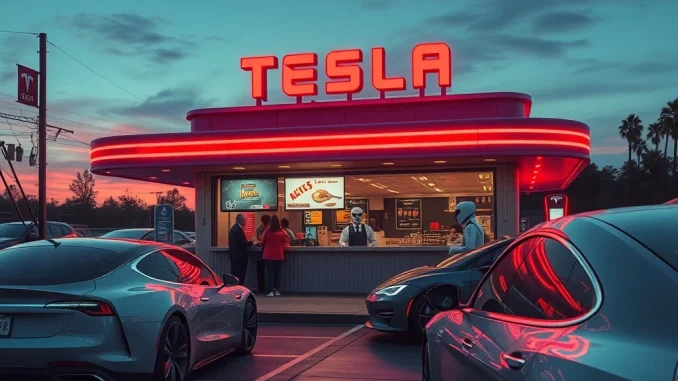
Imagine pulling off Historic Route 66 in Los Angeles, not just to charge your electric vehicle, but to step into a retro-futuristic eatery where robots serve your popcorn and classic diner fare. This isn’t a scene from a sci-fi movie; it’s the reality of Tesla’s newly unveiled Tesla Diner. This innovative concept marks a significant departure from the electric vehicle maker’s traditional business model, signaling a strategic pivot designed to reinvigorate its brand amidst a challenging automotive market.
The Los Angeles diner boasts:
- 80 Tesla charging stations, seamlessly integrating convenience with dining.
- Movie screens for entertainment while you wait or eat.
- Optimus robots serving popcorn, adding a futuristic touch to the experience.
- A menu featuring classic diner fare, including $4 tallow-fried french fries and $13 hot dogs.
CEO Elon Musk describes this venture as an “island of good food, good vibes & entertainment,” with ambitious plans for global expansion, including integration into existing Supercharger locations. This move isn’t just about adding a new revenue stream; it’s about creating an immersive brand experience that extends beyond the vehicle itself.
Navigating the EV Sales Decline: Why the Pivot?
Tesla’s foray into hospitality comes at a critical juncture. The company has faced considerable headwinds in the automotive market, particularly in California, a key battleground for EV adoption. The numbers tell a clear story:
- Seven consecutive quarters of sales decline in California.
- A year-to-date vehicle registration decrease of 18.3% in the state.
This substantial EV Sales Decline underscores the urgency behind Tesla’s strategic shifts. The market is becoming increasingly competitive, with traditional automakers and new EV players alike vying for market share. In such an environment, merely selling cars might not be enough to sustain growth and maintain market dominance. The Tesla Diner, therefore, isn’t just a quirky side project; it’s a calculated move to diversify the brand’s appeal and strengthen customer loyalty in a challenging period.
Elon Musk’s Vision: Beyond Vehicles to an Ecosystem
Wedbush Securities analyst Dan Ives highlights the diner as a pivotal step in Elon Musk’s Vision to forge an “all-encompassing brand.” This expansive vision transcends traditional product lines, aiming to weave Tesla into various aspects of daily life. As Ives articulated, “It’s all about brand… laying out an ecosystem that eventually goes from the car to the house to a restaurant to other areas of AI.”
This ecosystem approach suggests that Tesla is not just an automotive company, but a lifestyle and technology brand. The diner leverages Tesla’s cult-like customer base, offering them a tangible space to experience the brand’s aesthetic and technological integration. It’s about building a community around the Tesla identity, fostering a deeper connection that goes beyond the transactional relationship of buying a car.
Optimus Robots and the Future of Service
One of the most captivating features of the Tesla Diner is the integration of Optimus Robots. These humanoid robots are not just a novelty; they represent a tangible step towards Musk’s broader ambitions in robotics. While early reviews note long wait times for food, the presence of Optimus robots serving popcorn certainly adds to the unique, futuristic appeal of the diner. It transforms a simple meal into an interactive experience, showcasing Tesla’s commitment to pushing technological boundaries.
However, the path to profitability in robotics remains under scrutiny. Musk’s recent robotaxi pilot in Austin faced challenges regarding safety and scalability, raising questions about the timeline for significant returns from these ventures. Despite these hurdles, the diner serves as a public demonstration of Tesla’s advancements in AI and robotics, potentially laying the groundwork for future applications in various industries.
The Brand Strategy: Cultivating Loyalty and Experience
Tesla has always prided itself on eschewing traditional advertising, relying instead on viral moments, product integration, and a strong brand narrative to attract attention. The Tesla Diner is a natural extension of this unconventional Tesla Brand Strategy. By creating a physical space that embodies the brand’s ethos – retro-futuristic design, cutting-edge technology, and a focus on experience – Tesla aims to deepen customer engagement and loyalty.
This strategy is particularly effective in an era where consumers seek more than just products; they desire experiences and a connection to the brands they support. The diner offers a unique blend of nostalgia and innovation, catering to both existing enthusiasts and potential new customers. The viral buzz generated by its opening, despite initial operational hiccups, demonstrates the power of this approach.
Challenges and Opportunities Ahead
While the Tesla Diner has generated significant buzz, its success is intrinsically linked to Tesla’s broader commercial performance and Musk’s leadership. The 18.3% EV Sales Decline in California is a stark reminder of the market pressures. Analyst Dan Ives frames the diner as part of Musk’s “wartime CEO” approach, a necessary redirection from past political entanglements that have impacted Tesla’s market value.
Key challenges and opportunities include:
- Reputational Management: The diner could help redirect public attention from Musk’s political activities and associated investor skepticism, which saw Tesla’s market value plummet by $127 billion in March.
- Operational Scalability: Ensuring the diner concept can be efficiently replicated globally and integrated into Supercharger locations without compromising quality or experience.
- Profitability of New Ventures: Proving that ventures like the diner and robotics (e.g., Optimus robots) can contribute meaningfully to the bottom line, rather than just being brand-building exercises.
- Leadership Focus: Ives suggests structural changes for Tesla’s board, such as performance-linked incentives and a committee to monitor the CEO’s political activities, to ensure Musk remains focused on core business priorities like autonomous driving and robotics.
Tesla’s move into hospitality reflects a broader industry trend where brands leverage experiential concepts to foster deeper customer relationships. As competitors explore similar nostalgia-driven dining experiences, Tesla’s unique integration of its core technology and brand identity positions it distinctively in this evolving landscape. The diner is not merely a restaurant; it’s a tangible manifestation of Tesla’s ambition to be a holistic lifestyle brand, capable of weathering market storms and capitalizing on future innovations.
Conclusion: A New Chapter for Tesla’s Brand Journey
The launch of the Tesla Diner is more than just a novelty; it’s a strategic declaration. Faced with an EV Sales Decline and intense market competition, Tesla is boldly redefining its identity, moving beyond a pure automotive manufacturer to an “all-encompassing brand” guided by Elon Musk’s Vision. By integrating innovative features like Optimus Robots and leveraging its unique brand appeal, Tesla aims to create a deeper, more immersive experience for its customers. This pivot into hospitality is a testament to Tesla’s adaptability and its determination to maintain its leadership in the evolving tech and consumer landscape. Whether this new chapter translates into a significant rebound in sales and market value remains to be seen, but it undeniably marks a fascinating evolution in the Tesla Brand Strategy.
Frequently Asked Questions (FAQs)
Q1: What is the primary purpose of the new Tesla Diner?
A1: The Tesla Diner serves multiple purposes: it’s a strategic pivot in Tesla’s brand strategy, aiming to create an immersive customer experience, diversify the brand’s appeal, and provide convenient charging stations. It also acts as a physical embodiment of Elon Musk’s vision for an ‘all-encompassing brand’ that extends beyond vehicles.
Q2: How does the Tesla Diner address the recent EV sales decline?
A2: While not a direct sales channel for vehicles, the diner aims to boost brand loyalty and engagement, indirectly supporting sales. By creating a unique and positive brand experience, especially in a retro-futuristic setting with charging facilities, Tesla hopes to strengthen its connection with existing customers and attract new ones, thereby mitigating the impact of the EV Sales Decline.
Q3: What role do Optimus Robots play in the Tesla Diner concept?
A3: Optimus Robots are integrated into the diner experience, serving popcorn and adding a futuristic, innovative touch. Their presence showcases Tesla’s advancements in AI and robotics, reinforcing Elon Musk’s broader vision for an AI-driven ecosystem and demonstrating the potential applications of humanoid robots in service industries.
Q4: How does this initiative fit into Elon Musk’s overall vision for Tesla?
A4: Elon Musk’s vision extends beyond electric vehicles to an ‘all-encompassing brand’ that integrates technology across various aspects of life, from cars to homes to hospitality and AI. The Tesla Diner is a concrete step in laying out this ecosystem, leveraging the brand’s unique appeal and technology to create a holistic customer experience.
Q5: Is the Tesla Diner concept expected to expand globally?
A5: Yes, CEO Elon Musk has indicated plans for the Tesla Diner concept to expand globally, with a particular focus on integrating these diners into existing Supercharger locations. This suggests a long-term strategy to combine convenient EV charging with a unique dining and entertainment experience worldwide.