In the volatile landscape of global economics, geopolitical shifts can send ripples far beyond traditional markets, often influencing the very stability that underpins digital assets. As the European Union braces for a potential EU trade war with the United States, preparing a formidable €100 billion defense against looming tariffs, the implications for international trade, supply chains, and even investor sentiment in the crypto space become increasingly significant. Understanding these macro trends is crucial for anyone navigating the broader financial ecosystem.
What is the EU’s Anti-Coercion Instrument (ACI)?
The European Union is gearing up with what it calls its ‘trade bazooka’ – the Anti-Coercion Instrument (ACI). This powerful new tool is designed to allow the EU to respond swiftly and effectively when a third country attempts to exert economic pressure or coercion on the bloc or its member states. Think of it as Europe’s ultimate defensive mechanism in a high-stakes global poker game.
Initially conceived with China’s trade practices in mind, the ACI’s focus has now dramatically shifted. EU diplomats confirm that the primary concern is now potential economic coercion from the United States, particularly under a new Trump administration. This pivot highlights the growing unease within the bloc regarding transatlantic trade relations.
Key aspects of the ACI include:
- Retaliatory Measures: The ACI enables the EU to impose a range of countermeasures, from tariffs and import restrictions to limitations on access to public procurement contracts.
- Targeted Response: It’s designed to be a flexible tool, allowing for responses tailored to the specific nature of the coercive act.
- Last Resort: Officials emphasize that the ACI is a ‘last resort’ measure, to be deployed only when diplomatic and negotiation efforts fail.
The activation of the ACI requires broad consensus among member states, a factor that has historically posed challenges for the EU. However, with strong backing from economic heavyweights like France and Germany, confidence in its viability is growing, signaling a united front against perceived threats.
Why are US Tariffs a Concern for Europe?
The specter of renewed US tariffs looms large over Europe. The previous Trump administration demonstrated a willingness to impose duties on European goods, leading to strained transatlantic ties over sectors like steel, aluminum, and agriculture. Now, with hints of fresh tariffs on European products, the EU is taking proactive steps to shield its economy.
The primary concern stems from the potential for significant economic disruption. If the U.S. were to impose tariffs of up to 30% on European exports, it could severely impact key industries and supply chains. This isn’t just about financial loss; it’s about safeguarding jobs, maintaining market access, and protecting the economic interests of EU member states.
Consider these potential impacts:
- Export Decline: Industries heavily reliant on the U.S. market, such as automotive, luxury goods, and specialized machinery, could see a sharp decline in exports.
- Supply Chain Disruption: Tariffs can create bottlenecks and increase costs throughout global supply chains, affecting businesses and consumers alike.
- Investor Uncertainty: The threat of a trade war can create significant uncertainty for investors, potentially leading to capital flight or reduced foreign direct investment.
The EU’s readiness to activate the ACI underscores a strategic shift towards asserting its economic sovereignty. It signals that Europe is no longer willing to simply absorb the costs of unilateral trade actions but is prepared to respond in kind.
Europe’s EU Contingency Plan: A €100 Billion Response
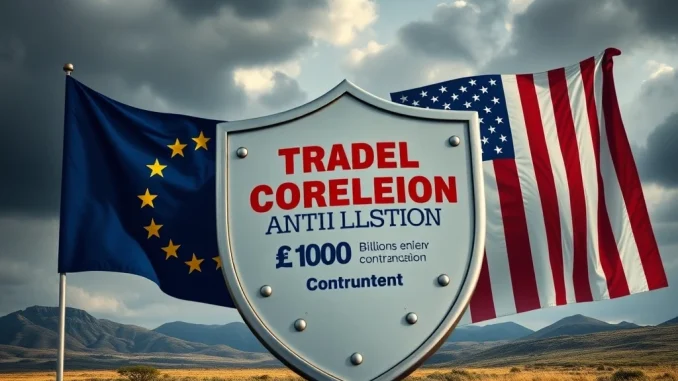
To match the potential U.S. tariffs, the European Union has meticulously drafted an EU contingency plan valued at a staggering €100 billion. This isn’t just a hypothetical exercise; it’s a concrete strategy to absorb potential economic blows and deliver a proportionate response.
This robust plan outlines specific retaliatory tariffs that would be imposed on key U.S. exports. While details are still being finalized, past disputes give us a glimpse of what could be targeted:
- Agricultural Products: U.S. soybeans, a major export, have historically been a target in trade disputes.
- Consumer Goods: Iconic American products like bourbon and Harley-Davidson motorcycles could face higher duties.
- Industrial Goods: Various manufactured goods and raw materials could also be included.
Berlin’s explicit endorsement of using the ACI in a ‘no-deal’ scenario further solidifies the seriousness of this plan. It demonstrates a collective willingness within the bloc to absorb short-term economic costs if it means safeguarding long-term trade interests and deterring future coercion. The €100 billion figure isn’t arbitrary; it’s designed to be a direct counterweight to the potential impact of U.S. tariffs, sending a clear message of equivalence and resolve.
The Stakes of Trump Trade Policies
The potential return of Trump trade policies is a significant driver behind the EU’s current preparations. The previous administration’s ‘America First’ approach led to a series of unilateral tariff impositions and aggressive trade rhetoric that strained long-standing alliances. This history informs Europe’s current defensive posture.
What makes these policies particularly challenging for the EU?
- Unpredictability: Trump’s trade strategy has often been characterized by its unpredictability, making it difficult for other nations to plan and adapt.
- Bilateral Focus: A preference for bilateral deals over multilateral agreements often leaves individual nations more vulnerable to pressure.
- Use of Tariffs as Leverage: Tariffs are frequently employed as a primary tool to force concessions, rather than as a last resort.
The implications of a renewed aggressive trade stance from the U.S. could reshape the transatlantic relationship for years to come. It challenges the established norms of global trade and forces allies to reconsider their strategic economic partnerships. While the EU emphasizes that the ACI remains a ‘last resort’ and ongoing talks are still possible, their firm posture signals that they are no longer waiting to react but are proactively preparing for potential economic conflict.
Navigating the Potential EU Trade War
The prospect of an EU trade war with the United States is a scenario no one desires, but one that Europe is determined to be ready for. This potential conflict extends beyond mere economics; it reflects broader geopolitical dynamics where economic tools are increasingly used to assert influence and sovereignty.
The EU’s dual application of the ACI – against both the U.S. and China – highlights its strategic importance as a deterrent. It shows a bloc that is increasingly prioritizing tools to counter coercion from multiple adversaries, asserting its economic weight on the global stage.
However, navigating this potential conflict comes with its own set of challenges:
- Internal Cohesion: While major powers like Germany and France are on board, smaller member states might hesitate to provoke a trade war with the U.S. due to their own economic vulnerabilities.
- Global Economic Impact: A full-blown trade war between two of the world’s largest economic blocs could have significant negative repercussions for global growth and stability, potentially impacting everyone, including crypto markets sensitive to macro trends.
- Diplomatic Fallout: Beyond trade, such a conflict could strain diplomatic relations and cooperation on other critical global issues.
Despite these challenges, the strong backing from key economic powers suggests that the EU is prepared to leverage its collective market weight to assert its interests and defend its economic sovereignty. The goal is not necessarily to initiate a trade war, but to demonstrate a credible threat of retaliation that discourages coercive actions.
The European Union is sending a clear, unequivocal message: it is prepared to defend its economic interests against potential U.S. trade coercion. With a formidable €100 billion EU contingency plan and the activation of its powerful Anti-Coercion Instrument, Europe is signaling a strategic shift towards assertive economic sovereignty. While the prospect of a full-blown EU trade war with renewed US tariffs under Trump trade policies is a serious concern, the bloc’s readiness underscores a new era of transatlantic relations where economic leverage is met with firm resolve. This proactive stance aims to deter, rather than provoke, ensuring that Europe can protect its markets and maintain its long-term trade interests in an increasingly unpredictable global landscape.
Frequently Asked Questions (FAQs)
Q1: What is the EU’s Anti-Coercion Instrument (ACI)?
A1: The Anti-Coercion Instrument (ACI) is a new EU legal tool designed to allow the European Union to impose countermeasures against third countries that engage in economic coercion against the EU or its member states. It enables retaliatory measures such as tariffs, import restrictions, or limitations on access to EU public procurement.
Q2: Why is the EU preparing this plan now, specifically targeting the U.S.?
A2: The EU’s preparations are largely in response to the potential for renewed aggressive trade policies, particularly under a new Trump administration, which has hinted at imposing fresh tariffs on European goods. While the ACI was initially developed with China in mind, the current focus has shifted to transatlantic trade tensions.
Q3: What does the €100 billion contingency plan entail?
A3: The €100 billion contingency plan is a financial and strategic framework designed to match potential U.S. tariffs of up to 30%. It includes detailed plans for retaliatory tariffs on key U.S. exports, such as soybeans and bourbon, aiming to absorb economic costs and demonstrate the EU’s capacity for a proportionate response.
Q4: What are the potential implications of an EU-U.S. trade war?
A4: A trade war could lead to significant economic disruptions, including reduced exports for European industries, higher costs for consumers, and increased global supply chain instability. It could also strain diplomatic relations and cooperation on other critical global issues.
Q5: Is the EU’s Anti-Coercion Instrument only for the U.S.?
A5: No, while the immediate concern is the U.S., the ACI is a versatile tool designed to counter economic coercion from any third country. Its dual application against both the U.S. and China highlights its strategic importance as a deterrent in the EU’s broader trade policy.
Q6: How might this impact global markets, including cryptocurrencies?
A6: Escalating trade tensions and a potential trade war between major economic blocs can create significant uncertainty in global financial markets. This volatility can influence investor sentiment, potentially leading to shifts in capital allocation and affecting the broader economic stability that often impacts the performance of traditional and digital assets, including cryptocurrencies.