In a groundbreaking move that signals a seismic shift in the digital asset landscape, the crypto world is abuzz with the news of a pivotal WLFI Vaulta partnership. This alliance promises to redefine how traditional finance intersects with the burgeoning decentralized economy, bringing real-world assets closer to the blockchain than ever before. For anyone tracking the evolution of digital finance, this collaboration offers a glimpse into the future.
The Strategic WLFI Vaulta Partnership Unpacked
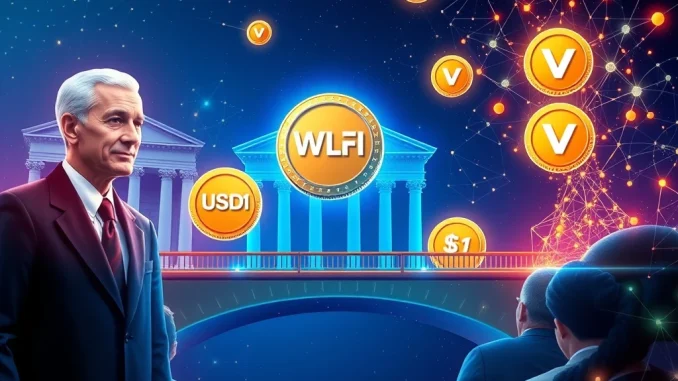
World Liberty Financial (WLFI), a cryptocurrency project gaining significant attention, has announced a strategic collaboration with Vaulta (A), an altcoin listed on Binance. This alliance is not just a handshake; it involves a substantial $6 million purchase of Vaulta’s native A token by WLFI. More importantly, it includes the integration of WLFI’s USD1 stablecoin into Vaulta’s web3 banking infrastructure. This WLFI Vaulta partnership aims to achieve several key objectives:
- Enhance liquidity across both ecosystems.
- Expand access to real-world assets (RWA).
- Bridge the gap between traditional finance and decentralized platforms.
WLFI has a history of strategic crypto acquisitions, including significant amounts of Bitcoin (BTC), Ethereum (ETH), and Tron (TRX). These moves reflect a broader strategy to diversify its crypto reserves and expand its decentralized finance (DeFi) ecosystem. Zak Folkman, WLFI’s co-founder, highlighted that USD1 is gaining traction as an institutional and payment solution, emphasizing the partnership’s role in advancing practical and compliant decentralized finance. Yves La Rose, Vaulta’s CEO, echoed this sentiment, calling the collaboration a milestone in reimagining Web3 banking, aligning with both entities’ goals of financial transparency and accessibility.
Why DeFi Integration is the Future of Finance
The core of this collaboration lies in its robust approach to DeFi integration. Decentralized Finance, or DeFi, refers to financial applications built on blockchain technology, aiming to remove intermediaries and provide more transparent, accessible, and efficient services. This partnership exemplifies how established and emerging crypto entities are working together to push the boundaries of what DeFi can achieve.
The integration of USD1 into Vaulta’s web3 banking infrastructure means that users could potentially experience:
- Smoother transactions with a stable, dollar-backed digital currency.
- Increased interoperability between different blockchain platforms and traditional financial systems.
- New avenues for yield generation and financial services within a decentralized framework.
This move underscores the growing maturity of the DeFi space, moving beyond speculative trading to practical applications that serve institutional and individual needs alike. It’s about building a financial system that is more resilient and globally accessible.
The Power of the USD1 Stablecoin in Bridging Worlds
At the heart of this transformative partnership is the USD1 stablecoin. Stablecoins are cryptocurrencies designed to minimize price volatility, typically by being pegged to a stable asset like the U.S. dollar. USD1’s integration into Vaulta’s web3 banking solutions positions it as a crucial link between the stability of fiat currencies and the innovation of blockchain technology.
The significance of stablecoins cannot be overstated. They are vital for:
- Facilitating cross-border payments with lower fees and faster settlement times.
- Providing a reliable store of value within the volatile crypto market.
- Enabling institutional participation in DeFi without direct exposure to market fluctuations.
With regulatory clarity emerging, such as the anticipated GENIUS Act for federal stablecoin laws, the stablecoin sector is projected for massive growth, potentially reaching $3.7 trillion by 2030. USD1’s strategic positioning through this partnership could see it play a significant role in this expansion, particularly as an institutional and payment solution.
Unlocking Real-World Assets on the Blockchain
A major focus of the WLFI Vaulta partnership is to expand access to Real-World Assets (RWA) through tokenization. RWA tokenization involves representing tangible assets, like real estate, commodities, or even art, as digital tokens on a blockchain. This process brings numerous benefits:
- Increased Liquidity: Fractional ownership allows more people to invest, making illiquid assets more tradable.
- Greater Transparency: Blockchain records provide an immutable and verifiable ownership history.
- Global Accessibility: Investors worldwide can access assets without geographical barriers.
Examples like Tether’s recent farmland acquisition via USDT demonstrate a growing trend towards integrating tangible assets into the crypto economy. This shift is likely to influence future regulatory frameworks and investment strategies, making digital assets more appealing to a broader range of investors looking for diversified portfolios that include both digital and physical value.
Navigating Current Crypto Market Trends and Future Outlook
The announcement of this partnership comes amid dynamic Crypto Market Trends. Bitcoin and Ethereum have recently reached record highs, and the total market capitalization has surpassed $4 trillion, signaling robust growth and increasing institutional adoption. This is evidenced by surging inflows into exchange-traded funds (ETFs) and the expanding use of stablecoins in cross-border transactions.
However, the crypto space, while full of opportunities, also presents challenges. WLFI’s ties to high-profile figures like former U.S. President Donald Trump, while drawing attention, also highlight that political endorsements do not guarantee long-term sustainability. The project’s focus on stablecoins and real-world asset tokenization, while innovative, also exposes it to regulatory scrutiny, particularly in jurisdictions with strict crypto policies, such as South Korea where institutional crypto exposure is restricted.
The inclusion of Vaulta’s A token on Binance, one of the world’s largest exchanges, suggests a strategic alignment with mainstream crypto infrastructure. As the market continues to evolve, collaborations like the WLFI Vaulta partnership will be crucial in shaping the future landscape, balancing innovation with the need for stability and compliance.
Conclusion
The alliance between World Liberty Financial and Vaulta marks a significant step forward in the ongoing convergence of traditional finance and the decentralized economy. With a substantial A token purchase and the strategic integration of the USD1 stablecoin, this partnership is poised to enhance liquidity, broaden access to real-world assets, and solidify the foundations for compliant and practical DeFi solutions. As the crypto market matures and regulatory clarity increases, such collaborations will be instrumental in unlocking new possibilities for financial innovation and accessibility worldwide.
Frequently Asked Questions (FAQs)
What is the core of the WLFI Vaulta partnership?
The partnership involves World Liberty Financial (WLFI) purchasing $6 million worth of Vaulta’s (A) native token and integrating WLFI’s USD1 stablecoin into Vaulta’s web3 banking infrastructure. Its primary goal is to bridge traditional finance with decentralized platforms, enhance liquidity, and expand access to real-world assets.
What is USD1 and why is its integration important?
USD1 is a dollar-backed stablecoin developed by WLFI. Its integration into Vaulta’s web3 banking solutions is crucial because it aims to provide a stable, compliant digital currency for institutional and payment solutions, facilitating smoother transactions and greater financial accessibility within the DeFi ecosystem.
How does this partnership relate to Real-World Assets (RWA)?
A key objective of the WLFI Vaulta partnership is to expand access to Real-World Assets (RWA) through tokenization. This means representing tangible assets as digital tokens on the blockchain, which can increase liquidity, transparency, and global accessibility for various types of investments.
What are the potential benefits of this DeFi integration?
The benefits of this specific DeFi integration include enhanced liquidity for both WLFI and Vaulta, expanded access to real-world assets, and a more seamless bridge between traditional finance and decentralized platforms. It also aims to promote practical and compliant decentralized finance solutions.
How have broader Crypto Market Trends reacted to this news?
While specific metrics for the A token’s price increase were not disclosed, the broader crypto market has generally responded positively to such institutional moves. Bitcoin and Ethereum have seen record highs, and the total market cap has surpassed $4 trillion, indicating growing confidence and adoption, partly driven by increased institutional participation and stablecoin utility.
Are there any risks associated with this partnership?
Like any crypto venture, risks exist. While high-profile backing can attract attention, it doesn’t guarantee long-term sustainability. The project’s focus on stablecoins and RWA tokenization also exposes it to market volatility and ongoing regulatory scrutiny, especially in jurisdictions with strict digital asset regulations.