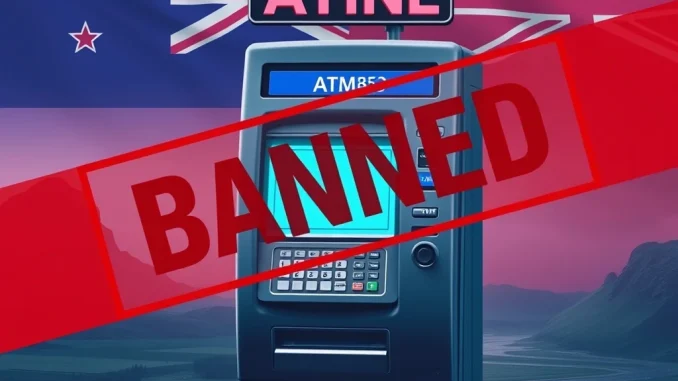
The digital asset world is buzzing with significant news from down under. On July 17, 2025, New Zealand announced a nationwide New Zealand Crypto ATM Ban, a move designed to strengthen its fight against illicit financial activities. If you’re involved in cryptocurrency, understanding this development is crucial, as it reflects a growing global trend in how governments approach digital assets.
Why the New Zealand Crypto ATM Ban?
New Zealand’s Associate Justice Minister, Nicole McKee, made it clear: the ban targets kiosks that facilitate cash-to-crypto conversions, which have become problematic conduits for illegal money movement. By April 2025, over 220 such machines were operating across the country, often in easily accessible locations like convenience stores and petrol stations, frequently with minimal user verification. This lax oversight made them attractive to criminals.
The government’s justification for this decisive action includes:
- Combating Money Laundering: Authorities cited cases like a substantial $64 million laundering scheme that exploited these machines.
- Disrupting Drug Trafficking: Cross-border drug trafficking operations were reportedly using crypto ATMs to move illicit funds, making it harder for law enforcement to track.
- Strengthening AML Efforts: The ban is a key component of a broader overhaul of New Zealand’s Anti-Money Laundering (AML) and Counter-Financing of Terrorism (CFT) framework.
McKee emphasized the need for a “smarter, more agile” system that effectively balances enforcement with support for legitimate businesses. The goal is to disrupt criminal networks by limiting their ability to move funds and enabling real-time monitoring of suspicious transactions.
Crypto ATM Regulation in Focus: A Global Trend?
New Zealand is not alone in taking a hard line on crypto ATMs. This ban places it alongside other nations that have implemented strict controls, signaling a growing global trend in crypto ATM regulation. Different countries have adopted varied approaches, reflecting their unique regulatory philosophies and risk assessments.
How Does New Zealand Compare?
Here’s a quick look at how New Zealand’s approach stacks up against other key players:
| Country | Crypto ATM Stance | Key Characteristics |
|---|---|---|
| New Zealand (2025) | Nationwide Ban | Complete prohibition on cash-to-crypto kiosks to curb illicit finance. |
| United Kingdom (2022) | Prohibition | FCA ordered all crypto ATMs to shut down due to lack of registration and AML compliance. |
| Singapore (2022) | Moratorium | Monetary Authority of Singapore (MAS) halted new crypto ATM installations and urged existing ones to cease operations. |
| Australia | Regulatory Caps & Enhanced Compliance | Opted for stricter regulations, including transaction limits and enhanced KYC/AML rules, rather than an outright ban. |
| China (2017) | Comprehensive Crypto Ban | Broader ban on all crypto transactions, including ATMs, exchanges, and mining. |
This comparison highlights that while the concerns over financial crime are universal, the regulatory responses vary from outright bans to stricter compliance frameworks. New Zealand’s decision represents a definitive stance, prioritizing risk mitigation.
Strengthening Money Laundering Prevention Efforts
The ATM ban is just one facet of New Zealand’s comprehensive strategy for money laundering prevention. The broader reforms underscore a commitment to a “smarter, more agile” system to tackle financial crime effectively. These measures are designed to make it significantly harder for criminals to exploit the financial system.
Key Reforms Include:
- NZ$5,000 Cap on International Cash Transfers: This new limit aims to restrict the bulk movement of physical cash across borders, a common method for illicit fund transfers.
- Expanded Data-Sharing Powers for the Financial Intelligence Unit: This crucial enhancement allows the Financial Intelligence Unit (FIU) to share information more broadly and in real-time, enabling faster identification and disruption of suspicious transactions.
- Focus on High-Risk Sectors: The reforms target sectors identified as vulnerable to money laundering, ensuring that regulations are applied where they are most needed.
These combined measures aim to create a more robust and responsive AML/CFT framework, disrupting criminal networks by limiting their ability to move funds offshore and enabling better real-time monitoring.
Navigating Digital Asset Laws: What This Means for Users
While the ban on crypto ATMs is significant, it’s important to understand what it does not mean. Bitcoin and other cryptocurrencies remain legal in New Zealand. They are classified as property and are subject to income tax, just like other assets. This means users can still freely buy, sell, and hold cryptocurrencies through regulated exchanges and platforms that comply with existing digital asset laws.
Industry Reaction and Future Outlook
The industry reaction to the ban has been mixed. CoinFlip, New Zealand’s largest crypto ATM provider, openly criticized the ban, viewing it as a setback for digital innovation. They argued that criminal misuse could be addressed through more targeted regulations, such as wallet pinning and pre-transaction risk checks, rather than a complete elimination of the technology. This highlights a fundamental tension between security imperatives and the desire for technological progress and accessibility.
The government’s approach underscores its commitment to integrating digital assets into existing financial frameworks while aggressively curbing their misuse. This balancing act is a challenge many nations face as they grapple with the evolving landscape of digital finance.
The Empowered Financial Intelligence Unit and Future Outlook
A central pillar of New Zealand’s reinforced AML/CFT framework is the expanded role and powers of the Financial Intelligence Unit (FIU). This unit is critical in detecting and preventing financial crime, acting as the nexus for information sharing and analysis. With enhanced data-sharing capabilities, the FIU is better equipped to monitor suspicious transactions and identify illicit activities in real-time.
The reforms signal a proactive shift towards prioritizing risk mitigation while maintaining a space for legitimate innovation. As the global regulatory landscape continues to evolve, New Zealand’s approach offers a compelling case study in balancing national security with the advancements of digital technology.
New Zealand’s comprehensive ban on crypto ATMs is a clear signal of its commitment to combating financial crime, particularly money laundering and drug trafficking. While controversial for some in the crypto community, this decisive action aligns with a broader global trend of increasing crypto ATM regulation. By strengthening its money laundering prevention framework and empowering its Financial Intelligence Unit, New Zealand aims to create a more secure financial environment while still allowing for the legitimate use of digital assets under clear digital asset laws. This bold move will undoubtedly influence future discussions on how nations integrate emerging technologies into existing regulatory structures.
Frequently Asked Questions (FAQs)
Q1: Is Bitcoin or other cryptocurrency now illegal in New Zealand?
No, Bitcoin and other cryptocurrencies remain legal in New Zealand. They are classified as property and are subject to income tax. The ban specifically targets crypto ATMs that allow cash-to-crypto conversions, not the holding or trading of digital assets through regulated exchanges.
Q2: Why did New Zealand ban crypto ATMs?
The ban was implemented to curb money laundering, drug trafficking, and other illicit financial activities. Regulators argued that crypto ATMs, particularly those with minimal user verification, had become conduits for criminals to move funds, citing specific cases of large-scale laundering schemes.
Q3: How does New Zealand’s ban compare to other countries?
New Zealand’s nationwide ban is similar to the outright prohibitions seen in the UK and China (as part of a broader crypto ban) and Singapore’s moratorium. In contrast, countries like Australia have opted for stricter regulatory caps and enhanced compliance rules rather than a complete ban.
Q4: What other measures are part of New Zealand’s anti-money laundering reforms?
Beyond the crypto ATM ban, New Zealand’s reforms include a NZ$5,000 cap on international cash transfers and expanded data-sharing powers for the Financial Intelligence Unit. These measures aim to disrupt criminal networks by limiting their ability to move funds offshore and enabling real-time monitoring of suspicious transactions.
Q5: Can I still buy and sell cryptocurrency in New Zealand?
Yes, you can still buy, sell, and hold cryptocurrencies in New Zealand. However, you must do so through regulated exchanges and platforms that comply with New Zealand’s Anti-Money Laundering (AML) regulations. The ban only applies to the physical cash-to-crypto ATM kiosks.