Bitcoin Price News: Veteran Trader Identifies $42k Support as Capital Flows Toward AI Crypto Projects
Global, March 2025: Recent Bitcoin price movements have sparked significant discussion among cryptocurrency analysts and institutional investors. Market data indicates Bitcoin has tested the $42,000 level multiple times in recent weeks, with some veteran traders suggesting this represents a critical support zone. Concurrently, blockchain analytics reveal notable capital rotation toward emerging sectors, particularly artificial intelligence-focused cryptocurrency projects, while established layer-1 platforms like Sui and Stellar demonstrate varied recovery patterns amid broader market conditions.
Bitcoin Market Analysis: Examining the $42,000 Support Level
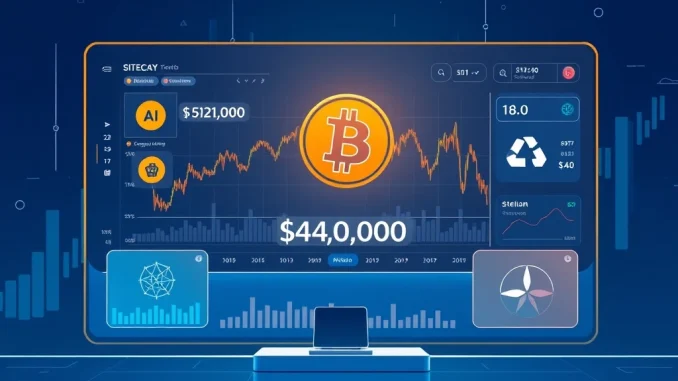
The cryptocurrency market has experienced increased volatility throughout the first quarter of 2025, with Bitcoin’s price action drawing particular attention from technical analysts. The $42,000 price point has emerged as a significant area of interest, having been tested as support on three separate occasions over the past month. Market participants note that this level previously served as resistance during Bitcoin’s consolidation phase in late 2024, creating what technical analysts describe as a “role reversal” pattern where former resistance becomes support.
Historical data shows that Bitcoin has established similar psychological and technical support levels during previous market cycles. The $42,000 threshold represents approximately a 30% correction from Bitcoin’s recent highs, which aligns with typical pullback magnitudes observed during bull market corrections. On-chain metrics, including the realized price indicator and the MVRV ratio, suggest that at current levels, Bitcoin is trading near its average acquisition cost for medium-term holders, potentially creating a zone of increased buying interest.
Market structure analysis reveals several key factors influencing current price action:
- Exchange reserves have declined by approximately 2.5% over the past month, suggesting reduced selling pressure
- Derivatives data shows declining open interest and funding rates, indicating market deleveraging
- Institutional flows through regulated products have shown modest net inflows despite price volatility
- Mining economics remain favorable with hash rate stability and efficient operations
Capital Rotation Patterns: The Rise of AI-Focused Cryptocurrency Projects
Blockchain intelligence firms report measurable capital flows from established cryptocurrencies toward emerging sectors, with artificial intelligence and machine learning projects attracting particular attention. This rotation pattern mirrors historical market cycles where capital seeks new narratives and technological innovations during consolidation phases in major assets like Bitcoin and Ethereum.
The intersection of artificial intelligence and blockchain technology represents a growing sector within the cryptocurrency ecosystem. Projects in this category typically focus on several key areas:
- Decentralized AI model training and inference
- Data marketplace platforms with privacy preservation
- AI-powered decentralized autonomous organizations
- Blockchain-based verification of AI outputs
DeepSnitch AI represents one project within this broader category, focusing specifically on on-chain analytics and threat detection using machine learning algorithms. The project’s technical documentation describes a system designed to identify anomalous transaction patterns and potential security threats across multiple blockchain networks. Like many emerging projects in the AI-crypto intersection, it faces both significant technological challenges and potential opportunities as the sector develops.
Market analysts caution that while AI-focused cryptocurrency projects represent an innovative sector, they typically carry higher risk profiles than established layer-1 networks. The “1000x” terminology referenced in some discussions reflects extreme best-case scenarios rather than consensus projections, with most institutional analysts emphasizing fundamental evaluation metrics including:
- Technical feasibility and development progress
- Team expertise and project transparency
- Market adoption and user metrics
- Competitive positioning within the AI-crypto landscape
Layer-1 Platform Performance: Sui and Stellar Market Dynamics
Amid broader market movements, individual layer-1 blockchain platforms demonstrate varied performance characteristics. Sui, a relatively new blockchain platform utilizing the Move programming language, has shown particular resilience during recent market conditions. Network metrics indicate growing developer activity and transaction volume, though from a smaller base compared to established competitors.
Key developments for the Sui network include:
- Mainnet stability since its 2023 launch with consistent uptime
- Growing decentralized application ecosystem across DeFi, gaming, and NFT sectors
- Partnership announcements with enterprise and gaming companies
- Technical upgrades focused on scalability and developer experience
Stellar, with its established focus on cross-border payments and financial inclusion, continues to demonstrate steady development progress. The network’s recent technical upgrades have focused on improving transaction throughput and reducing costs, aligning with its core mission of facilitating efficient value transfer. Stellar’s partnership with traditional financial institutions and money service businesses provides a distinct use case differentiation from many other blockchain platforms.
Comparative analysis reveals distinct approaches between these platforms:
| Metric | Sui Network | Stellar Network |
|---|---|---|
| Primary Use Case | General-purpose smart contracts | Cross-border payments & assets |
| Consensus Mechanism | Delegated Proof-of-Stake variant | Federated Byzantine Agreement |
| Transaction Speed | High throughput design | Optimized for settlement |
| Development Focus | Move language ecosystem | Interoperability standards |
Market Structure Implications and Historical Context
The current market environment shares characteristics with previous cryptocurrency cycles while demonstrating unique attributes specific to 2025 market conditions. Historical analysis reveals that capital rotation between sectors typically occurs during specific phases of market development:
- Early cycle phases often see capital flowing toward high-risk, high-potential projects
- Mid-cycle consolidation frequently features sector rotation as narratives evolve
- Late cycle phases historically show capital returning to established assets
The artificial intelligence narrative within cryptocurrency represents the latest in a series of sector rotations that have previously included decentralized finance, non-fungible tokens, and layer-1 platform competition. Each previous rotation has produced both successful projects that delivered substantial returns and unsuccessful projects that failed to achieve sustainable adoption.
Market participants should consider several structural factors when evaluating current conditions:
- Regulatory developments continue to shape market access and institutional participation
- Macroeconomic conditions including interest rates and inflation impact risk asset valuations
- Technological advancements in both blockchain and adjacent fields create new possibilities
- Adoption metrics across different user segments provide fundamental growth indicators
The cryptocurrency market’s maturation is evident in several measurable dimensions. Institutional participation has increased through regulated products and corporate treasury allocations. Regulatory frameworks continue to develop across major jurisdictions, providing both clarity and compliance requirements. Technological infrastructure has improved significantly since previous cycles, with better developer tools, security practices, and user experience across many platforms.
Conclusion
The current Bitcoin price news reflects a cryptocurrency market in a dynamic phase of development and sector rotation. The $42,000 level represents a technically significant area that market participants are monitoring closely for potential support. Concurrent capital flows toward emerging sectors like AI-focused cryptocurrency projects demonstrate continued innovation and narrative evolution within the broader ecosystem. Established platforms like Sui and Stellar continue their development trajectories with distinct technological approaches and use case specializations. As the market evolves, fundamental analysis of technological capabilities, adoption metrics, and sustainable value creation remains essential for informed participation across different cryptocurrency sectors and projects.
FAQs
Q1: What does the $42,000 level represent for Bitcoin technically?
From a technical analysis perspective, the $42,000 area represents a previous resistance level that has now been tested as potential support. This “role reversal” pattern is common in financial markets and suggests increased buying interest may emerge at this price point based on historical trading behavior.
Q2: How significant is the capital rotation toward AI cryptocurrency projects?
Blockchain analytics indicate measurable capital flows toward AI-focused projects, representing the latest sector rotation within cryptocurrency markets. Similar rotations have occurred historically toward DeFi, NFTs, and layer-1 platforms, with varying outcomes for different projects within each category.
Q3: What differentiates Sui from other layer-1 blockchain platforms?
Sui utilizes the Move programming language originally developed for Diem (formerly Libra) and employs a unique object-centric data model. This technical approach aims to optimize parallel transaction processing and improve developer experience for certain types of applications.
Q4: How does Stellar’s approach differ from other payment-focused blockchains?
Stellar employs the Federated Byzantine Agreement consensus mechanism and maintains a strong focus on interoperability with traditional financial systems. The network emphasizes asset issuance and cross-border settlement with established compliance frameworks for financial institutions.
Q5: What factors should investors consider when evaluating emerging cryptocurrency projects?
Fundamental evaluation should include technical feasibility, development progress, team expertise, adoption metrics, competitive positioning, and regulatory considerations. Historical analysis suggests that sustainable projects typically demonstrate clear utility, growing user bases, and technological differentiation over time.
Related News
- Crypto Accumulation Zone Emerges as Strategic Inflection Point Amid Deepening Market Pullback
- Galaxy Digital Unveils Monumental SUI Investment Partnership
- XRP Triangle Pattern Signals Critical Juncture – Technical Analysis Points to Potential 11% Breakout
Related: Infini Exploit: Shocking $32.7M ETH Laundering via Tornado Cash Exposes Crypto Recovery Crisis
Related: DeepSnitch AI Price Prediction for 2026: Analyzing Market Dynamics Amid Pump.fun's Vyper Acquisition