Quantum-Resistant Blockchain: InterLink’s Crucial Race Against Future Threats
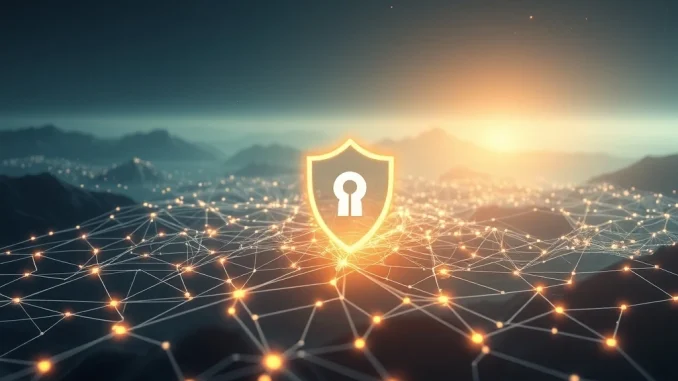
Global, May 2025: In a significant move for the future of digital assets, the InterLink development team has officially commenced work on a quantum-resistant blockchain. This initiative focuses on integrating advanced cryptographic mechanisms directly into its token infrastructure, aiming to safeguard the network against the potential threat posed by powerful quantum computers. The project represents a proactive step in an industry-wide conversation about long-term security and technological resilience.
Understanding the Quantum Threat to Blockchain
The security of most current blockchains, including Bitcoin and Ethereum, relies on cryptographic algorithms like Elliptic Curve Cryptography (ECC) and the SHA-256 hashing function. These are considered secure against classical computers. However, the theoretical advent of large-scale, fault-tolerant quantum computers presents a unique challenge. Specifically, Shor’s algorithm, a quantum algorithm, could efficiently break the public-key cryptography that protects digital wallets and transaction signatures.
This does not mean quantum computers will break blockchain tomorrow. Experts estimate that such machines are likely a decade or more away from posing a practical threat. Nonetheless, the cryptography community operates on a “cryptographic agility” principle. Transitioning to new standards is a slow process that must begin long before the threat materializes. InterLink’s development effort is part of this essential, forward-looking preparation.
InterLink’s Development Roadmap and Technical Approach
InterLink’s team is not building an entirely new blockchain from scratch but is focused on the establishment and implementation of quantum-resistant mechanisms within its existing infrastructure. This involves a multi-phase approach. The first phase consists of a comprehensive audit and research period to select the most suitable post-quantum cryptographic (PQC) algorithms.
Several candidate algorithms are under global scrutiny, primarily led by the U.S. National Institute of Standards and Technology (NIST), which is in the final stages of standardizing PQC algorithms. InterLink’s developers will likely evaluate front-runners like:
- CRYSTALS-Kyber: A key encapsulation mechanism (KEM) for general encryption.
- CRYSTALS-Dilithium: A digital signature algorithm, a direct replacement for ECC signatures.
- Falcon: Another NIST-selected digital signature scheme.
The implementation phase will involve creating new transaction types, wallet software, and consensus mechanisms that are compatible with these heavier algorithms, which require more data and computational power than current standards.
The Broader Industry Context and Timeline
InterLink is not alone in this pursuit. Other projects, such as QANplatform and the Quantum Resistant Ledger (QRL), have been architected with quantum resistance as a core principle. However, InterLink’s move is notable as it represents an established project undertaking a major cryptographic migration. This process mirrors the historical transition from SHA-1 to SHA-256 in internet security—a necessary evolution driven by advancing technology.
The timeline for a full rollout is expected to be measured in years. Development, testing on testnets, community governance proposals for adoption, and a carefully managed migration for users and token holders will all be critical steps. The goal is to ensure a seamless transition long before any quantum threat becomes reality, thereby maintaining user trust and asset security.
Implications for Users and the Crypto Ecosystem
For the average user, this development is a strong signal about a project’s commitment to long-term viability. A quantum-resistant blockchain future-proofs user assets. It also has significant implications for institutional adoption, as large financial entities have stringent requirements for asset security over multi-decade horizons.
The technical challenges are non-trivial. Post-quantum cryptographic algorithms often result in larger signature sizes and increased computational overhead. The table below outlines a key comparison:
| Cryptographic Element | Current Standard (ECDSA) | Post-Quantum Candidate (Dilithium) | Impact |
|---|---|---|---|
| Signature Size | ~64 bytes | ~2,000+ bytes | Larger blockchain data size |
| Key Generation Speed | Fast | Slower | Potential latency in wallet creation |
| Verification Speed | Very Fast | Moderately Fast | Minimal impact on transaction finality |
InterLink’s engineering team will need to optimize network performance to handle this increased data load without compromising on speed or decentralization—a core tenet of blockchain philosophy.
Conclusion: A Necessary Evolution for Digital Asset Security
InterLink’s decision to begin developing a quantum-resistant blockchain is a strategic and necessary investment in the future. It moves the project from theoretical discussion into practical engineering, addressing one of the most significant long-term threats to the cryptocurrency industry. While the full implementation is a complex journey, this proactive step enhances InterLink’s credibility and positions it as a project focused on resilience. As quantum computing continues to advance in labs worldwide, such efforts in the blockchain space are not merely innovative; they are becoming essential for ensuring the enduring security and trust that underpin the entire digital asset economy.
FAQs
Q1: What is a quantum-resistant blockchain?
A quantum-resistant blockchain is a distributed ledger that uses cryptographic algorithms specifically designed to be secure against attacks from both classical and future quantum computers. It aims to protect digital signatures and encryption from being broken by quantum algorithms like Shor’s algorithm.
Q2: Is my cryptocurrency in immediate danger from quantum computers?
No. Currently, no quantum computer exists that is powerful enough to break blockchain cryptography. The threat is considered long-term, likely a decade or more away. Projects like InterLink are developing solutions now to ensure a smooth transition long before the threat becomes practical.
Q3: How does quantum resistance affect blockchain performance?
Initial post-quantum algorithms often produce larger signature and key sizes, which can increase the data load on a network. This may lead to slightly larger blockchain sizes and require optimizations in transaction processing. However, ongoing research aims to improve the efficiency of these algorithms.
Q4: Will existing tokens on InterLink need to be swapped or moved?
In a full migration to a quantum-resistant system, users would likely need to move their tokens from the old, classical chain to the new, quantum-resistant chain through a managed process. This would be communicated extensively by the development team and would require user action, similar to a major network upgrade.
Q5: Are other blockchains working on quantum resistance?
Yes. Several projects, including QANplatform, Quantum Resistant Ledger (QRL), and IOTA, have quantum resistance as a core feature. Additionally, major blockchain foundations and research groups are actively studying post-quantum cryptography, indicating this is a growing priority across the industry.
Related News
- Trump's Defiant Stance: Vows Alternative Measures if Supreme Court Blocks Tariffs in 2025
- Get Manor Lords Territories Before The Ai (Quick Guide) | Flesson19
- Pioneering Web3 Crypto Integration: Blue Port Interactive's Global Recruitment Drive
Related: Groundbreaking: South Korea Deploys AI to Detect Crypto Manipulation in Real-Time by 2026
Related: Hard Forks and Soft Forks: The Essential Guide to Blockchain Evolution
Related: Ethereum Exchange Supply Plummets to 2016 Levels: The Critical Liquidity Shift