BlockDAG’s Final Presale Price: Analyzing the $0.00025 Entry Before February 11 TGE
Global, February 2025: The BlockDAG network has entered the final phase of its presale, with the BDAG token available at a fixed price of $0.00025. This stage precedes the project’s scheduled Token Generation Event (TGE) on February 11, a milestone that will transition the token from a presale asset to a publicly tradable cryptocurrency. This development has drawn attention within the digital asset community, prompting analysis of the project’s underlying technology, market positioning, and the broader context of early-stage crypto investments.
Understanding BlockDAG’s Final Presale Phase
The current presale phase represents the last opportunity for participants to acquire BDAG tokens at a predetermined price before they are listed on public exchanges. In cryptocurrency projects, a presale is a fundraising mechanism where tokens are sold to early backers prior to a public launch. The $0.00025 price point establishes an initial valuation for the project. The transition to a TGE is a standard procedure in blockchain development, where the token’s smart contract is finalized and activated on its native chain, enabling transfers and trading.
Historical data from the crypto market shows that presale dynamics vary significantly. Some projects see substantial price appreciation post-listing, while others struggle to maintain their presale value. Factors influencing this include market sentiment, the success of the mainnet launch, development progress, and broader economic conditions. The BlockDAG project enters a market that has matured since the initial coin offering (ICO) boom of 2017, with increased regulatory scrutiny and investor focus on fundamental utility.
Technology and Market Context of Directed Acyclic Graphs
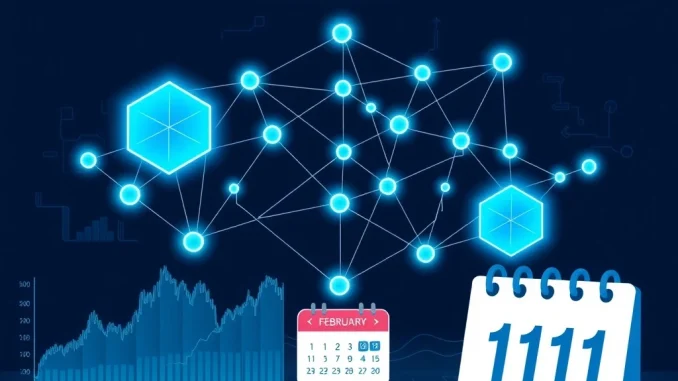
BlockDAG derives its name from its proposed underlying architecture: a Directed Acyclic Graph. This is a departure from the traditional linear blockchain structure used by networks like Bitcoin and Ethereum. In a DAG system, transactions can be processed in parallel, forming a web-like structure rather than a single chain of blocks. Proponents argue this can lead to significant improvements in scalability and transaction speed.
- Scalability: DAGs can potentially process thousands of transactions per second by allowing multiple chains to coexist and be validated simultaneously.
- No Miners: Many DAG implementations use a consensus mechanism where users validate previous transactions when making their own, potentially reducing fees and energy consumption.
- Challenges: DAG technology is less battle-tested than traditional blockchains. Achieving security and decentralization comparable to established networks remains a significant technical hurdle for new entrants.
Other projects, such as IOTA and Nano, have utilized DAG-like structures with varying degrees of adoption and technical challenges. The success of BlockDAG will depend on its unique implementation, its ability to solve real-world problems, and its developer adoption.
Analyzing the Projected Return Scenarios
The content provided mentions potential returns should the BDAG token reach price points between $1 and $5. It is critical to examine these figures from a mathematical and market perspective. A move from $0.00025 to $1 represents a 400,000% increase, or a 4,000x multiple on the initial investment. A move to $5 represents a 2,000,000% increase, or a 20,000x multiple.
For context, achieving a $1 price would imply a total market valuation for BDAG that must be evaluated against the total token supply, a figure not provided in the prompt. Market capitalization is calculated as (Token Price) x (Total Supply). Early-stage crypto investments carry extreme risk. While historical examples like early Bitcoin or Ethereum investors saw life-changing returns, they are exceptional outliers. The vast majority of new tokens do not achieve such growth, and many fall to zero value.
Investors should consider the following:
- Fully Diluted Valuation (FDV): What would the total value of all tokens be at $1 or $5? How does that compare to established projects?
- Liquidity: Post-TGE, will there be sufficient trading volume for investors to exit positions at desired prices?
- Utility: What specific function does the BDAG token serve within the BlockDAG ecosystem? Is demand for this utility likely to drive token value?
The Road to and Beyond the Token Generation Event
The February 11 TGE is not an endpoint but a beginning. Post-TGE, the project team must execute its roadmap, which typically includes mainnet launch, partnership announcements, developer tool releases, and community growth. Market reception in the weeks following the TGE is often volatile. Tokens can experience rapid price swings due to initial trading dynamics, as early presale participants may choose to take profits and new buyers enter the market.
Regulatory compliance will also be a key factor. Jurisdictions worldwide are increasing their oversight of cryptocurrency sales and trading. The project’s structure, its communications, and the geographic location of its team and foundations will face scrutiny. A successful long-term project must navigate this evolving landscape.
Conclusion
The final presale phase for BlockDAG’s BDAG token at $0.00025 presents a characteristic early-stage cryptocurrency opportunity, marked by high potential upside and commensurate high risk. The upcoming Token Generation Event on February 11 will mark a critical transition from a private fundraising vehicle to a publicly tradable asset. Success will hinge not on promotional multipliers but on the tangible delivery of a scalable, secure, and useful Directed Acyclic Graph network, the cultivation of a robust ecosystem, and the project’s navigation of a complex and competitive global market. As with any speculative asset, thorough due diligence, an understanding of the technology, and careful risk management are essential for any participant.
FAQs
Q1: What is a Token Generation Event (TGE)?
A Token Generation Event is the process by which a cryptocurrency project creates and distributes its native tokens on a blockchain, making them active and transferable. It is the functional launch of the token.
Q2: How is a Directed Acyclic Graph (DAG) different from a blockchain?
While a blockchain orders transactions into sequential blocks forming a single chain, a DAG allows transactions to be processed in parallel, linking to multiple previous transactions, which can theoretically enable higher throughput and scalability.
Q3: What happens to presale tokens after the TGE?
Typically, presale tokens are distributed to investors’ wallets after the TGE. They may be subject to a vesting schedule (released over time) or may become immediately liquid and tradable on supported exchanges, depending on the project’s terms.
Q4: What does a 4,000x return actually mean for an investment?
A 4,000x return means an investment is multiplied by 4,000. For example, a $250 investment would become $1,000,000. Such returns are extremely rare in any asset class and represent outlier, high-risk scenarios.
Q5: What are the key risks of participating in a crypto presale?
Key risks include project failure (the team fails to deliver the technology), market risk (the entire crypto market declines), regulatory risk (changing laws impact the project), liquidity risk (inability to sell tokens easily), and smart contract risk (bugs or vulnerabilities in the token’s code).
Related News
- Unlock MNDE Trading: Coinbase Expands Crypto Access to New York Residents
- Ethereum Whale's Epic $269 Million Exit: Final 26K ETH Lands at Bitstamp, Completing Five-Year Strategy
- CoinShares Reports Robust $32.4M Net Profit for Q2
Related: Best Crypto to Buy Now: Analyzing High-Beta Opportunities After Bitcoin's $70K Breakthrough
Related: Best Crypto Sportsbooks 2026: The Ultimate Guide to Fast Payouts & Superior Odds